

2025-03-14
24V vs 12V LED Strip: Which Voltage is Best for Your Lighting Project?
24V vs 12V LED Strip: Which Voltage is Best for Your Lighting Project?
Best LED strip lights have become a popular choice for both residential and commercial lighting due to their energy efficiency, durability, and versatility. Their flexibility, energy-saving capabilities, and ability to create unique lighting designs offer endless possibilities for illuminating spaces, whether for task lighting, accent lighting, or creating ambient effects.
Common voltages for LED ribbon are 12VDC and 24VDC. Generally, the price difference is minimal. When you're preparing to purchase low voltage LED strip, you might wonder, "What are the differences between 12V vs 24V LED strip lighting? Which one should I choose?"
ADLED offers high quality LED strip lights in both 12V DC and 24V DC. The choice of voltage depends on your application scenario. If you require frequent cutting and have high demands for cutting length, please choose LED tape light 12V. If you need long-distance installations and have high demands for brightness uniformity and luminous efficiency, please choose LED strip lights 24V. Regardless of your choice, please ensure to pair with suitable power supplies and accessories to ensure the best performance and lifespan of the best lightstrip.
Why is it important to choose the correct voltage for LED strip?
What is the difference between 12V and 24V LED strip?
What are the advantages of 12V LED strip lights?
What are the advantages of 24V LED strip lights?
Is 12V LED strip better than 24V LED strip?
Wrapping Up
Why is it important to choose the correct voltage for LED strip?

DC12V LED Strip

24V LED Strip
Don't ruin your LED lighting! Understand why choosing the correct 12V or 24V LED strip voltage is crucial to avoid uneven brightness, damage, and ensure optimal performance. Learn about the impact of voltage on brightness, long runs, power supply compatibility, and safety. Create the perfect LED lighting solution now!
1. Ensure the normal operation of LED tape strip
LED LED strips require a specific voltage to emit light normally. If the voltage is too high, the LED lamp beads may overheat or even burn out; if the voltage is too low, the LED light light strip may not emit light normally or the brightness is insufficient.
Therefore, it is necessary to select a voltage that matches the specifications of the LED tape strip lighting to ensure its normal operation.
2. Extend the service life of strip LED lights
The correct voltage can reduce the loss of LED lamp beads, thereby extending the service life of the lighting strip. Excessive voltage will accelerate the aging of LED lamp beads and shorten their service life.
3. Consistent Brightness
Insufficient voltage can lead to dim or uneven brightness, ruining your desired lighting effect. Choose the right voltage to ensure your LED strips shine brightly and consistently.
4. Long Run Performance
For longer installations, low voltage LED strip lights are more susceptible to voltage drop, causing the end to dim. Higher voltage LED strip excel in this area, guaranteeing uniform brightness throughout.
5. Power Supply Compatibility
LED strip must be paired with a LED power supply of the matching voltage to function correctly. Choosing the wrong voltage can prevent the light strips from lighting up or even cause them to burn out.
6. Safety Assurance
While both 12V and 24V are low voltage, using the correct voltage ensures the system operates within its safe parameters, minimizing potential hazards.
7. System Efficiency
For larger lighting projects, selecting the appropriate voltage can improve system efficiency, simplify wiring, and reduce the number of power supplies needed.
What is the difference between 12V and 24V LED strip?
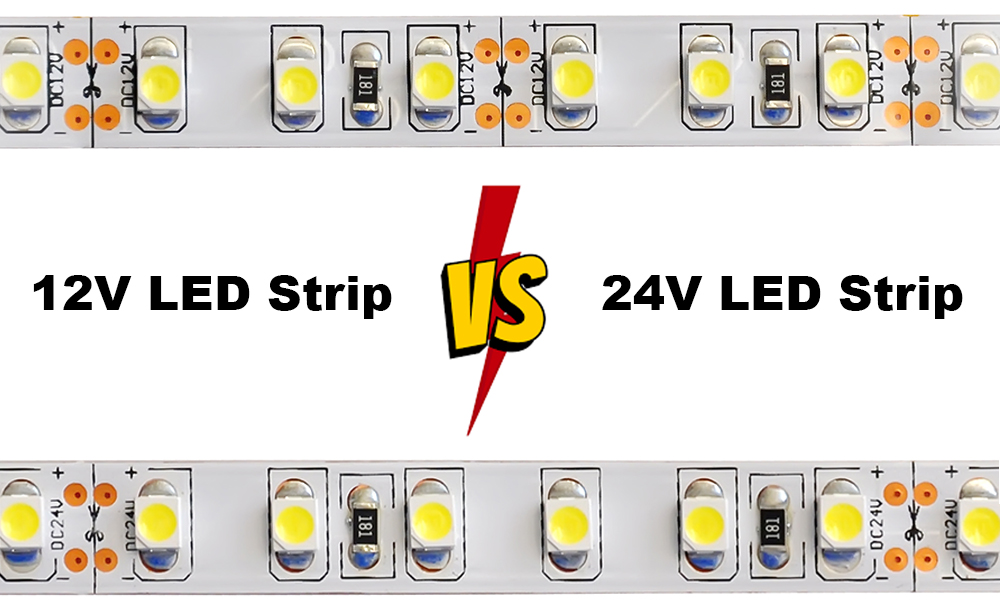
e.g., Both LED strip lights 12V vs 24V are 120 LEDs per metre, 3528 SMD, and from ADLED Light manufacturer using the same quality components.
The differences will be as follows:
1. Brightness
The voltage does not dictate the brightness of LED strip lights. The light output of 12V vs 24V LED tape light is fundamentally identical.
2. Current
LED strip lights 12 volt operate on 12 volts direct current (12V DC), while 24V strip LED require 24 volts direct current (24V DC) to operate. At the same power, the amperage of 24V LED tape light is half that of 12 volt DC LED strip lights. This means that for LED strip lights with the same brightness, LED strip 24V require less current.
3. Cut Length
12V LED light strip has 3 LEDs, the cut length is 25mm, and LED 24V strip lights has 6 LEDs, the cut length is 50mm. The cut points are located between the groups.
4. Run Length
For 12V LED ribbon lights, expect a maximum continuous run of approximately 5 meters before noticeable brightness reduction due to voltage drop. In contrast, 24V strip lights extend to roughly 10 meters, ideal for longer, uninterrupted lighting designs.
5. Compatible with LED power supplies
For optimal performance, match voltage: 12 volt LED tape lights with 12V LED power supply, 24V strip LED light with 24V LED driver. Incorrect voltage can cause damage.
6. Voltage Drop
Voltage drop diminishes LED light strip brightness and uniformity, particularly beyond 5m. 24 volt LED strip, by operating at lower current, significantly reduce resistance-induced losses, providing superior consistency over extended distances.
What are the advantages of 12V LED strip lights?
12 volt LED strip lights with their low-voltage characteristics, are an ideal choice for small-scale lighting projects. 12 volt DC LED strip are not only safe and easy to use, but also excel in scenarios with limited power sources or where efficiency and simplicity are prioritized. 12V DC LED strip lights are particularly suitable for applications that do not require long-distance wiring (within 5 meters) or where 12V LED power supply is already available, such as vehicle interiors and small residential lighting.
In terms of application scenarios, LED strip lights 12V are widely applicable for interior and exterior decorative lighting in cars, trucks, boats, decks, campers, and RVs, as well as small residential projects such as cabinets, shelves, closets, stairs, pathways, corridors, mirrors, TV backlights, and more. 12V strip light broad compatibility allows for easy integration with readily available 12V LED power supplies and battery systems, enabling quick realization of personalized lighting without the need for additional specialized equipment.
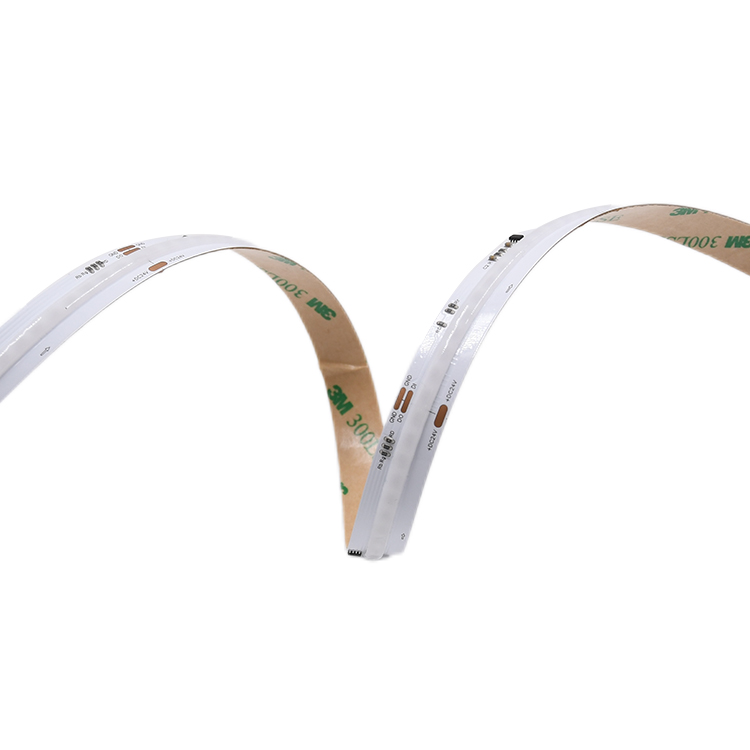
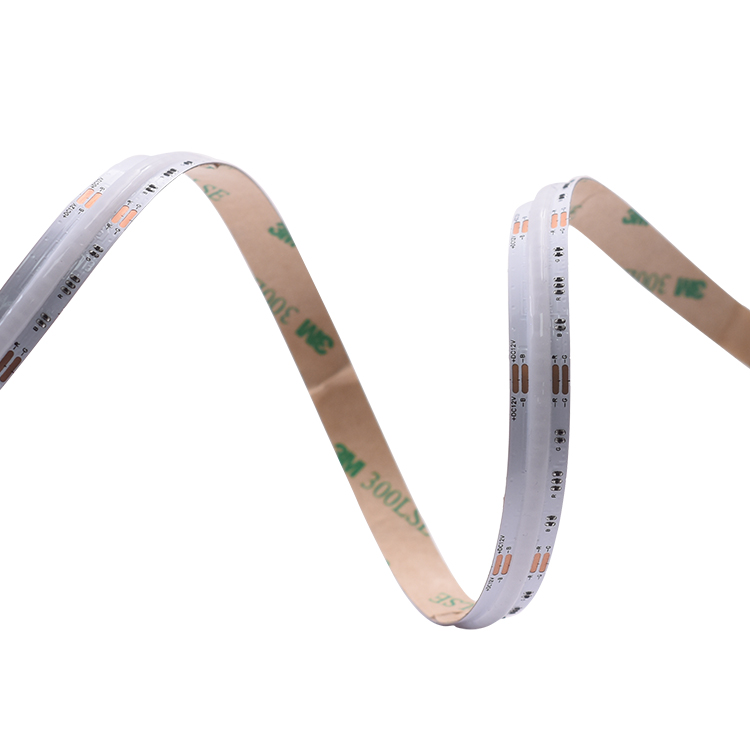
Top Selling 12V LED strip
 |
 |
 |
LED Strips 12 Volt |
12V COB LED Strip Lights |
12V LED RGB Light Strips |
 |
 |
 |
12V RGB LED Strip Lights |
LED Strip 12V DC |
White LED Light Strips 12V |
What are the advantages of 24V LED strip lights?
24V LED tape are designed for medium to large-scale lighting projects, with their high-voltage characteristics significantly improving efficiency and long-distance operation capabilities. This makes 24V LED light strip an ideal choice for continuous lighting needs, suitable for commercial spaces and large residential projects, ensuring uniform and stable light.
In application, 24V DC LED strip lights are widely used in commercial spaces such as offices, retail stores, shopping malls, hotels, restaurants, bars, and warehouses, as well as in residential areas requiring long-distance uniform lighting, such as ceiling coves, long hallways, and open-plan spaces. 24V strip light low-current characteristics not only reduce power loss but also allow for the use of thinner, more economical cables, simplifying installation. Even in small installations, 24V DC LED light strip can provide more stable light output and higher reliability.
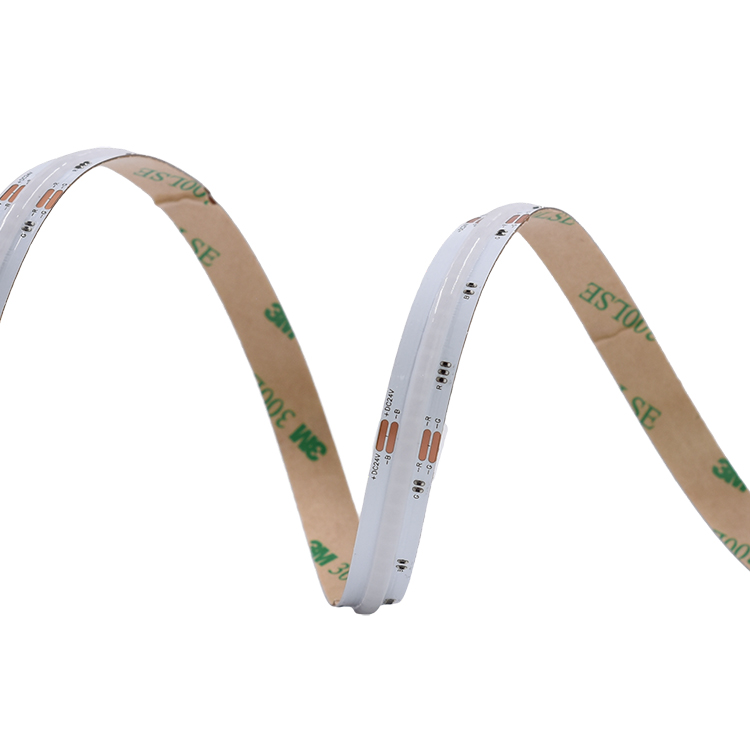
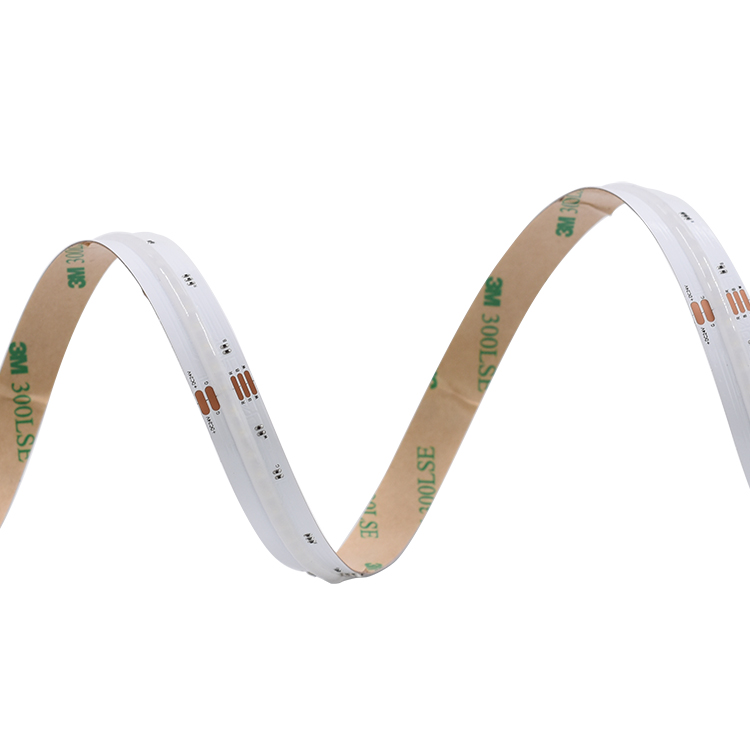
Top Selling 24V DC LED strip
 |
 |
 |
24 Volt LED Strip Lights |
24V LED Light Strip |
LED Strip Light 24V DC |
 |
 |
 |
24V COB LED Strip |
24V RGB LED Strip Lights |
CON RGBW LED Strip Light 24V |
Is 12V LED strip better than 24V LED strip?
Whether 24V LED tape are "better" than 12V LED light strip isn't a simple yes or no answer. Each voltage has its own advantages and disadvantages, making one better than the other depending on the specific application and your needs.
Here's a breakdown of where 24V LED tape light often outperform 12V LED ribbon lights:
1. Longer Run Lengths and Less Voltage Drop
This is the primary advantage of 24V. Because the voltage is higher, for the same power output, the current is halved. Lower current means less voltage is lost (voltage drop) along the length of the strip lights due to the wire's resistance. This allows for significantly longer continuous runs of 24V strip LED with consistent brightness compared to 12V LED strip lights, which can dim noticeably over longer distances.
2. Thinner Wiring
Due to the lower current in 24V systems, you can often use thinner gauge wires for the same power requirements. This can simplify installation and reduce wiring costs, especially in longer runs.
3. Higher Power Handling
24V systems can generally handle higher total power loads more efficiently. This is beneficial for installations with a large number of LED strip lights or high-power LED chips.
4. Potentially Higher Efficiency
While the efficiency of the individual LEDs is primarily determined by their design, the lower current in a 24V system can lead to less energy loss in the wiring due to resistance, resulting in slightly higher overall system efficiency.
However, LED strip 12V may be more suitable or advantageous in the following situations:
5. Shorter Cutting Intervals
12V strip light often have shorter cutting units, allowing for more precise length adjustments and greater installation flexibility, especially in applications requiring specific lengths.
6. Wider Compatibility
In certain low-voltage applications, such as automotive (typically 12V electrical systems), boats, and some smaller electronic projects, using LED 12V light strips directly can be more convenient and avoid the need for additional voltage conversion.
7. Potentially Lower Component Costs
While the cost of the strip light themselves may not differ significantly, 12V LED power supplies and some related accessories can sometimes be slightly less expensive than their 24V counterparts.
8. More Mature Market and Wider Selection
12V LED light strips have been on the market longer, so in some cases, there might be a slightly wider variety of models and specifications available.
Ultimately, the "better" choice depends entirely on the specifics of your project, your budget, and your performance goals. There's no universally superior option, only the one that is more suitable for your particular needs. Carefully evaluate your application before making a decision.
Wrapping Up
Whether you're creating a warm home atmosphere or illuminating a commercial space, LED strip 24V vs 12V can meet your lighting needs. The choice depends on the project scale and practical requirements: 12 volt strip lights offer flexible cutting, suitable for precise installations and small projects, such as car interiors and home decorations, and are highly compatible, easily integrating with existing 12V systems; 24VDC LED strip lights have significant advantages in long-distance wiring, with lower voltage drop and more uniform brightness, suitable for commercial and large spaces, and with lower current, wiring is more convenient and efficiency is higher.
ADLED is a professional LED strip light manufacturer,Provide high quality LED strip lighting with UL, CUL, ERP, CE, FCC, RoHS, etc certificates. ADLED also provide customizable LED light strips solutions to meet customers' special needs.If you are looking for highest quality LED strip lights, ADLED would be a good choice. You can visit ADLED's official website or contact their sales team to learn more details about their products and services.

FAQ
What are the common voltages for LED strip lights?
The most common are 12V DC, 24V DC, and high-voltage AC (e.g., 120V or 220-240V).
How do I choose between 12V and 24V LED strip lights?
For short runs and portable applications, LED strip 12V DC is often sufficient.
For long runs and commercial/industrial applications, DC24V LED strip is preferred.
If needing very precise cut lengths, 12 volt light strips may be better.
If long runs with consistant brightness is needed, 24 volt LED tape light is better.
Does voltage affect LED strip brightness?
No, voltage itself does not determine brightness. Brightness depends on factors like LED chip quality and density.
How do I match LED power supplies to 24V vs 12V LED strip?
Use a 12V power supply for DC 12V LED strip and a 24V power supply for 24V light strip. Mismatched voltage can damage the LED strips.
What are the maximum run lengths for 12V or 24V LED strip?
LED strip DC 12V typically have a maximum run of about 16.4 feet (5 meters), while 24V tape light can run up to 32.8 feet (10 meters) or more with minimal voltage drop.
How can I minimize voltage drop in my strip LED light installation?
Use shorter runs, thicker wires, higher voltage (24V), or inject power at multiple points along the LED strip lights.
What is the difference between 12V vs 24V LED strip lighting?
24 volt strip lights have lower current draw for the same power, resulting in less voltage drop, making them better for longer runs. 12V light strip are often used in automotive and smaller DIY projects.
Can I use a 24V power supply with a 12V LED light tape?
No. Using a higher voltage power supply than the LED strip's rating will damage the LED strip.
How do I calculate the power supply needed for my LED strip light?
Calculate the total wattage of the LED strip by multiplying the wattage per meter by the length. Choose a power supply with a wattage rating at least 20% higher to allow for headroom.