2026-05-27
Achieving Seamless Light: Why COB LED Strips Are Replacing SMD in High-End Hospitality Design
The lighting landscape of high-end hospitality is undergoing a quiet but profound transformation. Walk into any newly renovated five-star hotel lobby, luxury boutique, or high-end restaurant today, and you will notice something different about the light. It is smoother, more continuous, and free of the tiny bright spots that once betrayed the presence of LED strips. This is not an accident. This is the rise of COB LED technology.
For years, SMD (Surface-Mounted Device) LED strips have been the industry standard. They are reliable, cost-effective, and widely available. But in spaces where every visual detail matters—where light defines ambiance, guides guest experience, and communicates brand identity—SMD’s limitations have become increasingly apparent.
This blog explains why leading architectural lighting designers, luxury retail contractors, hotel engineering teams, museum curators, and smart home integrators are making the switch to COB LED strips. We will examine the technology behind seamless illumination, explore real-world applications across high-end sectors, and provide actionable guidance for specifying and installing COB systems that deliver flawless results.
And by the end of this article, you will understand why COB is not just an incremental improvement but a fundamental rethinking of what linear lighting can achieve.
Part One: Understanding the Technology Shift
Part Two: Why High-End Hospitality Is Leading the Switch
Part Three: Applications Across Key Market Segments
Part Four: Technical Specifications for Professional Specifiers
Part Five: Installation Best Practices for Architects and Contractors
Part Six: The Business Case for COB in Hospitality Projects
Part Seven: Future Trends and Innovations
Part Eight: Choosing the Right COB Strip Manufacturer
Conclusion
Frequently Asked Questions (FAQ)
Part One: Understanding the Technology Shift
-
What Is COB LED?
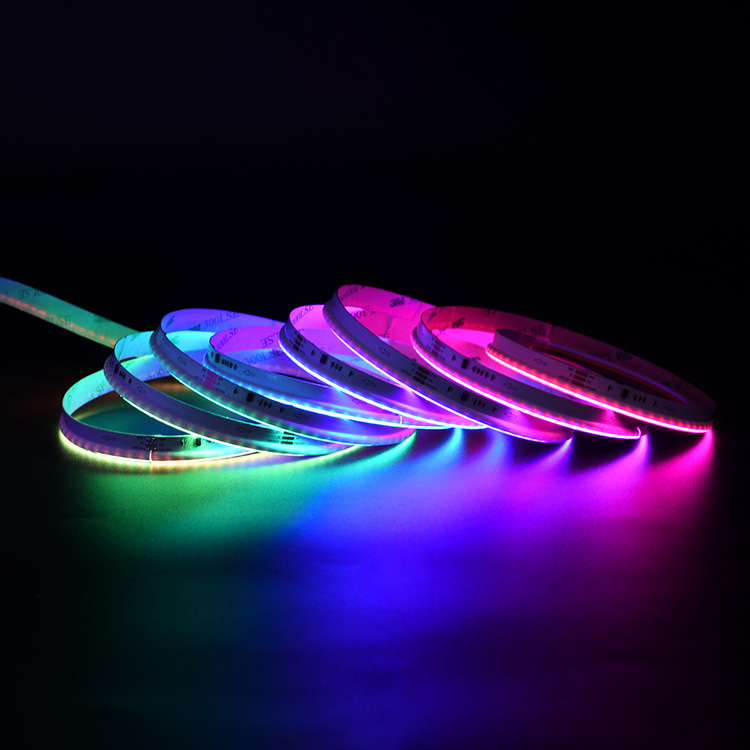
COB stands for Chip-on-Board. Unlike traditional SMD LEDs, where individual LED chips are mounted inside separate plastic housings and then soldered onto a circuit board, COB technology mounts multiple LED chips directly onto a single substrate and covers them with a continuous phosphor layer. The result is a single, unified light-emitting surface rather than a series of individual point sources.
This structural difference has profound implications. In a typical SMD strip, visible gaps separate each LED package, creating the “dotted-line” effect that becomes especially noticeable on reflective surfaces like polished marble, glass countertops, and high-gloss displays. COB strips, by contrast, produce a smooth, continuous line of light with no visible hot spots or gaps, even when viewed from close range.
The technical distinction extends beyond aesthetics. COB construction shortens the thermal dissipation path dramatically. Where SMD LEDs require heat to travel from the chip through die-attach adhesive, plastic housing, solder joints, and PCB before reaching a heat sink, COB chips transfer heat directly from the chip to the substrate to the heat sink in just three steps. This translates to lower junction temperatures, better lumen maintenance over time, and extended product lifespan.
-
SMD vs. COB: A Detailed Comparison
To fully appreciate why COB is winning in high-end applications, it helps to understand the trade-offs:
Light Uniformity. This is the most visible difference. SMD strips, even with high-density configurations, retain identifiable individual light points when viewed directly. COB eliminates this entirely, producing a seamless, dot-free illumination that appears as one continuous luminous line-. For applications where the light source remains visible—such as under-counter lighting, cove lighting in guest rooms, or display case illumination—this distinction is decisive.
1. Brightness Efficiency
Under equivalent power consumption, COB strips typically deliver 15 to 20 percent higher brightness than ordinary SMD strips while emitting softer, glare-free light-. This efficiency stems from the higher packing density of LED chips and the absence of light loss caused by individual plastic housings.
2. Thermal Performance
COB’s direct chip-to-substrate mounting provides superior thermal management. This is particularly important in hospitality environments where lighting operates for extended hours and reliability is non-negotiable. Better heat dissipation not only improves immediate performance but also protects long-term lumen maintenance and color stability.
3. Color Consistency
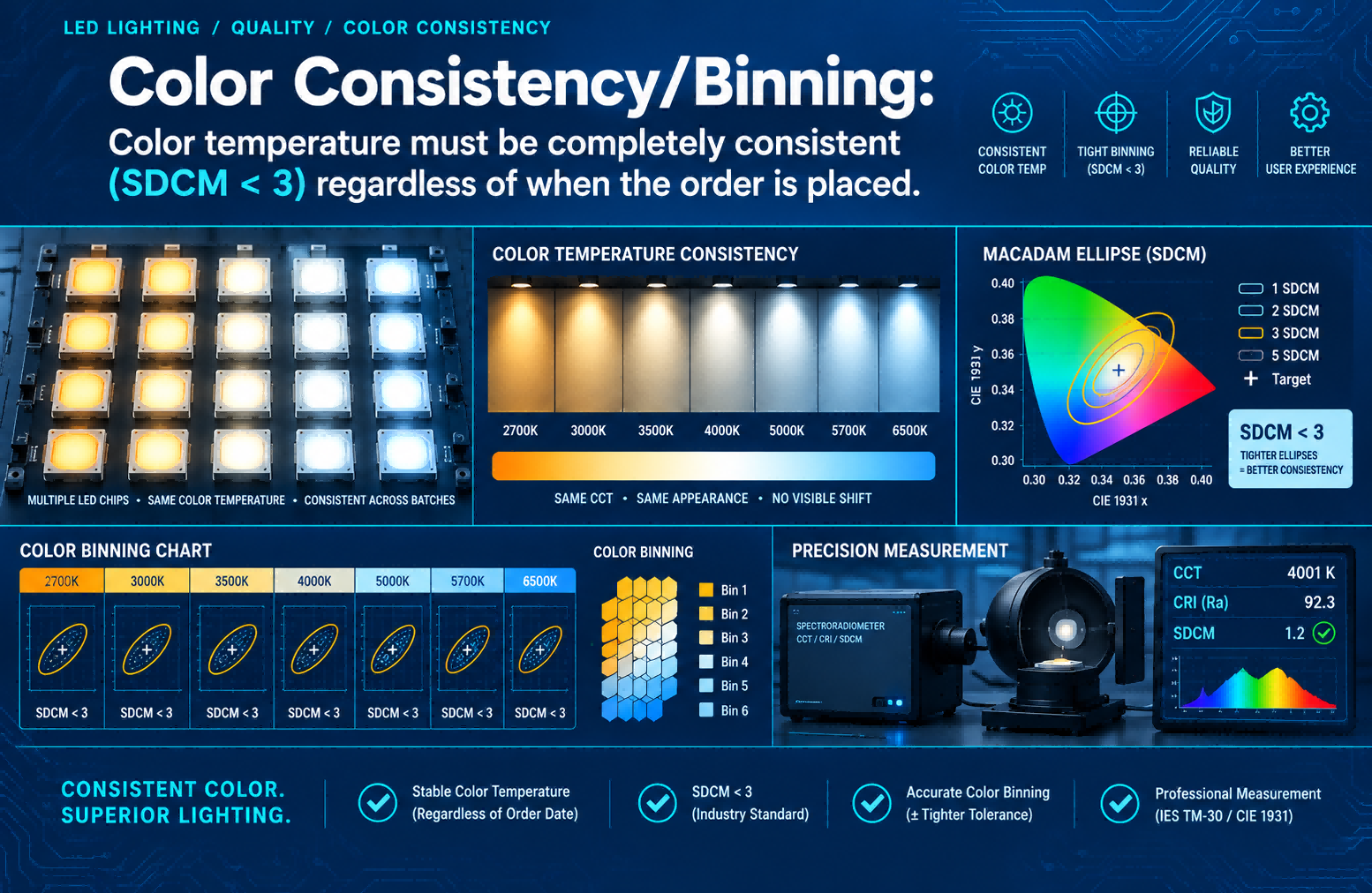
High-end projects demand tight color matching across long runs of linear lighting. COB technology achieves better chromaticity consistency because all chips on a single board share identical manufacturing conditions and are covered by a uniform phosphor layer. This eliminates the bin-to-bin color variation that can plague multi-segment SMD installations.
4. Cost Considerations
There is no avoiding the price difference. COB strips typically cost 20 to 30 percent more than equivalent SMD products-. However, in high-end hospitality and luxury retail projects, the visual premium justifies the investment. For applications where the strip is concealed within a diffuser channel, SMD may still be adequate. But for exposed or semi-exposed installations, the gap in aesthetic quality is unmistakable.
5. Application Fit
The industry is moving toward a clear segmentation: SMD remains cost-effective for large-scale general illumination where strip lights are hidden behind diffusers, while COB dominates in premium, close-viewing applications where light quality and visual continuity define the space.

Part Two: Why High-End Hospitality Is Leading the Switch
The hospitality sector has always been an early adopter of lighting technologies that enhance guest experience. Hotel lobbies, guest corridors, restaurants, and spa facilities are not just functional spaces—they are stages where every design element communicates the brand’s commitment to quality.
-
The Five-Star Lobby

The lobby sets the tone for an entire stay. It is where guests form their first impressions, where they linger during check-in, and where they return throughout their visit. Lighting in this space must do many things at once: create warmth and welcome, guide wayfinding, highlight architectural features, and project sophistication.
COB strips excel in these demanding conditions. When installed in ceiling coves, behind reception desks, or along feature walls, they produce a smooth wash of light without the distracting point-source effect that SMD strips would create at close viewing distances. The absence of hot spots is particularly valuable when lobbies feature polished stone floors or mirrored surfaces—reflective finishes that mercilessly reveal every imperfection in the light source.
-
Guest Corridors and Rooms

Hotel corridors present a unique challenge. The long, narrow geometry amplifies any inconsistency in lighting. SMD strips, with their visible individual light points, can create a marching line of bright spots that becomes increasingly obvious the longer the corridor. COB’s continuous illumination eliminates this problem entirely, producing a clean, calming light that guides guests without distracting them.
In guest rooms, COB strips are finding applications in headboard lighting, under-bed illumination, closet lighting, and bathroom mirror lighting. The smooth, dot-free output creates a restful ambiance that aligns with contemporary hospitality design preferences for clean lines and minimal visual clutter.
-
Restaurants and Bars

Dining experiences are increasingly designed for social media sharing. Restaurant and bar owners know that a well-lit space—one that photographs beautifully—generates organic marketing through guest posts. COB’s seamless light creates exceptional photogenic results, eliminating the uneven hot spots that can ruin otherwise carefully composed images.
Behind-bar shelving, wine display cases, and feature wall lighting all benefit from COB’s uniform output. The technology also pairs exceptionally well with dimming systems, enabling restaurants to transition smoothly from bright daytime service to intimate evening ambiance without flicker or uneven brightness.
Part Three: Applications Across Key Market Segments
COB technology is not limited to hotels. The same properties that make it valuable in hospitality—seamless illumination, superior color rendering, thermal efficiency, and design flexibility—are driving adoption across multiple high-end sectors.
-
Luxury Retail and Premium Showcases

Retail lighting does more than illuminate products. It influences purchase decisions, communicates brand values, and creates the atmosphere in which customers evaluate merchandise. For luxury brands selling jewelry, watches, handbags, and premium apparel, lighting quality is directly linked to perceived product value.
COB LED strips are becoming the standard for illuminated display cases and shelving systems. Their smooth, uniform light eliminates harsh shadows and hot spots, allowing customers to see products accurately and appreciate their true colors and finishes. For a jewelry display case, where diamonds and precious metals reflect light in complex ways, the difference between COB and SMD is immediately visible to discerning customers.
High CRI versions of COB strips, with CRI ratings of 90 or 95 and chromaticity consistency within ≤3 SDCM, are essential for luxury retail environments-. These specifications ensure that products appear true to life—a diamond’s brilliance is accurately rendered, a leather handbag’s texture is properly revealed, and a garment’s color is precisely as the designer intended.
Linear LED strips now constitute 35 to 40 percent of the display and shelf lighting market, and within this segment, COB technology is rapidly capturing premium installations where light quality is prioritized over initial cost.
-
Museums and Art Galleries

Museum lighting imposes the most demanding requirements in all of architectural illumination. Artworks must be rendered with absolute color accuracy. Light levels must be carefully controlled to prevent damage to sensitive materials. And the lighting itself must remain invisible—present as illumination but absent as a visual distraction.
COB LED strips meet these demands. Their high-density chip arrangement and uniform phosphor coating produce light that is exceptionally consistent across long runs. For exhibition cases, plinths, and wall-washing installations, this consistency ensures that no uneven illumination distracts from the artwork.
The color rendering requirements in museum applications are exacting. Professional-grade COB strips designed for museum and gallery use deliver CRI ratings of 95 or higher, ensuring that paintings, textiles, and artifacts appear with accurate color reproduction-. This level of color fidelity is matched with extremely tight chromaticity control, often within 2 SDCM, so that multiple segments of strip lighting installed in different locations produce visually identical light.
Thermal management is equally critical in museum environments. COB’s efficient heat dissipation reduces the thermal load on sensitive artifacts, while the low-profile design allows strips to be integrated into display cases without compromising aesthetics or requiring visible hardware.
-
High-End Whole-Home Smart Integration

The residential luxury market is embracing comprehensive smart home systems that integrate lighting, climate control, security, and entertainment. Within these integrated systems, lighting plays the most visible role in shaping daily experience.
COB strips are an ideal fit for whole-home smart integration. They work seamlessly with leading control protocols, including DALI, DMX, Zigbee, and proprietary smart home systems. The ability to dim smoothly across the full 0-to-100-percent range is essential for residential applications, where lighting must transition from bright task illumination to intimate evening ambiance.
Smooth dimming requires careful matching of drivers and controllers. When properly specified, COB strips using high-frequency PWM dimming produce flicker-free light across the entire dimming curve, with 256 or more gray scale steps for precise brightness control-. This level of precision is particularly valuable for circadian lighting applications, where color temperature and intensity change throughout the day to align with natural human rhythms.
The visual appeal of COB matters in residential settings as well. Homeowners who invest in luxury smart systems expect every visible detail to meet aesthetic standards. COB strips installed in kitchen under-cabinet positions, bookshelf cove lighting, stair tread illumination, and bathroom mirror lighting all benefit from seamless, dot-free output.
Part Four: Technical Specifications for Professional Specifiers
For design professionals specifying COB systems, understanding key technical parameters is essential to achieving successful outcomes.
-
Luminous Efficacy
Modern COB strips achieve exceptional energy efficiency. Premium products deliver 90 to 150 lumens per watt or higher, depending on color temperature and CRI specifications-. This means that even high-output installations remain energy-efficient, an important consideration for projects pursuing LEED certification or other sustainability credentials.
Some high-performance COB platforms now achieve 200 lumens per watt while maintaining CRI 90 or 95, eliminating the traditional trade-off between color quality and efficiency-. For designers specifying lighting for luxury projects, this breakthrough means they no longer need to choose between beautiful light and sustainable operation.
-
Color Rendering Index (CRI) and R9
Standard commercial lighting often specifies minimum CRI of 80. High-end hospitality and retail projects demand significantly more. Professional COB strips deliver CRI 90 as a baseline, with CRI 95 widely available and CRI 97 products offered for museum and gallery applications.
Beyond CRI, the R9 value—which measures red color rendering—has become an important specification for hospitality and retail applications where warm skin tones, rich wood finishes, and vibrant product colors must be accurately represented. Premium COB products maintain strong R9 values alongside high overall CRI.
-
Chromaticity Consistency (SDCM)
Color matching across multiple strip segments or across a single long run is critical for professional installations. Industry best practice for high-end projects calls for SDCM ≤3, with many specifiers requiring SDCM ≤2 for critical applications where any color shift would be immediately apparent.
-
Color Temperature Range
Professional COB strips are available across the full color temperature spectrum. Warm white from 2200K to 3000K predominates in hospitality environments, creating inviting, relaxed atmospheres. Neutral white at 3500K to 4000K appears in retail and museum applications where balanced, accurate illumination is prioritized. Tunable white products that adjust color temperature throughout the day are increasingly specified for wellness-focused hospitality and residential projects.
-
Lifetime and Lumen Maintenance
Quality COB strips are rated for L70 lifetimes of 50,000 hours or more, meaning they maintain at least 70 percent of initial luminous output at the rated lifetime point-. Premium products, backed by LM-80 test data and TM-21 lifetime projections, extend to 35,000 hours or more of certified lumen maintenance.
Real-world lifetime depends heavily on operating temperature. Proper thermal management—including mounting on aluminum channels that act as heat sinks—is essential to achieving rated lifetimes, particularly in enclosed installations or high-ambient-temperature environments.
-
Dimming and Control
COB strips are compatible with multiple dimming technologies. PWM dimming remains the most common approach, delivering smooth, flicker-free dimming when specified with compatible drivers and controllers-. For installations requiring integration with existing building control systems, phase-cut dimming and 0-10V dimming options are available. DALI and DMX control are specified for projects requiring advanced scene-setting and color-tuning capabilities.
-
Waterproofing Ratings
IP20 ratings suit interior dry locations such as coves, cabinets, and display cases. IP54 ratings provide protection against dust and splashing water for bathroom and kitchen installations. IP65 and IP68 ratings are available for outdoor, wet-location, and submerged applications.
Part Five: Installation Best Practices for Architects and Contractors
Proper installation is the difference between a COB system that performs beautifully for years and one that disappoints within months.
-
Surface Preparation and Mounting
The adhesive backing on COB strips bonds effectively only to clean, dry, smooth surfaces. In hospitality installations, where strip lighting is often installed during final fit-out phases, dust and debris are common adversaries. Thoroughly cleaning mounting surfaces with isopropyl alcohol before installation significantly improves adhesion and prevents future peeling.
For maximum adhesion longevity—particularly in high-humidity environments such as hotel bathrooms, spa facilities, or pool areas—supplemental mechanical fastening or aluminum mounting channels with retaining clips are recommended.
-
Thermal Management
Heat is the primary enemy of LED lifespan. COB strips generate heat that must be dissipated to maintain junction temperatures within rated specifications. Installing strips on aluminum mounting channels that serve as heat sinks is essential for full lifetime achievement. This recommendation applies doubly to enclosed spaces with limited natural airflow and high ambient temperature environments.
For high-power COB strips generating significant heat output, channels should be selected with sufficient thermal mass and surface area to maintain safe operating temperatures. In continuous-run installations exceeding recommended maximum lengths, multiple power feed points should be considered to reduce current loading and associated heat generation.
-
Voltage Drop Management
Voltage drop—the progressive reduction in voltage along the length of a strip—causes visibly dimmer output at the far end of long runs. For 12V COB strips, maximum practical lengths are limited to approximately 5 meters before voltage drop becomes visible. For 24V strips, runs of 10 meters or more are feasible with proper wire gauge selection.
For installations requiring runs longer than these limits, multiple power injection points or shorter runs with separate drivers are necessary. Planning voltage drop at the design stage prevents the unpleasant surprise of uneven brightness in completed installations.
-
Cutting and Connection
COB strips are designed to be cut at marked intervals, typically every 25mm to 50mm depending on the product. Cuts must be made precisely at the indicated points and only between LED segments. Cutting through the circuit traces prevents proper function of the remainder of the strip.
Soldered connections are the most reliable method for joining strip segments or attaching lead wires. Solderless connectors are available but should be used with caution, as they introduce potential points of failure. In hospitality installations where reliability is paramount, soldered connections are strongly preferred.
-
Diffuser Selection
While COB strips are significantly smoother than SMD alternatives, matching strips with appropriate diffusers produces optimal results. Deep-profile channels with frosted or opal diffusers soften and blend the light further, eliminating any residual perception of individual light points. For applications where the light source remains visible—such as exposed linear installations—professional specifiers use channels with diffusers designed specifically for COB output.
Part Six: The Business Case for COB in Hospitality Projects
For hotel engineering contractors and procurement teams, the decision to specify COB strips involves balancing initial investment against long-term value.
-
Energy Savings
COB’s superior luminous efficacy translates directly into reduced energy consumption and lower utility bills. In a large hotel with thousands of linear feet of LED strip lighting, the annual energy savings from specifying high-efficacy COB strips can be substantial.
-
Maintenance Reduction
SMD strips fail more frequently than COB strips because of higher operating temperatures and the multiple potential failure points introduced by individual LED packages. COB’s reduced component count and better thermal management mean fewer failures, less frequent replacement, and lower maintenance labor costs.
-
Extended Lifetime
Reliable COB strips achieve L70 lifetimes exceeding 50,000 hours—over 11 years of continuous operation, or more than 20 years of typical hospitality usage patterns. This extended lifetime eliminates multiple replacement cycles compared to lower-quality alternatives.
-
Enhanced Guest Satisfaction
While difficult to quantify directly, superior lighting quality measurably improves guest satisfaction scores. A lobby that feels warm and welcoming, guest rooms that feel calm and restful, and restaurants that photograph beautifully for social media all contribute to positive guest reviews and return visits.
-
Brand Alignment
For luxury hotel brands, lighting quality communicates brand values as directly as any other design element. Specifying COB strips signals a commitment to quality and attention to detail that resonates with discerning guests.
Part Seven: Future Trends and Innovations
The COB LED strip market is evolving rapidly, with several trends shaping product development.
-
Higher Efficacy Boundaries
COB efficacy continues to improve, with leading products now exceeding 200 lumens per watt while maintaining CRI 90 or higher-. As efficacy rises, the energy savings case for replacing existing lighting with new COB installations becomes increasingly compelling.
-
Narrower Profiles
The demand for nearly invisible lighting continues to drive miniaturization. Ultra-narrow COB strips as small as 2.8mm in width are now available, enabling lighting integration into furniture, millwork, and architectural details where conventional strips would not fit.
-
Enhanced Color Tuning
Tunable white COB strips—allowing independent control of warm and cool white channels—are enabling circadian lighting installations in hospitality and residential projects. More advanced full-color COB strips with addressable control are bringing dynamic color-changing capabilities to entertainment and event lighting applications.
-
Smart Integration
COB strips are increasingly designed with native support for major smart control platforms. DALI-2, DMX512, and wireless protocols are integrated directly into strip controllers, simplifying installation and reducing component count.
-
Sustainability Focus
Demand for environmentally responsible lighting is accelerating. COB strips with improved efficacy reduce operational carbon emissions. Products meeting ErP energy efficiency standards and pursuing RoHS compliance are increasingly preferred by sustainability-focused project owners. Some manufacturers now offer COB strips with ErP energy efficiency class D ratings, achieving energy savings of up to 37 percent compared to conventional COB products.
-
Expanded Color Temperature Ranges
Extremely warm color temperatures, including 1800K and 2200K, are becoming available for applications requiring candlelight-like ambiance. At the opposite end of the spectrum, high-CRI cool white options at 5000K and above serve applications requiring neutral daylight simulation.
Part Eight: Choosing the Right COB Strip Manufacturer
Not all COB strips are created equal. For professional projects with demanding requirements, selecting the right manufacturing partner matters.
-
What to Look For
LM-80 Testing. Reputable manufacturers provide LM-80 test data documenting lumen maintenance under controlled conditions. This data, analyzed using TM-21 methods, projects expected lifetime under actual operating conditions.
Chromatical Consistency. Manufacturers capable of delivering SDCM ≤2 consistency across production runs demonstrate the process control necessary for high-end projects.
Customization Capability. For projects requiring specific color temperatures, CRI values, strip widths, or IP ratings, manufacturers offering customization services provide significant design flexibility.
Warranty and Support. Professional projects demand professional support. Look for manufacturers offering comprehensive warranties—5-year coverage is increasingly standard for premium COB products-—and responsive technical support for specifiers and contractors.
At ADLED Lights (www.adledlights.com), we manufacture premium COB LED strips engineered specifically for the demands of high-end hospitality, luxury retail, museum, and architectural applications. Our products combine exceptional light quality with robust thermal management and verified long-term reliability.
Conclusion
The transition from SMD to COB in high-end hospitality and commercial lighting is not a passing trend. It reflects the industry’s growing understanding that in spaces where light quality defines experience, the small incremental cost of COB technology delivers outsized returns in visual performance, energy efficiency, operational reliability, and guest satisfaction.
For architectural lighting designers, luxury retail specifiers, hotel engineering contractors, museum curators, and smart home integrators, the question is no longer whether to consider COB, but how to specify it correctly for each unique application. Those who master this technology will deliver projects that stand apart—spaces where light serves not as an afterthought but as a defining element of design excellence.
FAQ
What is the difference between COB and SMD LED strips?
COB (Chip-on-Board) strips mount LED chips directly onto a substrate and cover them with a continuous phosphor layer, producing a seamless, dot-free line of light. SMD (Surface-Mounted Device) strips mount individual LED packages separately, which creates visible gaps and hot spots. COB also offers better thermal performance, higher luminous efficacy, and more consistent color rendering than SMD in most applications.
Are COB LED strips more expensive than SMD strips, and is the cost difference justified?
COB strips typically cost 20 to 30 percent more than equivalent SMD products. In high-end hospitality, luxury retail, and museum applications, the superior light quality—seamless, dot-free illumination with higher CRI values—makes the investment well worthwhile. The improved thermal management also translates to longer lifespan and lower maintenance costs over time.
What CRI rating should I specify for COB strips in luxury retail or museum applications?
For high-end retail and hospitality, specify CRI ≥90 as a baseline requirement. For museum and gallery applications where color accuracy is critical, specify CRI ≥95. For the most demanding applications, CRI 97 or higher is available. Also pay attention to R9 values—which measure red color rendering—as they are especially important for accurate representation of warm skin tones, wood finishes, and many premium materials.
Can COB strips be dimmed without flicker, and what control systems do they work with?
Yes, premium COB strips dim smoothly without flicker when paired with compatible drivers and controllers. High-frequency PWM dimming delivers full 0–100% control with 256 or more gray scale steps. COB strips integrate with leading control protocols including DALI, DMX, 0-10V, and phase-cut dimming, as well as major smart home and building automation systems.
How long do COB LED strips last, and how should they be installed for maximum longevity?
Quality COB LED strips are rated for L70 lifetimes of 50,000 hours or more—over 11 years of continuous operation. For maximum lifespan, install strips on aluminum mounting channels that act as heat sinks, especially in enclosed spaces or high-ambient-temperature environments. Use proper voltage management with 24V strips for runs longer than 10 meters, and make soldered rather than soldered connections for maximum reliability.