2026-05-19
Backlighting vs Edgelighting Which LED Solution is Best for Large Formats
Backlighting vs. Edgelighting: Which LED Solution is Best for Large Formats?
In the evolving landscape of commercial signage and architectural lighting, the demand for large-format illumination has surged. From the sleek, frameless displays in luxury retail flagships to the towering wayfinding signs in international airports, the choice of lighting technology defines not just visibility, but brand perception. For visual merchandisers, architects, and signage integrators, the central debate often revolves around two dominant technologies: LED backlighting vs edge lighting.
Selecting the wrong solution can lead to uneven illumination, excessive energy consumption, or prohibitive maintenance costs. This comprehensive guide analyzes the technical nuances, performance metrics, and application-specific benefits of both technologies to help you determine the best LED solution for large light boxes. Whether you are designing a high-end boutique display or a robust transit hub directory, understanding these differences is critical for project success.
1. LED Backlighting vs Edge Lighting: Understanding the Core Differences for Large Formats
To make an informed decision, one must first understand the fundamental mechanical and optical differences between these two approaches.
Direct-lit LED technology for signs, commonly known as backlighting, involves mounting LED strips or modules directly on the back panel of the light box cabinet. The light emits forward, passing through a diffuser sheet or fabric before exiting the face of the sign. This method relies on the "throw distance"—the space between the LEDs and the face—to allow light to mix and spread evenly.
In contrast, edge-lit LED technology for large formats injects light from the perimeter of the panel. Side-lit LED modules comparison reveals that this approach uses specialized LED bars mounted on the frame’s edges, directing light into a Light Guide Plate (LGP) or a diffusion system. The LGP redistributes the light across the entire surface using micro-printed dots or patterns.
-
Key Structural Distinctions
-
Depth Requirement: Backlighting typically requires a deeper cavity (often 50mm to 200mm+) to achieve uniformity, whereas slim profile LED light box solution designs using edge-lighting can be as thin as 10-20mm.
-
Light Path: Backlighting is a direct projection; edge-lighting is a lateral distribution system.
-
Component Complexity: Backlighting relies on simple strip placement; edge-lighting requires precision-engineered edge-lit LED bars with light guide plate systems and secondary optics.
For projects where depth is constrained by architectural elements, such as recessed wall niches in luxury hotels, edge-lighting is often the only viable option. Conversely, for massive outdoor billboards where depth is less of a concern, backlighting offers a more cost-effective structure.
Backlit LED Strips for Light Boxes |
Backlighting CCT LED Bar |
RGBW Backlight LED Bar |
Edgelighting LED Bar |
Edge Lighting |
RGBW Edge Lighting |
2. How to Choose the Best LED Solution for Large Light Boxes: Key Decision Factors
Determining the best LED solution for large light boxes requires balancing aesthetic goals, budget constraints, and operational requirements. Here are the primary factors decision-makers must evaluate:
-
Aesthetic Requirements and Uniformity
Luxury brands like those in high-end retail demand flawless, seamless illumination. Uniform lighting for fabric light boxes is non-negotiable for displaying high-resolution graphics without visible "hotspots" or dark zones. Edge-lit systems generally offer superior uniformity in slim profiles due to the precise engineering of the light guide plate. However, modern high brightness LED strips for backlit signs with wide beam angles can also achieve excellent uniformity if the cabinet depth is sufficient.
-
Size and Scale of the Installation
As the size of the light box increases, the physics of light distribution changes. For extremely large formats (e.g., >3 meters in width), backlighting becomes more efficient because it scales linearly. Adding more rows of LEDs is simpler than engineering a massive, structurally sound light guide plate for edge-lighting. However, for medium-to-large formats where a sleek, modern look is preferred, edge-lit LED modules for signage provide a premium finish.
-
Maintenance and Accessibility
In environments like shopping malls or airports, downtime is costly. Backlit systems often allow for easier access to individual LED strips if the front panel is removable. Edge-lit systems, while robust, may require more specialized service if the light guide plate or edge modules fail. Consider the LED warranty and after-sales support terms offered by your supplier. A reliable partner will provide modular components that simplify repairs.
-
Budget and Total Cost of Ownership (TCO)
While edge-lit systems may have a higher initial component cost due to the LGP and specialized optics, they often save on material costs for the cabinet structure (less aluminum/extrusion). Backlighting has lower LED costs but may require more robust framing to support the depth. Evaluate factory direct LED pricing for large projects to understand the true TCO, including energy consumption and maintenance labor.
3. The Advantage of Edge-Lit LED Modules for Signage: Slim Profiles & Uniform Lighting for Fabric Light Boxes
Edge-lighting has become the gold standard for premium retail and exhibition environments. Its primary advantage lies in its ability to deliver uniform lighting for fabric light boxes and acrylic panels within an ultra-slim footprint.
-
Precision Optics for Flawless Illumination
The core of a high-quality edge-lit system is the optical design. Using 45°x15° asymmetric lens edge-lit LED technology, manufacturers can direct light precisely into the light guide plate, minimizing loss and maximizing efficiency. This directional control ensures that light travels deep into the panel, eliminating the "fall-off" effect often seen in poorly designed systems.
-
Ideal for SEG (Silicone Edge Graphics)
Softbox or SEG fabric light boxes are increasingly popular in retail and exhibitions due to their ease of graphic replacement. SEG fabric light box LED solution implementations using edge-lighting provide a tension-free, wrinkle-free appearance with even backlighting that enhances the vibrancy of printed fabrics. The diffuse LED for fabric light boxes ensures that the texture of the fabric is illuminated without revealing the underlying structure.
-
Aesthetic Versatility
Edge-lit systems enable frameless LED light box technology, creating a floating effect that is highly desirable in modern interior design. This low-profile LED lighting system is perfect for:
-
Luxury retail showcases (jewelry, watches, fashion)
-
Corporate lobby branding
-
High-end hospitality signage
By choosing edge-lit LED modules for signage, designers can integrate lighting seamlessly into architectural elements without bulky protrusions.
4. Why High Brightness LED Strips for Backlit Signs Are Ideal for Extra-Large Formats
While edge-lighting dominates the slim-profile market, high brightness LED strips for backlit signs remain the powerhouse for extra-large and outdoor applications.
-
Superior Lumen Output and Reach
Backlighting utilizes 160° beam angle LED strips for backlighting, which cast light broadly across the diffuser. This wide dispersion is ideal for deep cabinets, ensuring that every corner of a large format sign is illuminated. For outdoor signage competing with sunlight, the ability to pack high-density LEDs into a cabinet allows for significantly higher nit levels (brightness) than most edge-lit systems can achieve.
-
Cost-Effectiveness at Scale
For massive installations, such as building wraps or large highway billboards, the cost of manufacturing giant light guide plates for edge-lighting becomes prohibitive. Direct-lit LED technology for signs allows for a modular approach: standard LED strips are mounted on a grid. This simplifies production and reduces waste. Bulk order LED modules for signage often yield better pricing for backlit components due to their standardized nature.
-
Robustness and Heat Dissipation
Backlit systems typically have more internal air volume, allowing for better passive heat dissipation. This contributes to the 50,000 hours L70 LED lifetime often cited in high-quality modules. The aluminum PCB LED heat dissipation in backlit strips is highly effective, ensuring stable performance even in demanding environments.
5. Technical Comparison: Uniformity, Brightness, and Energy Efficiency in Large Scale Installations
When comparing LED backlighting vs edge lighting, technical specifications provide the objective data needed for engineering decisions.
-
Uniformity Metrics
Edge-Lit: Achieves >90% uniformity consistently in slim profiles thanks to light guide plate efficiency optimization and secondary optics LED modules. The no hotspot LED technology is inherent to well-designed LGPs.
Backlit: Uniformity depends on the LED pitch (spacing) and cabinet depth. A general rule is a 1:1 ratio between LED spacing and depth. Wide angle LED for uniform backlit coverage helps, but improper spacing can lead to visible dotting.
-
Brightness and Efficiency
Efficiency: Modern 120lm/W high efficiency LED modules are available in both formats. However, edge-lit systems incur some loss due to light trapping in the LGP. Backlit systems are generally more optically efficient as light travels directly to the face.
Brightness: High lumen output LED strips in backlit configurations can easily exceed 5,000 nits, making them suitable for direct sunlight. Edge-lit systems typically cap around 2,000-3,000 nits, which is sufficient for indoor and shaded outdoor use.
-
Color Consistency
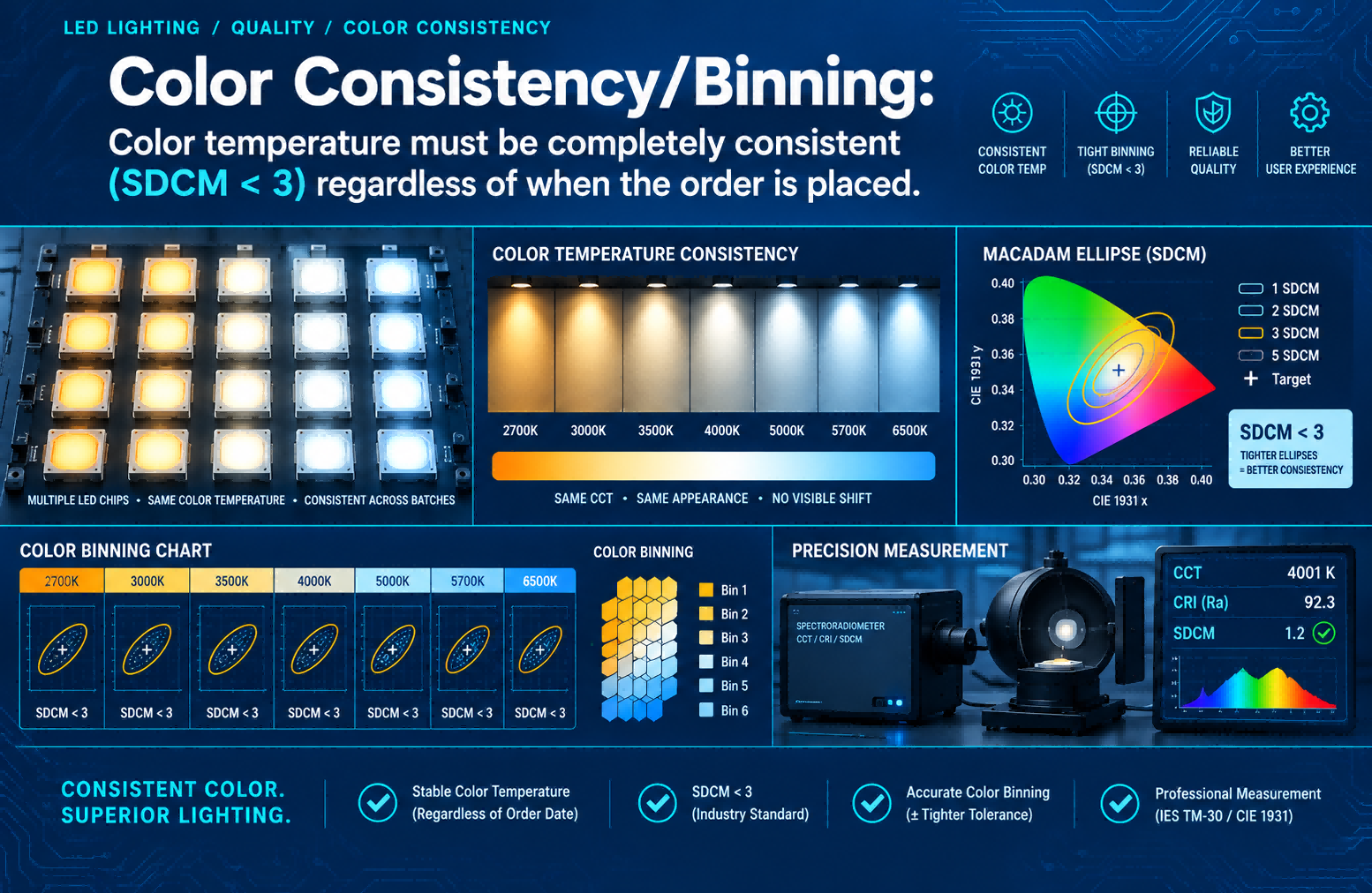
Both technologies rely on binning control LED strips to ensure consistent color temperature LED modules. Look for suppliers who guarantee MacAdam ellipse <3 LED quality to prevent color shifts across large surfaces. CRI >90 LED for luxury goods display is essential for retail, regardless of the lighting method.
6. Matching LED Technology to Application: Retail, Exhibition, and Transportation Signage
Different industries have distinct priorities. Here is how to match the technology to the sector:
-
Luxury Retail and Shopping Malls
Priority: Aesthetics, Uniformity, Color Accuracy.
Recommendation: Edge-lit LED modules for signage. The slim profile complements high-end interior design, and uniform lighting for fabric light boxes ensures merchandise looks its best. 3000K warm white LED for luxury retail creates an inviting atmosphere.
-
International Exhibitions and Events
Priority: Speed of Installation, Weight, Modularity.
Recommendation: Modular LED light box components using edge-lighting. These systems are lightweight and easy to assemble/disassemble. Wholesale LED strips for exhibition stands often feature quick-connect systems for rapid deployment.
-
Transportation and Infrastructure (Airports, Metro)
Priority: Durability, High Brightness, Low Maintenance.
Recommendation: High brightness LED strips for backlit signs. These environments require robust IP67 LED modules for outdoor light boxes or dustproof LED modules for airports. Backlit systems are easier to maintain in hard-to-reach ceiling installations. Vibration proof LED for transit signs is critical for metro applications.
7. Installation and Maintenance: What Integrators Need to Know About Large Format LED Systems
Successful implementation relies on proper installation and long-term maintenance planning.
-
Installation Best Practices
Backlighting: Ensure even spacing of backlit LED strips for light boxes. Use aluminum channels for heat sinking. Verify that the diffuser is taut to prevent sagging.
Edge-Lighting: Handle light guide plates with care to avoid scratches. Ensure edge-lit LED bars with light guide plate are securely coupled to prevent light leakage. Use optical simulation for light boxes during the design phase to predict performance.
-
Maintenance and Support
Choose a LED lighting supplier for large format signage that offers comprehensive support.
Technical Datasheet Download for LED Modules: Always keep these on hand for reference.
LED Sample Request for Large Format Testing: Test samples in situ before full production.
24/7 Engineering Consultation LED: Access to expert advice can troubleshoot issues quickly.
For large projects, consider a long-term LED partnership for retail chains to ensure consistency across multiple locations. Global shipping LED manufacturer for projects capabilities are essential for international rollouts.
8. Partner with a Professional LED Manufacturer for Custom Large Format Solutions
Selecting the right manufacturing partner is as crucial as choosing the right technology. A commercial LED module manufacturer for light boxes with extensive experience can guide you through the complexities of large-format lighting.
-
Why Choose a Specialized Manufacturer?
Customization: An OEM LED strip factory for signage companies can tailor solutions to your specific dimensions and brightness requirements. Custom LED solutions for retail displays ensure your brand stands out.
Quality Assurance: Look for an ISO9001 certified LED manufacturer with SGS audited LED lighting factory status. UL listed LED modules for signage and CE RoHS compliant LED light boxes are mandatory for many markets.
R&D Capability: A Shenzhen LED R&D team for signage with 13 years experience LED manufacturer China background brings deep technical expertise. China professional LED technology has advanced significantly, offering world-class quality at competitive prices.
-
Supply Chain Reliability
As a China LED export supplier global, a reputable factory ensures timely delivery. Container load LED lighting solutions and bulk discount LED lighting for malls make large-scale projects economically viable. Flexible MOQ LED supplier for prototypes allows for testing before committing to large orders.
9. Conclusion
The debate of LED backlighting vs edge lighting is not about which is universally better, but which is best for your specific application. For slim, high-aesthetic indoor installations, edge-lit LED modules for signage provide unparalleled uniform lighting for fabric light boxes. For massive, high-brightness outdoor or industrial applications, high brightness LED strips for backlit signs offer the robustness and scalability required.
By understanding the technical distinctions, evaluating your project's unique needs, and partnering with a reliable LED supplier for large formats, you can ensure your lighting investment delivers impact, efficiency, and longevity. Whether you need LED lighting solutions for airport signage or custom LED solutions for retail displays, the right technology exists to bring your vision to light.
10. FAQ
What is the main difference between LED backlighting and edge lighting?
LED backlighting vs edge lighting differs primarily in light source placement. Backlighting mounts LEDs behind the diffuser, requiring depth for light mixing. Edge lighting injects light from the sides into a light guide plate, allowing for ultra-slim profiles.
Which solution offers better uniformity for fabric light boxes?
Uniform lighting for fabric light boxes is often easier to achieve with edge-lit systems due to the precision of the light guide plate. However, high-quality backlit systems with proper LED spacing can also achieve excellent uniformity.
Can edge-lit modules be used for outdoor signage?
Yes, provided they are rated appropriately. Look for IP67 LED modules for outdoor light boxes and weatherproof LED lighting for exterior use. Edge-lit systems must be sealed effectively to prevent moisture ingress.
How do I choose the best LED solution for large light boxes?
Consider size, depth constraints, brightness needs, and budget. For slim, premium looks, choose edge-lighting. For massive, high-brightness needs, choose backlighting. Consult a professional LED lighting consultant for architects for complex projects.
Are backlit LED strips more energy-efficient than edge-lit modules?
Generally, backlit systems have slightly higher optical efficiency as light travels directly. However, modern high-efficiency LED for signage in both formats minimizes this gap. Look for 120lm/W high efficiency LED modules regardless of type.
What certifications should I look for in LED modules?
Ensure the supplier provides UL listed LED modules for signage for North America, CE marked LED for Europe, and RoHS compliant LED materials. LM-80 TM-21 LED report data verifies longevity.
Can I get custom sizes for edge-lit LED modules?
Yes, an OEM LED strip factory for signage companies can provide custom LED solutions for retail displays. Shenzhen custom LED solutions factory capabilities allow for tailored lengths and brightness levels.
How do I request samples for testing?
Most reputable suppliers offer a LED sample request for large format testing. Contact a LED lighting supplier for large format signage to discuss your project specs and arrange for fast sample delivery LED factory services.