COB LED Strip Manufacturer & Commercial Lighting | ADLED
2026-06-03

COB vs SMD LED Strips : The Ultimate Guide to Achieving Dotless Lighting

COB vs. SMD LED Strips: The Ultimate Guide to Achieving Dotless Lighting

While both technologies are widely used across residential, commercial, retail, hospitality, and industrial projects, they deliver significantly different visual experiences.
For projects requiring perfectly smooth, hotspot-free illumination, COB LED strips have emerged as the preferred solution. However, SMD LED strips continue to dominate many applications due to their cost-effectiveness, brightness, and proven reliability.
This comprehensive guide explores everything you need to know about COB vs. SMD LED strips, helping you make informed decisions for your next lighting project.
Featured Snippet: COB vs. SMD LED Strip Quick Answer
Why Dotless Lighting Has Become an Industry Standard
Understanding SMD LED Strip Technology
Understanding COB LED Strip Technology
COB vs. SMD LED Strips: Detailed Comparison
Which Technology Produces Better Dotless Lighting?
Best Applications for COB LED Strips
Best Applications for SMD LED Strips
How to Achieve Truly Dotless LED Lighting
COB LED Strip Buying Guide
Common Mistakes When Selecting LED Strips
Future Trends in LED Strip Technology
Why Professional Buyers Are Switching to COB LED Strips
Final Verdict: COB vs. SMD LED Strip
FAQ
Conclusion

Featured Snippet: COB vs. SMD LED Strip Quick Answer

What is the difference between COB and SMD LED strips?

COB LED strips use hundreds of LED chips mounted directly onto a circuit board and covered by a phosphor layer, creating continuous and dotless illumination.
SMD LED strips use individually packaged LED chips mounted at intervals along the PCB, producing visible light points unless diffused.

COB LED Strip Advantages

  • Dotless lighting
  • Better visual comfort
  • Improved light uniformity
  • Premium appearance
  • Ideal for architectural lighting
COB LED Strip Advantages

SMD LED Strip Advantages

  • Higher maximum brightness
  • Lower cost
  • Greater market availability
  • Excellent efficiency
  • Suitable for signage and task lighting

For most premium architectural lighting projects, COB LED strips provide the superior visual experience.
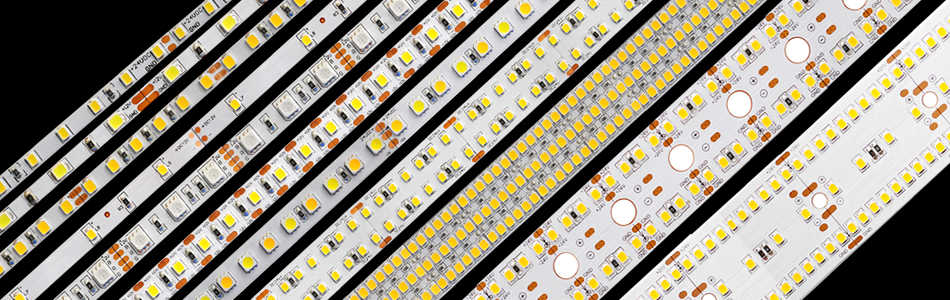
SMD LED Strip Advantages

Why Dotless Lighting Has Become an Industry Standard

A decade ago, visible LED points were widely accepted in lighting installations.
Today, expectations have changed.
Architects, interior designers, and property developers increasingly demand lighting systems that remain invisible while delivering smooth and elegant illumination.
Modern consumers associate continuous light with:
  • Luxury
  • Professional design
  • Premium construction quality
  • Enhanced visual comfort
Visible LED dots can negatively affect:
As a result, dotless LED lighting has become one of the fastest-growing segments within the global LED lighting industry.
Why Dotless Lighting Has Become an Industry Standard

Understanding SMD LED Strip Technology

What Does SMD Mean?

SMD stands for Surface Mounted Device.
This technology packages individual LED chips into separate housings before mounting them onto a printed circuit board.
Each LED functions as an independent light source.
Common SMD packages include:、

SMD 2835

Popular for:
  • General lighting
  • Commercial projects
  • Energy-efficient installations
Long LED Strips SMD 2835

SMD 5050

Popular for:
  • RGB lighting
  • Decorative lighting
  • Entertainment applications
SMD 5050 LED Strip Light

SMD 5630

Popular for:
  • High-brightness applications
  • Industrial lighting
  • Signage illumination

SMD 3528

Popular for:
  • Budget projects
  • Accent lighting
  • Low-power installations
SMD 3528 12V Tape Light

Advantages of SMD LED Strips

High Brightness Output

Premium SMD strips can achieve exceptional lumen output.
Many commercial projects prioritize brightness over aesthetics.

Applications include:

  • Advertising signs
  • Warehouse lighting
  • Industrial facilities
  • Task lighting
bendable LED Strip

Cost Efficiency

Because SMD manufacturing is mature and highly scalable, pricing remains competitive.
For large-volume projects, SMD strips often offer significant cost advantages.

Product Variety

SMD technology supports:
This flexibility contributes to its widespread adoption.

Proven Reliability

After years of market development, SMD technology has demonstrated outstanding long-term reliability.

Limitations of SMD LED Strips

Despite their strengths, SMD strips have one notable weakness:

Visible Light Dots

Individual LEDs remain visible.
This becomes problematic when:
  • Installation depth is limited
  • Reflective surfaces are present
  • Diffusers are absent
  • Direct viewing occurs
In premium projects, visible hotspots can compromise design quality.

Understanding COB LED Strip Technology

What Does COB Mean?

COB stands for Chip on Board.
Unlike traditional SMD packaging, COB technology mounts LED chips directly onto the PCB.
A phosphor coating covers the chip array, producing a continuous luminous surface.
Instead of seeing hundreds of individual LEDs, observers perceive a smooth line of light.

How COB Technology Works

A typical COB strip contains hundreds of tightly packed microchips.
Examples include:
320 LEDs per meter COB LED Strip Light
360 LEDs per meter COB LED Strip Light
480 LEDs per meter COB LED Strip Light
 COB LED Strip Light
 COB LED Strip Light
The phosphor layer blends light output from all chips, eliminating visible hotspots.
The result is near-perfect uniformity.

Advantages of COB LED Strips

 COB LED Strip Light

True Dotless Illumination

The primary reason for COB's popularity is its seamless appearance.
This characteristic makes COB ideal for:
  • Luxury homes
  • Hotels
  • Retail environments
  • Museums
  • Architectural projects

Superior Visual Comfort

Continuous light output reduces glare and eye strain.
This becomes increasingly important in environments where lighting remains visible for extended periods.

Better Light Uniformity

Uniformity directly affects perceived lighting quality.
COB strips provide:
  • Consistent brightness
  • Smooth illumination
  • Reduced shadowing

Enhanced Design Freedom

COB strips perform exceptionally well in:
  • Shallow coves
  • Slim aluminum profiles
  • Decorative fixtures
  • Tight installation spaces

COB vs. SMD LED Strips: Detailed Comparison

  • Light Uniformity

COB LED Strip
Produces continuous illumination without visible hotspots.
Ideal for premium installations.
Rating: Excellent
SMD LED Strip
Visible spacing remains apparent under many conditions.
Rating: Good
Winner: COB
  • Brightness

COB LED Strip
High brightness available.
Suitable for most architectural applications.
SMD LED Strip
Often achieves higher peak lumen output.
Ideal for demanding brightness requirements.
Winner: SMD
  • Visual Comfort

COB strips create softer, more natural lighting.
The absence of visible LED points significantly improves comfort.
Winner: COB
  • Efficiency

Modern SMD products generally achieve slightly higher lumens per watt.
Winner: SMD
  • Heat Management

Heat distribution directly impacts lifespan.
COB technology spreads thermal energy more evenly across the PCB.
Winner: COB
  • Flexibility

COB strips often bend more smoothly due to their chip layout.
Winner: COB
  • Cost

SMD strips remain more affordable.
Winner: SMD
  • Premium Appearance

COB strips create a cleaner, more sophisticated aesthetic.
Winner: COB

Which Technology Produces Better Dotless Lighting?

The answer is straightforward.
For direct visibility applications, COB LED strips provide significantly better results.
Even high-density SMD strips frequently require:
  • Deep channels
  • Frosted diffusers
  • Additional spacing
COB strips often achieve seamless illumination without these extra measures.

Best Applications for COB LED Strips

Cove Lighting

Architectural coves often expose light sources indirectly.
COB strips eliminate visible spotting.

Under Cabinet Lighting

Viewers frequently see the fixture from below.
COB strips improve comfort and appearance.

Hotel Lighting

Guest experience depends heavily on visual comfort.
COB strips support luxury design standards.

Retail Display Lighting

Uniform illumination enhances product presentation.

Museum Lighting

Smooth lighting minimizes distractions.

Best Applications for SMD LED Strips

Channel Letters

Maximum brightness remains the priority.

Signage

High output and cost efficiency make SMD ideal.

Industrial Facilities

Functionality often outweighs aesthetics.

Warehouse Lighting

Brightness and efficiency dominate purchasing decisions.

How to Achieve Truly Dotless LED Lighting

Many buyers assume that purchasing a COB strip automatically guarantees perfect results.
In reality, installation quality remains critical.

Choose High-Density COB Strips

Recommended densities:
Good
320 LEDs/m
Better
480 LEDs/m
Best
528–640 LEDs/m
Higher density improves visual consistency.

Select Premium Aluminum Profiles

Profiles improve:
  • Heat dissipation
  • Structural support
  • Long-term reliability

Use Stable Power Supplies

Voltage fluctuations may create uneven brightness.
Proper power sizing prevents performance issues.

Reduce Voltage Drop

For long runs:
  • Use thicker copper PCB
  • Inject power at multiple points
  • Select constant-voltage systems carefully

Consider Viewing Distance

The closer the observer, the more important uniformity becomes.

COB LED Strip Buying Guide

When evaluating suppliers, focus on the following specifications.

LED Density

Higher density generally means smoother illumination.

CRI (Color Rendering Index)

Recommended:
Residential
CRI 90+
Commercial
CRI 90+
Retail
CRI 95+
Museums
CRI 95+
High CRI improves color accuracy.

PCB Width

Common options:
  • 5mm
  • 8mm
  • 10mm
  • 12mm
Wider PCBs typically provide better thermal performance.

Waterproof Rating

IP20
Indoor use
IP65
Splash-resistant
IP67
Outdoor protection
IP68
Full waterproof protection

Common Mistakes When Selecting LED Strips

Choosing Based Solely on Price

The cheapest product often results in:
  • Lower brightness
  • Poor consistency
  • Reduced lifespan
Choosing Based Solely on Price

Ignoring CRI

Poor CRI affects appearance dramatically.

Overlooking Voltage Drop

Long installations require proper planning.

Using Low-Quality Drivers

Power supply quality directly impacts reliability.
Using Low-Quality Drivers

Selecting the Wrong Technology

Not every project requires COB.
Not every project benefits from SMD.
Understanding project goals remains essential.

Future Trends in LED Strip Technology

The industry continues evolving rapidly.
Key trends include:

Higher Density COB Technology

Future products will exceed 700 LEDs per meter.

Human-Centric Lighting

Circadian lighting solutions continue growing.

Smart Lighting Integration

Increasing demand for:
  • Bluetooth control
  • WiFi control
  • App control
  • Voice control

Higher Efficiency

Manufacturers continue improving lumens per watt.

Sustainable Manufacturing

Environmental regulations are driving greener production processes.

Why Professional Buyers Are Switching to COB LED Strips

Architects and designers increasingly prioritize aesthetics.
Modern consumers expect:
  • Invisible light sources
  • Continuous illumination
  • Enhanced comfort
  • Premium experiences
These expectations align perfectly with COB technology.
As manufacturing costs continue decreasing, COB strips are becoming the preferred choice for high-end projects worldwide.

Final Verdict: COB vs. SMD LED Strip

If your primary goal is achieving seamless, dotless, premium lighting, COB LED strips are the clear winner.
If your priority is maximum brightness at the lowest possible cost, SMD LED strips remain an excellent solution.
For modern architectural lighting, hospitality environments, retail spaces, luxury residences, and decorative installations, COB technology increasingly represents the industry's future.
The best solution ultimately depends on project requirements, budget, performance expectations, and installation conditions.
However, for professionals seeking the highest visual quality, COB LED strips have established themselves as the benchmark for premium LED strip lighting.

FAQ 

What is a COB LED strip?

A COB LED strip is a Chip on Board lighting solution that mounts hundreds of LED chips directly onto a PCB, producing continuous and dotless illumination.

Are COB LED strips better than SMD LED strips?

COB LED strips provide superior light uniformity and visual comfort, while SMD LED strips often offer higher brightness and lower cost.

Which LED strip is best for cove lighting?

COB LED strips are generally considered the best option for cove lighting because they create seamless illumination without visible hotspots.

Do COB LED strips last longer?

High-quality COB LED strips can achieve lifespans comparable to premium SMD products, typically ranging from 30,000 to 60,000 hours.

Are COB LED strips waterproof?

Yes. COB LED strips are available in IP65, IP67, and IP68 waterproof versions suitable for outdoor applications.

Can COB LED strips be cut?

Yes. Most COB LED strips feature designated cutting points that allow customization for specific installations.

Do COB LED strips consume more power?

Power consumption depends on the strip's wattage and design. COB strips do not inherently consume more power than SMD strips.

What CRI should I choose for architectural lighting?

A CRI of 90 or higher is recommended for most architectural applications, while premium retail and museum projects often require CRI 95+.

Conclusion

The transition from visible LED dots to seamless illumination reflects the evolution of modern lighting design. While SMD LED strips remain a strong choice for brightness-focused and budget-conscious projects, COB LED strips have become the preferred solution for achieving professional, dotless lighting.
Whether you're designing luxury residences, commercial spaces, hospitality environments, or retail displays, understanding the strengths of each technology enables better purchasing decisions and superior project outcomes. As the demand for premium lighting continues to grow, COB LED strip technology is poised to become the dominant standard for architectural LED lighting worldwide.
Contact ADLED for COB LED Strip