LED Power Supply Failures: Troubleshooting & Replacement Guide
2026-02-06

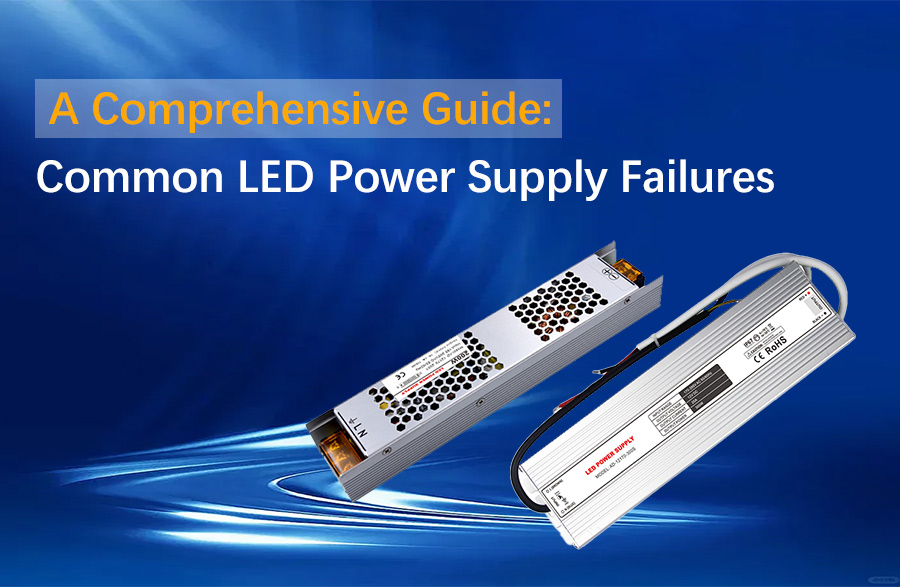
Common LED Power Supply Failures: A Comprehensive Guide

Common LED Power Supply Failures: A Comprehensive Guide

LED lighting has revolutionized the energy efficiency and longevity of modern illumination systems. However, the Achilles' heel of many LED installations lies not in the diodes themselves, but in their power supplies. Often accounting for more than 50% of LED system failures, power supply issues can undermine the promised 50,000-hour lifespan of LED fixtures. This comprehensive guide explores the most common LED driver failures, their underlying causes, diagnostic approaches, and practical solutions to extend the operational life of your lighting systems.

Understanding LED Power Supply Fundamentals

Before delving into failures, it's essential to understand what an LED power supply (commonly called an LED driver) does. Unlike traditional incandescent bulbs, LEDs require constant current or constant voltage with specific electrical characteristics. Drivers convert alternating current (AC) to direct current (DC), regulate voltage and current, and often include additional features like dimming and power factor correction. The complexity of these electronic components makes them susceptible to various failure modes influenced by thermal management, electrical conditions, and environmental factors.

Thermal-Related Failures

Overheating and Thermal Runaway

Excessive heat remains the primary killer of LED drivers. Most electronic components within drivers have rated maximum operating temperatures, typically between 85°C to 105°C. Prolonged operation above these temperatures accelerates the degradation of electrolytic capacitors, semiconductors, and other sensitive components. Inadequate heat sinking, poor ventilation, and high ambient temperatures contribute to this issue. Thermal runaway occurs when increasing temperature causes increased current draw, which generates more heat in a destructive positive feedback loop.

Capacitor Degradation

Electrolytic capacitors are particularly vulnerable to thermal stress. Their internal electrolyte gradually evaporates through the rubber seal at elevated temperatures, reducing capacitance and increasing equivalent series resistance (ESR). This manifests as flickering lights, reduced brightness, or complete failure. Capacitors operating at just 10°C above their rated temperature can see their lifespan halved according to the Arrhenius equation of chemical degradation.
Capacitor Degradation

Solder Joint Fatigue

Repeated thermal cycling—the expansion and contraction of materials during temperature fluctuations—causes mechanical stress on solder joints. Over time, this leads to crack formation, resulting in intermittent connections or complete open circuits. This failure mode is especially common in outdoor applications with significant day-night temperature variations or in fixtures subject to frequent on-off cycling.

Electrical Stress Failures

Voltage Surges and Transients

LED drivers are susceptible to voltage spikes from lightning strikes, utility grid switching, or inductive load switching within the same electrical system. While many drivers include basic surge protection, severe or repeated transients can overwhelm these safeguards, damaging rectifier diodes, MOSFETs, and control ICs. The switching power supply topology commonly used in LED drivers is particularly vulnerable to overvoltage conditions.

Inrush Current Stress

During initial power-up, the discharged input capacitors create a momentary short circuit, drawing substantial inrush current. Repeated power cycling accelerates the degradation of input rectifiers and fuses. This problem is exacerbated in installations with occupancy sensors or daylight harvesting systems that frequently switch the driver on and off.

Harmonic Distortion and Poor Power Factor

Nonlinear electronic loads like LED drivers can introduce harmonic currents back into the electrical system, potentially causing overheating in neutral conductors and transformers. While modern drivers include power factor correction (PFC) circuits to mitigate this, failures in PFC components can lead to increased harmonic distortion, reduced efficiency, and eventual driver failure.

Environmental and Mechanical Failures

Moisture and Humidity Intrusion

Despite ingress protection (IP) ratings, moisture remains a persistent threat to LED driver longevity. Condensation forms during temperature cycles, particularly in outdoor or high-humidity applications. Water intrusion corrodes PCB traces, creates short circuits, and damages components. Even drivers rated for damp locations can fail if seals degrade over time or if installation compromises the environmental protection.

Contaminant Accumulation

Dust, dirt, and chemical vapors accumulate on driver components, creating potential conductive paths or insulating heat sinks. In industrial environments, metallic dust can cause direct short circuits. Organic materials can absorb moisture, creating localized corrosion sites. Contaminants also reduce the effectiveness of thermal management systems by insulating heat-producing components.

Vibration and Physical Stress

Mechanical vibration from nearby equipment, transportation, or structural movement can loosen connections, fracture components, or cause PCB trace damage. This failure mode is common in automotive, marine, and industrial applications. Even in stationary installations, building vibrations from HVAC systems or foot traffic can gradually degrade driver reliability.

Component-Specific Failure Modes

MOSFET and Transistor Failures

The switching transistors in SMPS (Switched-Mode Power Supply) designs fail through several mechanisms including overvoltage breakdown, overcurrent thermal destruction, and gate oxide degradation. MOSFET failures often appear as short circuits between drain and source terminals, sometimes taking out other components like gate drivers and current sense resistors in the process.

Diode and Rectifier Failures

Input rectifier bridges and output rectification diodes fail due to current surges, reverse voltage breakdown, or thermal overstress. Failed rectifiers often short circuit, causing blown fuses or further damage to other components. Schottky diodes used in output stages are particularly sensitive to voltage transients and thermal stress.

Integrated Circuit (IC) Failures

Control ICs for regulation, dimming, and protection functions can fail from voltage spikes, latch-up conditions, or thermal stress. These failures often manifest as complete cessation of operation with no visible damage. Some ICs incorporate thermal shutdown protection that may reset if the driver cools, creating intermittent operation patterns.

Magnetic Component Issues

Transformers and inductors can fail through winding insulation breakdown, core saturation under abnormal conditions, or physical damage to windings. Insulation breakdown typically results from voltage spikes or thermal degradation of insulating materials. Ferrite cores can crack under mechanical stress, altering inductance values and disrupting circuit operation.

Diagnostic Approaches and Testing

Visual Inspection Techniques

Begin troubleshooting with a thorough visual examination. Look for bulging or leaking capacitors, discolored components or PCB areas (indicating overheating), cracked components or solder joints, and signs of moisture or corrosion. Magnification helps identify hairline cracks in solder joints or PCB traces.

Electrical Measurements

Systematic electrical testing includes:
  • Input voltage verification under load conditions
  • Output voltage and current measurements compared to specifications
  • Inrush current measurement using current probes
  • ESR testing of electrolytic capacitors without removal from circuit
  • Thermal imaging to identify hot spots during operation

Functional Testing

Load testing with variable resistors or electronic loads helps verify performance across expected operating ranges. Dimming function tests (if applicable) should include the entire dimming range with compatible dimmers. For intermittent failures, environmental stress testing with temperature cycling or vibration may be necessary to reproduce field conditions.

Prevention and Mitigation Strategies

Thermal Management Improvements

Enhance driver longevity through:
  • Proper sizing of heat sinks based on actual operating conditions
  • Ensuring adequate ventilation around drivers
  • Using thermal interface materials to improve heat transfer
  • Selecting drivers rated for higher ambient temperatures than expected
  • Implementing active cooling in extreme environments

Electrical Protection Enhancements

Upstream protection devices including:
  • Properly rated surge protection devices (SPDs)
  • Time-delay fuses to handle inrush currents
  • Dedicated circuits for LED lighting to avoid interference from other equipment
  • Voltage regulation for installations with unstable line voltage
  • Soft-start circuits to limit inrush currents

Environmental Protection Measures

  • Selection of appropriate IP-rated enclosures for the installation environment
  • Conformal coating of driver PCBs in high-humidity applications
  • Regular maintenance cleaning to prevent contaminant buildup
  • Anti-vibration mounting in applications with mechanical stress
  • Proper sealing of conduit entries and enclosure seams

Replacement and Repair Considerations

When to Repair vs. Replace

Economic considerations typically favor replacement for mass-produced drivers, while custom or high-value drivers may justify repair. Factors include repair cost versus replacement cost, availability of replacement units, and criticality of the application. Component-level repair requires technical expertise and proper diagnostic equipment.

Compatibility in Replacement

When replacing failed drivers, ensure compatibility regarding:
  • Output current and voltage ratings
  • Dimming protocol compatibility
  • Physical dimensions and mounting
  • Input voltage range
  • Safety certifications (UL, CE, etc.)
  • Environmental ratings

Retrofit Opportunities

Driver failures present opportunities to upgrade to newer technologies offering improved efficiency, better dimming performance, enhanced surge protection, or network connectivity. Consider whether the entire fixture should be replaced if the existing LED array has significant operating hours.

Future Trends in LED Driver Reliability

Emerging Technologies

Advances in driver technology aim to address common failure points:
  • Electrolytic capacitor-less designs using advanced topologies
  • Integrated thermal management with temperature monitoring
  • Enhanced surge protection integrated into driver ICs
  • Modular designs allowing component replacement
  • Self-diagnostic capabilities with failure prediction

Standards and Regulations

Evolving standards from organizations like UL, IEC, and ANSI continue to raise safety and reliability requirements. Energy efficiency regulations indirectly improve reliability by reducing thermal stresses. Industry initiatives toward standardized form factors may simplify replacement and upgrade processes.

Smart Driver Technologies

Network-connected drivers with monitoring capabilities enable predictive maintenance by tracking operating parameters and identifying early signs of degradation. These systems can alert maintenance personnel to issues before complete failure occurs, particularly valuable in large-scale commercial installations.

Conclusion

LED power supply failures represent a complex intersection of electrical, thermal, and environmental factors. By understanding common failure modes and their root causes, specifiers, installers, and maintenance personnel can implement strategies to maximize driver lifespan and system reliability. Proper selection, installation, and maintenance practices significantly reduce failure rates, protecting investments in LED lighting technology. As driver technology continues to evolve, future designs will likely address many current failure mechanisms, further enhancing the already impressive reliability of modern LED lighting systems.

Frequently Asked Questions

1. What are the most common signs of impending LED driver failure?

The most frequent indicators include visible flickering (especially during startup), reduced brightness output, inconsistent dimming performance, audible buzzing or humming noises from the driver, and complete failure to illuminate. Intermittent operation that resolves when cool but fails when warm strongly suggests thermal-related component degradation.

2. Can a failed LED driver damage the LED array itself?

Yes, certain driver failure modes can damage connected LEDs. Overcurrent conditions from failed current regulation can cause thermal overstress to LEDs, shortening their lifespan. Voltage spikes from driver failures can exceed the LED's reverse voltage rating. However, many modern drivers include protective circuits that fail safely without damaging the load.

3. How long should a quality LED driver typically last?

Well-designed LED drivers in appropriate operating conditions should achieve 50,000 hours or more. However, actual lifespan depends heavily on operating temperature—every 10°C reduction below maximum ratings can double expected life. High-quality drivers with robust thermal design often outlast cheaper alternatives by a factor of two or three.

4. Is it worth repairing failed LED drivers, or should they always be replaced?

For most commercial applications, replacement is more cost-effective due to labor costs for diagnosis and repair. Exceptions include high-value custom drivers, situations with long lead times for replacements, or when identical replacements are unavailable. Component-level repair requires specialized skills and is typically only economical for expensive drivers in large quantities.

5. How can I improve the reliability of LED drivers in outdoor applications?

Select drivers with appropriate IP ratings (IP65 or higher for direct weather exposure), ensure proper sealing of electrical connections, provide adequate ventilation while preventing water ingress, use drivers rated for wider temperature ranges, install surge protection at the circuit level, and consider protective enclosures in extreme environments. Regular maintenance inspections for moisture intrusion are also recommended.
Contact ADLED for LED Power Supply