

2025-04-11
Common LED Strip Problems and How to Fix Them
Common LED Strip Problems and How to Fix Them
LED lights strips have revolutionized modern lighting, offering an incredibly versatile way to enhance your home's ambiance, boost productivity in workspaces, or create stunning outdoor lighting effects. These flexible, energy-efficient solutions can transform ordinary spaces into extraordinary environments with just the flip of a switch.
However, as with any sophisticated electronic product, even the highest-quality commercial LED strip can occasionally experience technical hiccups. You might encounter flickering lights, color inconsistencies, or sections that simply refuse to illuminate. Before you consider replacing your entire setup or calling in an electrician, take heart - most LED 6500k strip issues have remarkably straightforward solutions that even beginners can implement.
In this comprehensive troubleshooting guide, we'll walk you through the most common LED strip problems that users face, from basic connectivity issues to more complex technical challenges. Each solution is presented in clear, step-by-step instructions with practical tips to ensure your lighting system is restored to optimal performance. Whether you're dealing with a simple wiring issue or a more perplexing technical glitch, this guide will help you diagnose and fix the problem efficiently.
By the end of this article, you'll not only have solved your immediate lighting issues but also gained valuable knowledge to prevent future problems and extend the lifespan of your LED installations. Let's dive in and get your lights shining brightly again!
1. LED Strip Won’t Turn On
2. LED Strip Flickering or Dimming
3. Only One Color Works (for RGB LED Strips)
4. LEDs Overheating
5. Water Damage (For Waterproof LED Strips)
Tips for Preventing LED Strip Issues
FAQ
2. LED Strip Flickering or Dimming
3. Only One Color Works (for RGB LED Strips)
4. LEDs Overheating
5. Water Damage (For Waterproof LED Strips)
Tips for Preventing LED Strip Issues
FAQ
1. LED Strip Won’t Turn On

Possible Causes:
- Loose or incorrect power connection
- Faulty power supply
- Damaged circuit or broken traces
How to Fix It:
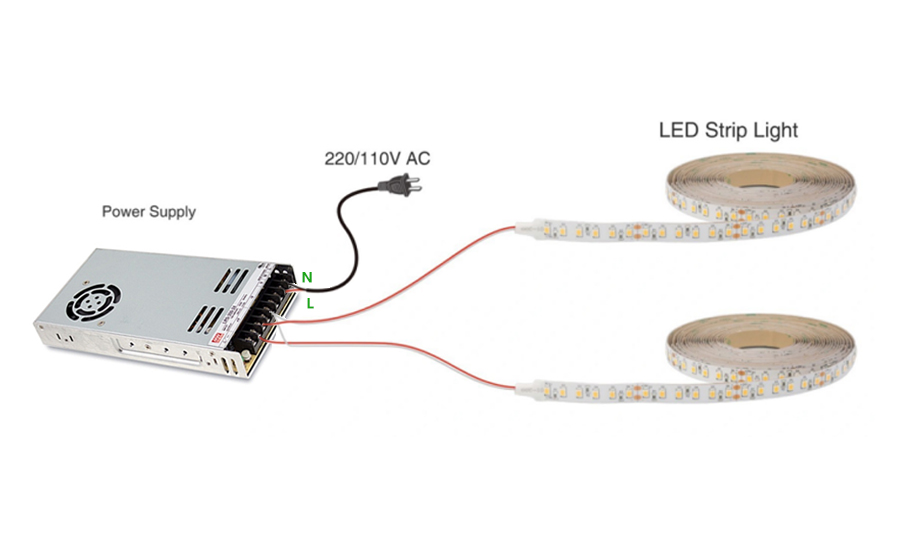
✅ Check the power supply – Ensure the adapter is plugged in and providing the correct voltage (e.g., 12V or 24V). Test with a multimeter if possible.
✅ Inspect connections – Make sure all wires are securely connected. If using connectors, try reattaching them.
✅ Test the UL LED strip – If only a section is dead, the 90 CRI LED strip may have a broken trace. Try cutting and reconnecting at the next cut point.
2. LED Strip Flickering or Dimming

Possible Causes:
- Insufficient power supply (voltage drop)
- Loose wiring or poor solder joints
- Compatibility issues with dimmers
How to Fix It:
✅ Use a higher-quality power supply – Ensure the power adapter can handle the LED light strips white’s wattage (e.g., 60W for 5m of 12V LED strip).
✅ Check for voltage drop – If the LED strip support dims toward the end, inject power from both ends or use a higher-voltage strip (24V).
✅ Avoid cheap PWM dimmers – If using a dimmer, ensure it’s designed for LED band strip (compatible with PWM or constant current).
3. Only One Color Works (for RGB LED Strips)

Possible Causes:
- Faulty RGB controller
- Damaged IC chip (for addressable LEDs)
- Loose wiring in the R/G/B channels
How to Fix It:
✅ Test with a different controller – Swap out the remote or controller to see if the issue persists.
✅ Check solder joints – If manually wired, ensure R, G, and B wires are properly connected.
✅ Replace damaged sections – For addressable LEDs (WS2812B), a single bad LED can stop the signal—cut and replace the faulty segment.
4. LEDs Overheating
Possible Causes:
- Poor heat dissipation (especially with high-power LEDs)
- Overdriving the power LED light strip beyond its rated wattage
- Enclosed installation without ventilation
How to Fix It:
✅ Use an aluminum channel– Helps dissipate heat and extends LED lifespan.
✅ Avoid running at 100% brightness for long periods – Dimming slightly reduces heat.
✅ Check power supply capacity – Overloaded power supplies can cause overheating.
5. Water Damage (For Waterproof LED Strips)

Possible Causes:
- Silicone coating peeling off
- Exposed solder joints in outdoor installations
- Submersion beyond IP rating (e.g., IP65 vs. IP68)
How to Fix It:
✅ Re-seal with silicone – Apply clear silicone gel to exposed areas.
✅ Use waterproof connectors – Avoid direct exposure to rain if the good strip lights isn’t fully waterproof.
✅Replace damaged sections – If corrosion has set in, cutting and reconnecting may be necessary.
Tips for Preventing LED Strip Issues
- Buy high-quality LED strips(cheap ones often have poor soldering and thin copper traces).
- Use proper power supplies(avoid overloading).
- Install with care(avoid sharp bends that can damage circuits).
The good news is that nearly 90% of LED strip 5meter malfunctions can be resolved with simple, no-cost troubleshooting techniques - no electrical engineering degree required. From frustrating flickering to mysterious color shifts or complete power failures, most issues stem from just a handful of common causes that anyone can diagnose and fix.
For flickering lights, the solution might be as easy as tightening a loose connector or upgrading your power supply. "Color irregularities"often trace back to controller settings or wiring sequence rather than defective products. Even when facing "complete power failures", you'll be surprised how often the fix involves simply checking connection points or resetting your controller rather than replacing components.
Remember: LED technology is remarkably durable. Before assuming your LED stripe is broken, work through these solutions - you'll likely discover it just needs a minor adjustment to shine like new again. Even if you've never worked with lighting systems before, these methods will give you both immediate results and long-term confidence in maintaining your setup.
Got a specific issue not covered here? Want to Buy high-quality LED strips? Cnnect us!
FAQ
Why Are My LED Strip Lights Only Partially Working?
This usually indicates:
• Voltage drop (common in long LED strips) → Add power injection points
• Damaged copper traces→ Cut and reconnect at the next cutting mark
• Loose connectors→ Reseat or replace solderless connectors
How Long Do LED Strips Last? Can I Extend Their Lifespan?
Average lifespan: 30,000-50,000 hours (3-6 years at 24/7 use)
Prolong life by:
• Using aluminum channels for heat dissipation
• Avoiding full brightness for extended periods
• Choosing high-CRI (>90) LED strips with quality chips
Why Do My RGB LED Strip Colors Look Wrong/Inaccurate?
Common culprits:
• Cheap PWM controllers → Upgrade to 16-bit+ controllers
• Voltage fluctuations → Use a regulated power supply
• Low CRI (<80) LEDs → Replace with high-color-rendering LED strips
Can I Cut LED Strips to Custom Lengths?
Yes, but only at marked cut points (scissor symbols every 1-3 LEDs)
Pro tips:
• Use sharp scissors for clean cuts
• For waterproof LED strips, reapply silicone after cutting
• Addressable LED strips require reprogramming after modification
What's the Difference Between 12V and 24V LED Strips?
Key differences:
• 24V LED strips have less voltage drop (better for runs >5m)
• 12V LED strips allow more precise cutting (often every 1 LED vs 2-3 on 24V)
• Power consumption is identical per lumen - voltage doesn't affect efficiency