

2025-10-30
Do LED Strip Lights Really Attract Bugs? The Surprising Truth
Do LED Strip Lights Really Attract Bugs? The Surprising Truth
As the sun sets and we turn on our beautifully installed LED strip lights to create a cozy ambiance on our patios, under our cabinets, or along our decks, an uninvited guest often arrives: the common bug. It’s a scene we all know too well—a swarm of tiny insects buzzing relentlessly around the light source. For generations, we’ve accepted that "light attracts bugs." But in the age of advanced LED technology, is this still true? Are our modern, energy-efficient LED strips just as guilty as old-fashioned incandescent or fluorescent bulbs?
The short answer is: It's complicated, but generally, LED strip lights attract significantly fewer bugs than traditional lighting.
To understand why, we need to dive into the fascinating science of what actually draws insects to light and how different types of LEDs perform.

The Bug-Light Connection: It’s Not the Heat, It’s the Wavelength
For a long time, it was believed that the heat emitted by light bulbs was the primary attractant. While some insects are sensitive to thermal radiation, the primary culprit is something invisible to our eyes: ultraviolet (UV) light and specific color wavelengths.
Insects’ eyes are fundamentally different from human eyes. They are highly sensitive to shorter wavelengths of light, particularly in the UV (ultraviolet), blue, and green parts of the spectrum. This is due to a phenomenon called phototaxis—the movement of an organism in response to light.
Many nocturnal insects use natural light sources, like the moon and stars, for navigation. They fly at a constant angle to these distant celestial bodies to travel in a straight line. Our artificial lights, however, are extremely close and bright. When an insect flies near one, it becomes confused, trying to maintain a constant angle to the light and ending up in a spiraling flight path that traps it. This is known as the "moth to a flame" effect.
Furthermore, many flowers reflect UV light to signal to pollinators like bees and moths. So, for many insects, a bright, UV-rich light source subconsciously signals "food and navigation," creating a powerful, irresistible draw.
The LED Advantage: Why They Are a Better Choice
This is where LED technology shines (pun intended). LEDs are a fundamentally different light source than incandescent, halogen, or even fluorescent bulbs.
-
Minimal UV Emission: High-quality white LED strip lights produce light through a blue LED chip coated with a yellow phosphor. This process generates very little to no ultraviolet (UV) light. Since bugs are most attracted to UV, LEDs are inherently less interesting to them from the start.
-
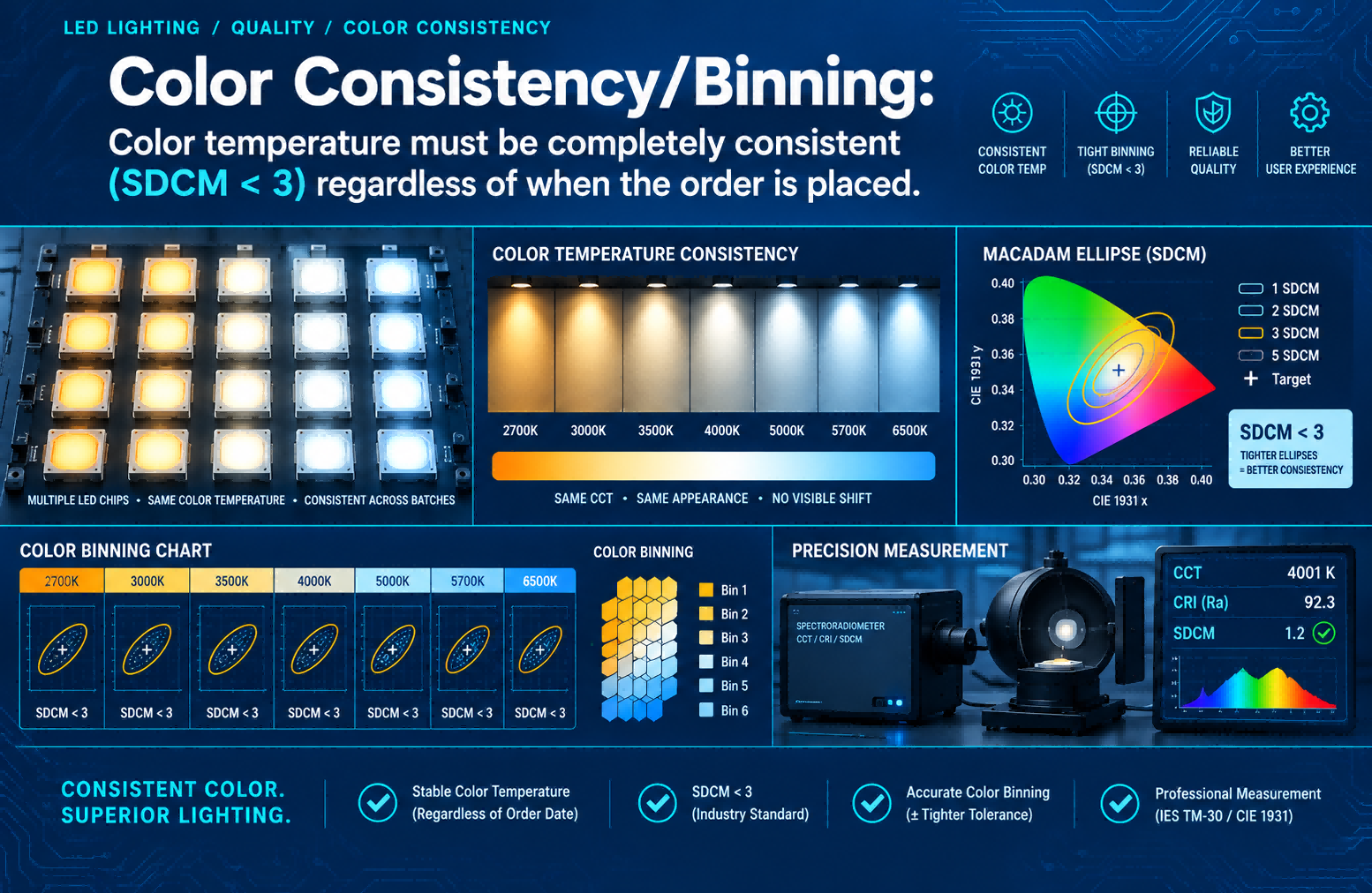
Color Temperature is Key: The "whiteness" of light is measured in Kelvin (K). This is often called Correlated Color Temperature (CCT).
-
Warm White (2700K - 3000K): This light has a yellowish, cozy hue, similar to an old incandescent bulb. It emits more light in the yellow, orange, and red part of the spectrum—the very wavelengths that insects care the least about.
-
Cool White (4000K - 5000K): This light is brighter and whiter, often described as "daylight." It has a much higher component of blue light.
-
Daylight (5000K - 6500K+): This is a very bright, bluish-white light that closely mimics midday sun. It is packed with blue wavelengths.
-
The critical takeaway: The higher the color temperature (i.e., the bluer and "colder" the light), the more insects it will attract. A 2700K warm white LED strip will be far less attractive to bugs than a 6500K cool daylight strip.
Comparing the Competition: Incandescent and Fluorescent Bulbs
To appreciate the LED advantage, let's see how the competition stacks up:
-
Incandescent/Halogen Bulbs: These are the worst offenders. They emit a broad spectrum of light, including a significant amount of infrared (heat) and a portion of UV/blue light. Their warm glow is still more attractive than cool LEDs, but their inefficiency and heat output make them a bug magnet.
-
Fluorescent Bulbs (including CFLs): Traditional fluorescent tubes emit a substantial amount of UV light. Even though the phosphor coating inside the tube converts most of it, enough UV leaks out to make them highly attractive to insects. This is why you see so many bugs circling fluorescent lights in garages and warehouses.
Choosing the Right LED Strip Lights to Minimize Bugs
You can strategically select and use your LED strips to create an environment that is both beautiful and bug-free.
1. Prioritize Color Temperature: Go for Warm White
This is the single most important factor. For outdoor applications like patios, pergolas, decks, and gazebos, always choose Warm White (2700K-3000K) LED strips. The warm, yellowish glow will provide ample illumination for ambiance and safety while keeping the insect party to a minimum.
2. Consider Amber or Yellow "Bug Lights"
Some manufacturers offer specialized LED strips in amber or yellow hues. These lights are designed to emit only long-wavelength light (above 550 nanometers), which is virtually invisible to most nocturnal insects. While this will cast a very specific, warm glow, it is the most effective technical solution for completely deterring bugs.
3. Utilize RGB Strips Strategically
If you have RGB (Red, Green, Blue) color-changing LED strips, you have a powerful tool at your disposal. When enjoying a bug-free evening, avoid using the cool white, blue, or green settings. Instead, opt for the red or warm orange colors. Insects see red very poorly, if at all, making it the best color for keeping them away. You can create a stunning, bug-free ambiance with deep reds and warm ambers.
4. Placement and Shielding Matter
Where and how you install your strips can also help.
-
Indirect Lighting: Instead of having the LED strips exposed and pointing outward, install them in channels or aluminum profiles with a diffuser. This contains the light source and creates a softer, more directed glow that is less likely to broadcast a wide-spectrum "beacon" to every bug in the neighborhood.
-
Downward Lighting: Position strips so they illuminate surfaces (like a floor or a table) rather than shining directly into the open air. This reduces the area from which the light is visible to flying insects.
A Balanced View: Other Factors That Attract Bugs
It’s important to remember that light is just one factor. If you have a pond, standing water, fragrant flowers, or uncovered food and drinks in your outdoor area, you will have bugs regardless of your lighting choice. Light is often the initial draw, but these other elements are what make them stay.
Integrated Pest Management:
-
Use citronella candles or essential oil diffusers in the area.
-
Ensure there is no standing water for mosquitoes to breed.
-
Consider installing fans on your patio, as bugs are weak fliers and avoid breezy areas.
Conclusion: Light Smarter, Not Just Brighter
So, do LED strip lights attract bugs? The evidence is clear: Yes, they can, but they don't have to.
The attraction is not a flaw of LED technology itself, but a result of the specific color wavelength we choose. By opting for warm white (2700K-3000K) LED strips or using the red/orange settings on RGB strips, you can dramatically reduce the number of uninvited insects.
LEDs give us unprecedented control over our lighting environment. We are no longer stuck with the bug-attracting, energy-hungry bulbs of the past. By making an informed choice about color temperature, you can enjoy the aesthetic, efficiency, and versatility of LED strip lighting without turning your home into the local bug disco.
Light smarter, and reclaim your outdoor spaces.



FAQ
Are there any LED strip lights that attract ZERO bugs?
While no artificial light source can be 100% bug-proof, amber or yellow LED strip lights come the closest. These specialized strips are designed to emit only long wavelengths of light (above 550 nanometers), which most nocturnal insects cannot see. For the average backyard, using these will make the light source virtually invisible to pests, creating a nearly bug-free environment.
I have RGBIC LED strips. What is the best color setting to avoid bugs?
Your RGBIC strips are a great tool for bug control! Avoid the Cool White, Blue, and Green settings, as these are the most attractive to insects. Instead, use the Pure Red or deep Orange colors. Insects have difficulty perceiving red light, so using these settings will allow you to enjoy beautiful ambiance while keeping the bugs at bay.
Does the brightness (lumens) of my LED strips affect how many bugs they attract?
Yes, absolutely. A brighter light (higher lumens) is more intense and visible from a greater distance, acting as a stronger beacon for insects. Even a warm white LED strip, if extremely bright, will attract more bugs than a dimmer one of the same color. For optimal results, use a warmer color temperature (2700K-3000K) and adjust the brightness to the lowest level comfortable for your needs.
I've installed warm white LEDs, but I still see some bugs. Why?
This is a common observation. Remember that light is often just the initial attractant. The bugs you see may have been drawn from a distance by your lights, but they are likely staying for other reasons. Check your surroundings for additional attractants like standing water (for mosquitoes), fragrant flowers (for moths), or food and drink residues. Your warm white lights are significantly reducing the problem, but integrated pest management is key for complete control.
For my garage and workshop, should I be concerned about bugs with bright LED strips?
For utility spaces like garages and workshops where ambiance is not a priority, bug attraction is more of a nuisance than a comfort issue. However, to reduce the number of insects getting inside, we still recommend avoiding very cool daylight (5000K+) strips. A neutral white (4000K) LED strip provides excellent visibility for tasks while being less attractive than fluorescent tubes or cool white options, helping to keep your workspace cleaner.