Import LED Strip Light from China: Professional Sourcing Guide
2025-05-23

How to buy LED strip from China?

How to buy LED strip from China?

In the hyper-competitive global lighting market, sourcing directly from the world’s manufacturing powerhouse is no longer just an option—it’s a strategic necessity. China remains the undisputed leader in LED technology, offering an sophisticated ecosystem that combines cutting-edge innovation with unmatched economies of scale. However, for many businesses, the leap from "wanting to import" to "successfully receiving a high-quality shipment" is fraught with logistical hurdles and supplier uncertainties. This comprehensive guide breaks down the complexities of purchasing LED strips from China into 14 actionable steps. Whether you are a first-time importer or a seasoned buyer looking to optimize your supply chain, this blueprint will help you navigate quality control, legal compliance, and logistics to secure a world-class product at a competitive edge.
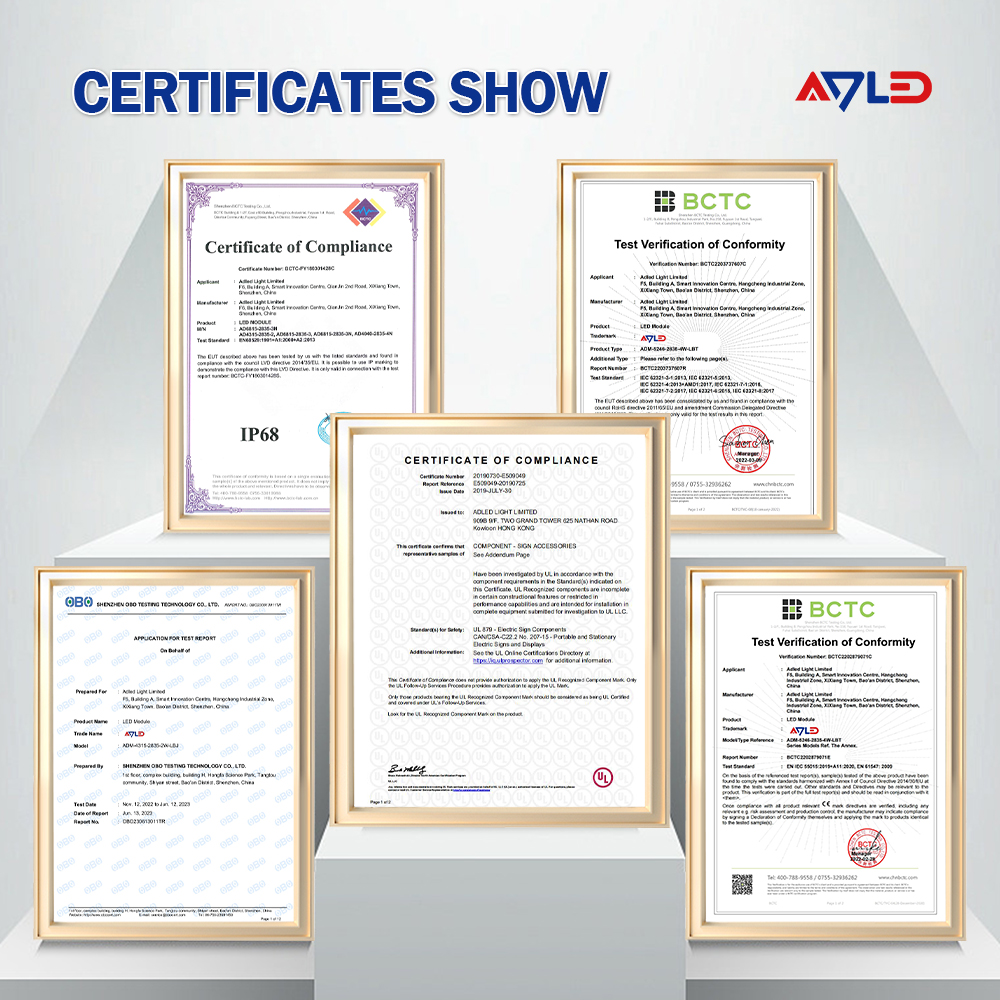
Certification
1. Why is it better to import LED lights from China?
2. China and other countries LED lamp import comparison
3. Check the right to import
4. Finding suitable Chinese suppliers
5. Review the supplier's reputation
6. The import budget needs to cover the following items
7. Negotiating prices
8. Find the right mode of transport
9. The order
10. Production and quality control
11. logistics and customs clearance
12 .Prepare to receive orders
13. Frequently Asked Questions and Risk Prevention
14. Long-term co-operation and brand development

1. Why is it better to import LED lights from China?
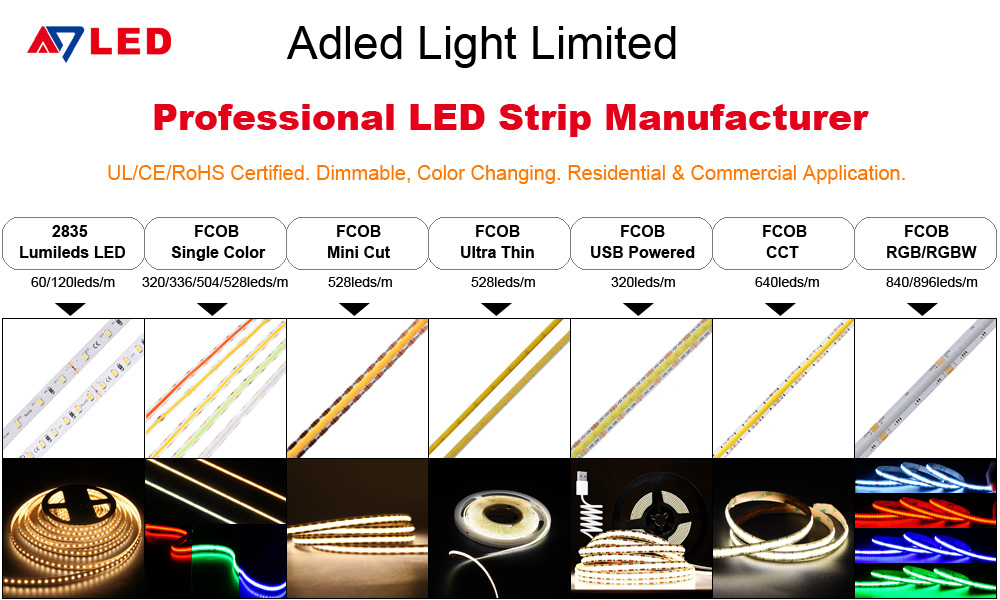

LED strip
 
China's LED industry started early and developed fast, with world-leading manufacturing equipment, raw material supply chain and industrial agglomeration advantages. The main advantages include:
Price competitiveness: Due to large-scale production, the cost of LED strip lights in China is generally lower than that in Europe and the United States.
Product diversity: from 10mm wide strips and COB strips to programmable strips and IP65 waterproof strips.
Short lead time: Efficient supply chain allows for quick turnaround for both customised and large volume orders.
Strong customisation ability: we can customise colour temperature, length, lumen, PCB width, package form, etc. as required.
Rapid technology update: For example, new products such as high lumen strips, colour changing LED strips, digital LED strips, etc. are the first to be mass-produced in China.
China's light bar export customers are all over the world, and many world-famous brands are looking for OEM or ODM factories in China.

2. China and other countries LED lamp import comparison


Chinese suppliers have a significant advantage in terms of cost-effectiveness, flexibility, and product innovation capabilities, and are particularly well suited to small and medium-sized customer groups that require diversification, fast delivery, and customisation.

3. Check the right to import


LED module
 
Before you start importing, you first need to check that you have the legal right to import in the country you are in. This usually includes:
Registering a legal business or sole trader
Applying for and having an import tax number (e.g. EIN in the US)
Registering as an Importer of Record with Customs
Registering for relevant taxes (e.g. VAT, excise tax, etc.)
Some countries also allow companies without import rights to import through agents, but need to bear higher costs and trust risks.

4. Finding suitable Chinese suppliers


Common ways to find Chinese suppliers of light bars include:
B2B platforms: Alibaba (Alibaba International), Made-in-China (Made-in-China), Global Sources, etc;
Search engines and industry forums: Google keywords such as ‘COB LED strip light manufacturer in China’, or find real user feedback on platforms such as Reddit and Quora;
Exhibitions and Industry Matchmaking Meetings: such as Guangzhou Light Asia, Hong Kong Electronics Fair (Autumn Edition), etc. for face-to-face communication and obtaining samples;
Sourcing agents or offices in China: for first-time import customers, you can look for experienced sourcing service providers to assist in pre-selection and negotiation.
It is recommended that priority be given to manufacturers specialising in soft light bar rather than pure trading companies, to ensure that product quality and after-sales response is more secure.

5. Review the supplier's reputation


Before determining the supplier, be sure to review the following steps:
Check whether the other party is a legally registered company and provide a business licence;
Check whether it has passed ISO 9001, ISO 14001 and other quality and environmental protection system certification;
Check whether they have export certificates such as CE, RoHS, ETL, FCC, etc;
Requesting information such as past export cases, customer lists and videos of actual production lines;
Checking buyer reviews and order numbers on Alibaba or Made in China;
Using third party services such as Dun & Bradstreet for business credit scoring;
Third-party organisations (e.g. SGS, BV) can be commissioned to conduct on-site factory inspection audits.
Budgeting


6. The import budget needs to cover the following items


LED bar
Strip product cost: including the unit price of the strip, packaging costs, customisation requirements, etc.
Transportation cost: according to the mode of transport (express/air/sea transport) respectively.
Import tax and VAT: according to the policy of each country (it is recommended to consult the customs clearance company)
Quality inspection costs: if you need third-party testing, sampling reports, etc.
Warehousing and local delivery costs: especially for e-commerce platform sellers.
Insurance and loss reserve: a certain risk reserve (5-10%) should be set up.
After the budget is set, a comprehensive price comparison analysis of different suppliers, quantities and transport options can be carried out.

7. Negotiating prices


The following methods are recommended for price negotiations:
Obtain multiple quotes and request ladder quotes (MOQ, 500M, 1000M, etc.)
Compare the same configuration of light strips (e.g. 12V COB strip, 10mm PCB, CRI>90)
Negotiate payment terms, e.g. 30% deposit for the first order + 70% payment before shipment, and strive for flexible billing period;
Request for free samples or sample fee can be used to offset the first order;
Strive for free mould fee, free laser Logo printing, small batch sampling and other services.


8. Find the right mode of transport


According to the order volume, time requirements and budget to choose the appropriate mode of transport:
Express (DHL/UPS): suitable for samples, small orders, urgent needs;
Air freight + agent customs clearance: medium volume, suitable for FBA warehouse or e-commerce sellers;
Sea freight LCL/Full Container: large quantity orders, lowest cost, but longer period (20-45 days);
Railway transport (China-European liner): optional for European customers, the price is between air and sea transport.
When choosing the mode of transport, you also need to confirm whether you need to do DDP (duty-paid delivery) or FOB/CIF delivery.


9. The order


Formal orders need to sign the form of invoice (Proforma Invoice), and specify the following content:
Product specifications: e.g. 10mm wide strip, 24V, waterproof grade IP65, CRI value, colour temperature, etc;
Quantity, unit price, total amount, payment method;
Production cycle, packaging method, brand printing requirements, etc;
After-sales protection and warranty period (e.g. 2 years, 3 years);
Whether it contains certification documents and instructions;
Delivery method: FOB, CIF, DDP and so on;
It is recommended to keep all communication records, sample photos, and copies of order contracts for subsequent checking.

10. Production and quality control


ADLED LIGHTING
Key aspects of ensuring consistent quality include:
Require factories to set production schedules and send weekly progress reports;
Reviewing raw material purchase orders (e.g. PCB thickness, resistors, chip brands);
Making pre-production samples for final confirmation (sampling stage is critical);
Mid-production sampling (remote video inspection or commission a third party);
Functional test report and aging test record before shipment;
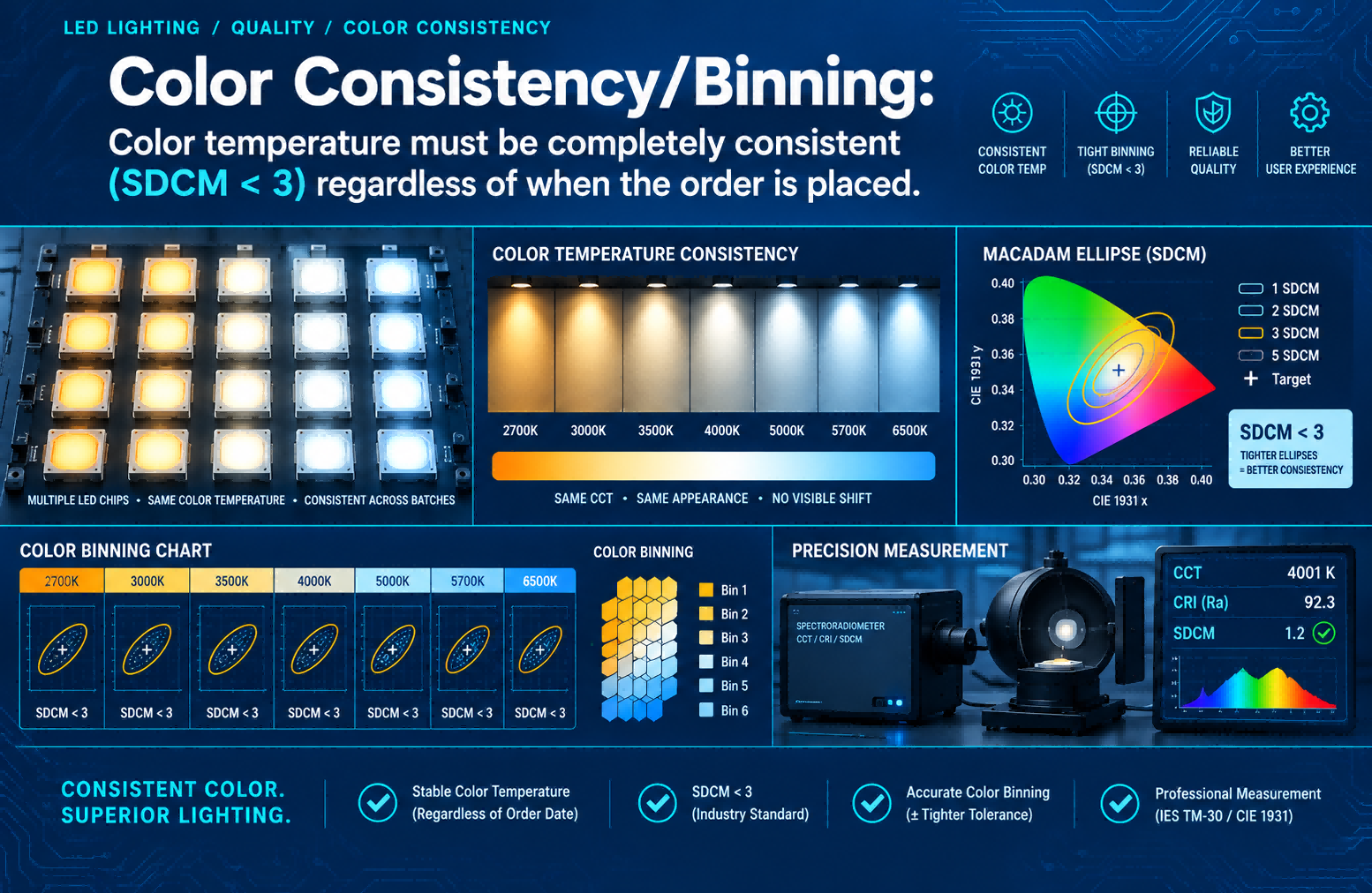
Common QC contents include: illumination, colour difference, length error, voltage stability, waterproof, etc.


11. logistics and customs clearance


The following information needs to be prepared when shipping:
Commercial invoice (need to specify the product name, quantity, unit price, etc.)
Packing list (specify the number of boxes, size, gross weight, net weight)
Transport documents (bill of lading, air waybill, courier number, etc.)
Certificate of origin (CO), export declaration (if necessary)
Copy of product certification (e.g. CE, RoHS, etc.)
If you operate your own customs clearance, you need to pay import tax (determined by the HS code) and other miscellaneous fees to your country's customs.


12 .Prepare to receive orders


Before the goods arrive at the port, please make the following preparations:
Contact the customs clearance agent or freight forwarder in advance to assist in declaration;
Prepare to pay relevant taxes and service charges;
Check the receiving address, warehouse time, loading and unloading methods;
If docking Amazon or other platforms, you need to reserve time for warehouse booking and labelling.
Thoroughly check the order and make a claim for damaged items
Immediately after receiving the goods should be:
Take photos of the outer packaging, barcode and box mark to check for shipping damage;
Unpack the box to sample check the performance of the light strip (such as brightness, current, voltage, colour consistency, etc.);
Check the quantity, model, colour and accessories against the order for consistency;
If problems are found, immediately take photos for record and negotiate with the factory or insurance party for claim.

13. Frequently Asked Questions and Risk Prevention


Types of problems Risk prevention measures
Unstable quality Sign contract, request samples, third-party quality inspection
Delivery delay Indicate the delivery date in the contract and set a default clause
Inconsistent quotations Uniform currency units, specify the validity period of quotations
Transport damage Require suppliers to purchase freight insurance
Difficulties in customs clearance Use experienced forwarder or customs clearance agent
Light bar out of specification Sample confirmation + detailed PI instructions
Risk of parallel importation Require the other party to have the right to export and compliance certification.


14. Long-term co-operation and brand development


Initial procurement success is just the beginning, it is recommended to gradually establish long-term cooperation mechanism:
Sign an annual cooperation agreement with the manufacturer to strive for better prices and priority delivery;
Launch own brand packaging and differentiated product series (e.g. smart strip light, pool LED strip light) according to market demand;
Build local inventory or co-operate with overseas warehouses to improve delivery capability;
Build R&D channels with factories and participate in new product design and sampling tests in advance;
Continuously monitor quality feedback to build brand reputation and customer loyalty.
With the systematic operation of the above 14 steps, importing light bars from China is no longer a complicated and high-risk affair. As long as you rigorously execute each step of the process, you can gain a strong competitive advantage in the global lighting market.
Contact ADLED for LED Lighting