

2025-04-18
How to choose LED strip color temperature?
How to choose LED strip color temperature?
LED strip lighting is a versatile and energy-efficient solution for both residential and commercial spaces. One of the most critical factors in achieving the perfect ambiance is selecting the right "color temperature".But with so many options—from warm white to cool daylight—how do you know which one is best for your project?
In this guide, we’ll explore:
✔ What is LED color temperature?
✔ Different color temperatures & their effects
✔ How to choose the appropriate color temperature?
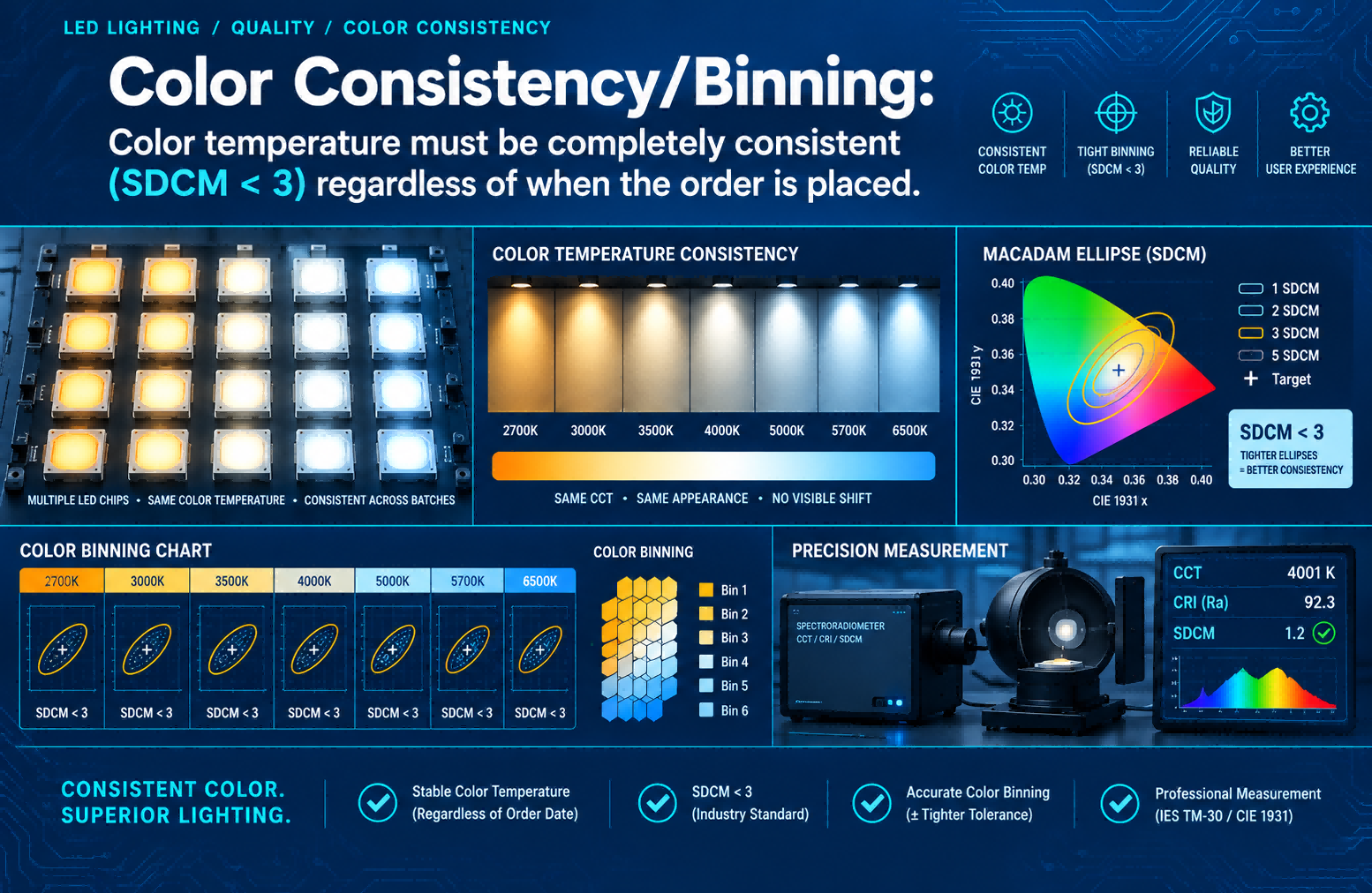
✔ Why Do LED Lights with the Same Color Temperature Look Different?
✔ Tunable White & RGB LED Strips
By the end, you’ll be able to confidently choose the ideal LED strip color temperature for any setting.
1. What Is LED Color Temperature?
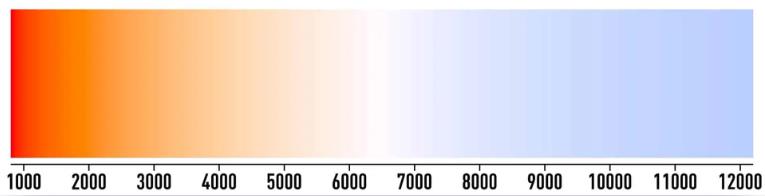
Color temperature is a unit of measurement that indicates the color component contained in light. Theoretically, the blackbody temperature refers to the color of an absolute blackbody after it has been heated from absolute zero (-273°C). When heated, the blackbody gradually changes from black to red, turns yellow, glows white, and finally emits blue light. When heated to a specific temperature, the spectral composition of the light emitted by the black body is called the color temperature. At this temperature, the unit of measurement is “K” (Kelvin).
The lower the color temperature value, the warmer the light color. The higher the color temperature value, the cooler the light color.
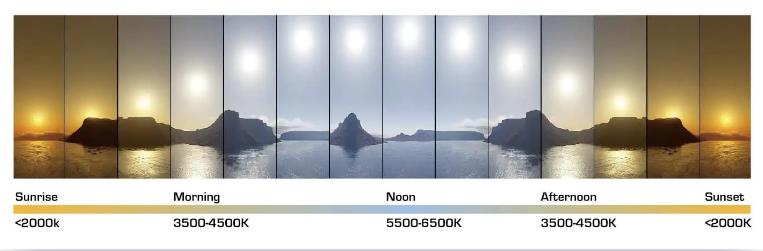
During the day, the color temperature of daylight constantly changes, from 2000K at sunrise and sunset to 5500-6500K at noon.
Kelvin Scale Explained:Color temperature is measured in "Kelvin (K)" and describes how "warm" or "cool" a light appears. Unlike brightness (measured in lumens), color temperature affects the "mood and functionality" of a space.
Here’s a quick breakdown of the Kelvin scale:
- Warm White (2000K - 3000K) – Soft, yellowish light (similar to candlelight or incandescent bulbs)
- Neutral White (3500K - 4500K) – Balanced white light (natural daylight)
- Cool White (5000K - 6500K) – Crisp, bluish-white light (mimics midday sunlight)
The higher the Kelvin value, the cooler (bluer) the light appears.
2. Different Color Temperatures & Their Effects
A. Warm White (2000K - 3000K) – Cozy & Inviting
Best for:
✔ Living rooms
✔ Bedrooms
✔ Restaurants & cafes
✔ Hospitality spaces
Effects:
- Creates a **relaxing, intimate** atmosphere
- Mimics sunset or candlelight
- Reduces eye strain in low-light environments
Avoid:
- Task lighting (too dim for detailed work)
- Workspaces (can feel too sleepy)
B. Neutral White (3500K - 4500K) – Natural & Balanced
Best for:
✔ Kitchens
✔ Bathrooms
✔ Offices
✔ Retail stores
Effects:
- Provides clear visibility without harshness
- Enhances color accuracy (great for makeup mirrors or product displays)
- Suitable for both relaxation and productivity
Avoid:
- Ultra-cozy spaces (may feel too clinical)
C. Cool White (5000K - 6500K) – Bright & Energizing
Best for:
✔ Garages & workshops
✔ Hospitals & clinics
✔ Commercial signage
✔ Security lighting
Effects:
- Increases alertness & focus
- Ideal for high-detail tasks (e.g., reading, crafting)
- Makes spaces feel larger and cleaner
Avoid:
- Bedrooms (can disrupt sleep)
- Restaurants (feels too sterile)
3. How to choose the appropriate color temperature?
(1)Common Mistakes to Avoid
❌ Mixing clashing temperatures(e.g., warm white in kitchen + cool white in dining area) → Creates visual inconsistency.
❌ Using only one temperature for all rooms → Different spaces need different moods.
❌ Ignoring CRI (Color Rendering Index) → A high CRI (90+) ensures colors look natural.
❌ Choosing too bright or too dim** → Balance lumens (brightness) with Kelvin (color).
(2)Match color temperature with your space
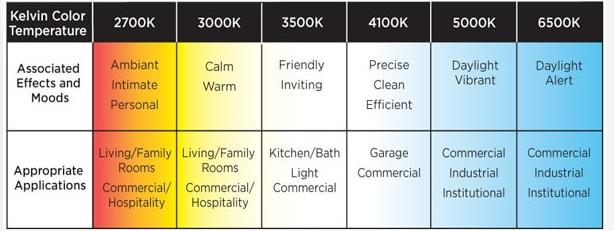
A. Residential Lighting
- Living Room / Bedroom → 2700K-3000K (warm & relaxing)
- Kitchen / Bathroom → 3000K-4000K (clean & functional)
- Home Office → 4000K-5000K (boosts concentration)
B. Commercial & Retail Lighting
- Restaurants → 2200K-3000K (cozy dining experience)
- Retail Stores → 3500K-4500K (accurate product colors)
- Offices → 4000K-5000K (reduces eye strain)
C. Outdoor & Task Lighting
- Pathway Lights → 3000K-4000K (safe yet inviting)
- Garage / Workshop → 5000K-6500K (maximum visibility)
4.Why Do LED Lights with the Same Color Temperature Look Different?
Even if two LED lights are labeled with the same color temperature (e.g., 3000K warm white), their actual appearance may vary. This discrepancy stems from multiple technical factors. Below are the key reasons and solutions:
(1)Measurement Errors in Color Temperature (Kelvin)
- Manufacturer Variations: Different brands may interpret "3000K" differently, with actual color temperatures potentially fluctuating within ±200K.
- Testing Standards: Color temperature measurements can be affected by ambient temperature and current stability, leading to color shifts in low-quality LEDs.
- Solution: Opt for high Color Rendering Index (CRI > 90) brands or request spectral test reports before purchasing.
(2)Impact of Color Rendering Index (CRI)
- Low CRI (<80): Makes colors appear unnatural, even if the color temperature is the same.
- Example: Under 4000K lighting, food may look pale with low CRI but vibrant with high CRI (95+).
- Solution: Prioritize LEDs with "CRI ≥ 90", especially for settings like kitchens or galleries where color accuracy matters.
(3)Differences in Spectral Distribution
- Full Spectrum vs. Standard LEDs:
- Standard LEDs use blue chips + phosphor to mimic white light, potentially missing certain wavelengths (e.g., deep red or cyan).
- Full-spectrum LEDs closely resemble natural light, offering better visual comfort at the same color temperature.
- Solution: For color-critical applications (e.g., photography, painting), choose "full-spectrum" LEDs.
(4)Fixture Design and Light Diffusion
- LED Density and Diffuser Material:
- High-density LEDs with frosted covers produce more uniform light, while sparse LEDs may appear "grainy."
- Example: A 3000K LED strip in an aluminum channel (with diffusion) looks softer than a bare strip.
- Solution: Use diffusers or indirect lighting to avoid direct exposure to LED chips.
(5)Voltage and Driver Stability
- Voltage Fluctuations: Poor-quality power supplies can cause color shifts (e.g., labeled 3000K but appearing greenish or purplish).
- PWM Dimming Interference: Low-frequency dimming may introduce flicker, affecting visual consistency.
- Solution**: Choose constant-current drivers and avoid cheap dimmers.
(6)Ambient Light and Contrast Effects
- Environmental Influence: The same light may appear different against white walls vs. dark wood surfaces.
- Contrast Effect: If adjacent rooms use 5000K cool white, a 3000K light will feel warmer by comparison.
- Solution**: Maintain uniform color temperatures in a space (e.g., 3000K throughout) or use smart lighting for dynamic adjustments.
5. Tunable White & RGB LED Strips
If you can’t decide, consider:
✔ Tunable White LED Strips – Adjust from warm to cool white (2700K-6500K).
✔ RGB + White LED Strips – Full color control + adjustable white temperatures.
Great for:
- Smart homes (voice-controlled lighting)
- Mood-based lighting (e.g., warm for evenings, cool for mornings)
6. How to Ensure LED Color Temperature Consistency?
1. Use the Same Brand and Batch: Minimizes manufacturing variations.
2. Verify CRI and Spectral Data: Prioritize lights with **RA > 90, R9 > 50**.
3. Use Professional Controllers: Tunable White systems can synchronize color temperatures.
4. Avoid Mixing Light Sources: Combining LEDs with halogens (even at the same color temp) creates inconsistency.
7. Conclusion
The perceived differences in LEDs with the same color temperature result from spectral composition, CRI, manufacturing quality, and environment. For high-consistency applications (e.g., commercial spaces, studios), we recommend:
✅ High-CRI (≥95) LEDs
✅ Same-batch products
✅ Professional optical design (diffusers, constant-current drivers)
Final Thoughts
Choosing the right LED strip color temperature depends on:
✅ The room’s purpose (relaxation vs. productivity)
✅ Desired ambiance (cozy vs. crisp)
✅ Matching existing lighting (avoid clashing tones)
Pro Tip: Test samples before full installation! What looks good in a store may feel different in your space.
FAQ
Can I mix different color temperatures in one room?
While possible, we recommend:
- Using consistent temperatures within the same visual space
- If mixing, maintain at least 1000K difference between zones
- Consider tunable white strips for flexibility
How does color temperature impact productivity?
- Warm whites (≤3000K): Promote relaxation
- Cool whites (≥5000K): Enhance alertness and focus
- Neutral whites (4000K): Ideal for balanced environments
What's the difference between color temperature and brightness?
- Color temperature (K): Light appearance (warm/cool)
- Brightness (lumens): Light intensity
Example: A 3000K 1000-lumen strip appears warm, while a 5000K 1000-lumen strip appears cooler at the same brightness.
Should I choose different temperatures for different times of day?
Yes! Consider:
- Morning/Daytime: 4000K-5000K for energy
- Evening: 2700K-3000K for relaxation
- Smart tunable white strips can automatically adjust throughout the day
Can I change the color temperature after installation?
Yes, through:
- Tunable white LED strips (adjustable 2700K-6500K)
- RGBW strips (color + adjustable white)
- Smart LED systems with app control
Need Help Selecting LED Strips? Contact Us!