

2026-02-03
LED Module Trends 2026: The Future is Warm, Smart & Healthy
LED Module Trends 2026: The Future is Warm, Smart & Healthy
As the early morning sun gently rises, an LED light module in a smart home office begins its day, transitioning from a warm, energizing glow to a crisp, focus-enhancing white.The global lighting industry is undergoing a quiet but profound revolution. The once-dominant cold, uniform glare of standard LED modules is being replaced by intelligent systems that adapt to human needs rather than the other way around.
By 2026, the smart lighting market in China alone is projected to reach ¥51.2 billion, with shipments exceeding 54 million units. This growth is fueled not by more light, but by better light—warmer, more intelligent, and fundamentally health-conscious.
This trend signals a shift from purely functional lighting to lighting with an emotional and biological purpose.
The Evolution of Illumination: From Brightness to Wellness
The story of the LED light module began with a singular goal: efficiency. Replacing incandescent bulbs and fluorescent tubes with solid-state lighting was a triumph of energy conservation. Yet, in achieving this goal, something essential was lost—the subtle quality of light that humans evolved under for millennia.
Today, the industry is correcting this oversight. The latest generation of smart LED modules is being designed with human-centric principles at their core, moving beyond simple on/off switches to systems that understand context, time of day, and biological need.
It’s a transition from “illumination” to “environment creation.”

Trend 1: The Ascendancy of Warmth
The most immediate sensory shift in 2026's lighting landscape is the overwhelming preference for warmth. The stark, blue-leaning light of early LEDs, often associated with sterile offices and hospital corridors, is being systematically phased out in residential and hospitality settings.
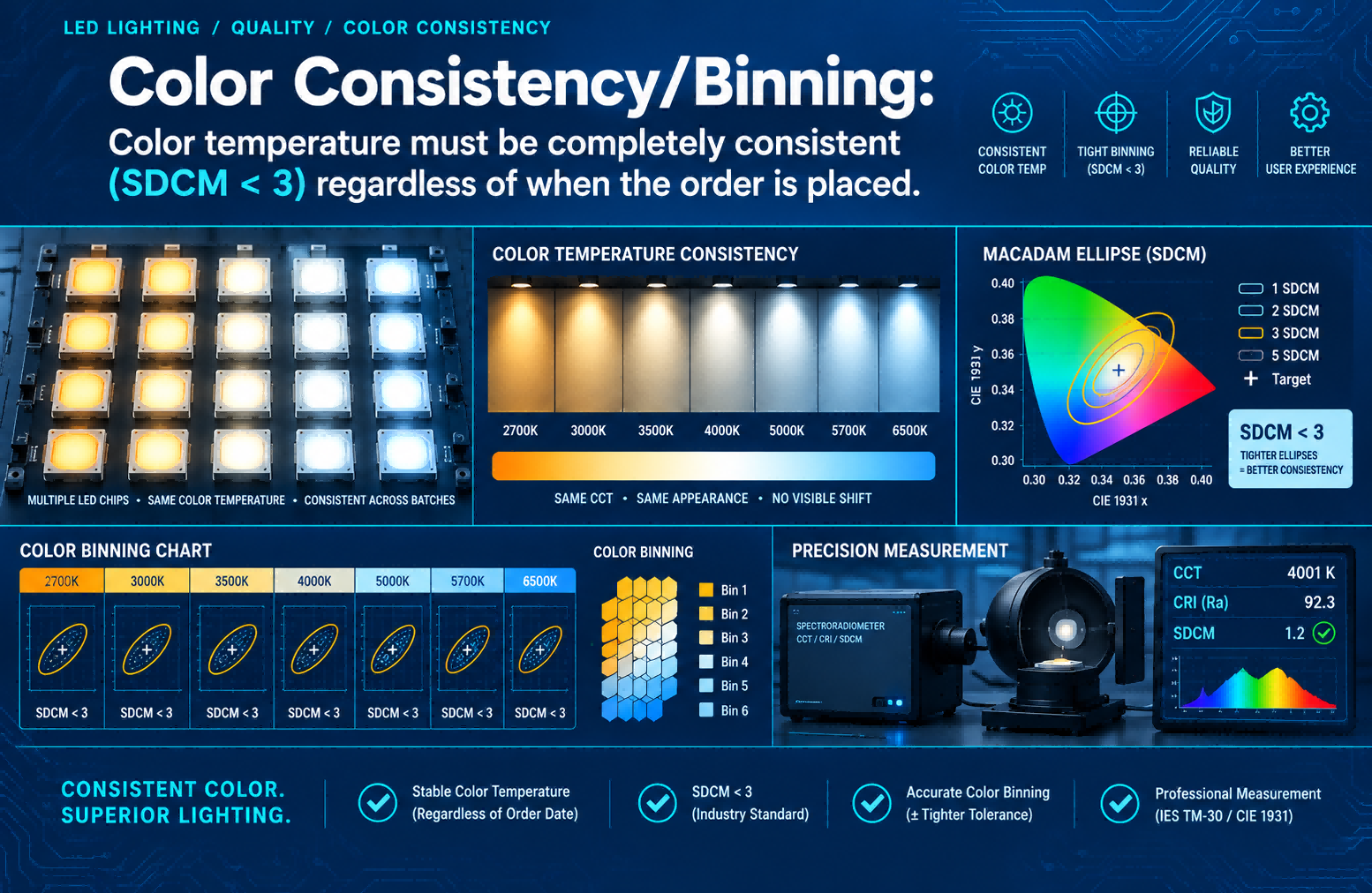
Market demand is now firmly aligned with LED module warm white technology, which produces a gentle, amber-tinted light similar to sunset or candlelight.
Why Warmth Wins
Scientific analysis reveals distinct advantages to warm white LED module products. Research comparing warm white and cool white LEDs has found that while cool white bulbs may offer slightly higher initial brightness (luminous flux), warm white LEDs demonstrate superior performance in power quality.
They tend to generate fewer harmonic distortions on electrical networks and contribute to a cleaner, more stable power supply—a significant technical benefit for large-scale installations and smart grids.
Psychologically and biologically, the preference is even clearer. Warm light, with its lower correlated color temperature (typically between 2700K and 3000K), signals relaxation and safety to the human brain. It reduces glare, minimizes pupil constriction, and helps prepare the body for rest by supporting the natural production of melatonin as evening approaches.
This has made the warm white LED module the default setting for smart home systems and a cornerstone of healthy lighting design.
Technological Reliability
A critical factor enabling this trend is proven reliability. Advanced tunable white LED module systems, which blend warm and cool white LED assemblies, have undergone rigorous testing.
Studies show these systems maintain excellent lumen output and color stability over time, with only minimal, barely perceptible shifts in chromaticity even after thousands of hours of operation. This durability gives manufacturers and consumers confidence to adopt the technology widely.

Table: Comparison of Warm White vs. Traditional Cool White LED Characteristics
| Characteristic | Warm White LED (3000K) | Cool White LED (6000K) | Implication for 2026 Trends |
|---|---|---|---|
| Typical Application | Living rooms, bedrooms, hospitality | Garages, industrial spaces, task lighting | Warm white dominates living spaces |
| Perceived Atmosphere | Cozy, relaxing, intimate | Energetic, alert, sterile | Aligns with demand for comfortable “home hospitality” |
| Power Quality & Harmonics | Generally better performance | Can present more harmonic challenges | Supports stable smart home ecosystems |
| Circadian Rhythm Impact | Supports evening melatonin production | Can suppress melatonin if used at night | Foundational for circadian lighting systems |
Trend 2: Intelligence Through Simplicity and Integration
The second pillar of the 2026 trend is intelligence, but not the complex, app-dependent intelligence of the past. The new benchmark is smart LED modules that are intuitive, flexible, and work seamlessly within broader ecosystems.
Plug-and-Play Modularity
The future is modular. Systems based on low-voltage rail ecosystems are moving from technical niches to design-center stage. These systems allow homeowners or designers to mix and match spotlights, pendants, and linear LED modules on a single track.
The true intelligence lies in the ability to reconfigure lighting for different activities—creating a focused work zone, a soft dining ambiance, or accent lighting for art—without requiring an electrician or rewiring. This plug-and-play flexibility empowers user creativity and extends the product's lifecycle.
Unified Ecosystems and Material Innovation
Smart lighting is no longer an island. The most successful smart LED module products in 2026 will be those that integrate effortlessly with major smart home platforms via universal standards like Matter.
This seamless integration allows lighting to become part of a scene that might also adjust thermostats, blinds, and audio. Furthermore, intelligence is expressed through material choice. Design trends favor natural, tactile materials like bamboo, rattan, linen, and textured ceramics, which naturally soften light and connect the indoors with the outdoors.
When a warm white LED module is housed in a hand-woven rattan shade, technology and nature collaborate to create a uniquely comforting atmosphere.
Trend 3: Lighting as a Health and Wellness Tool
The most transformative trend is the reconceptualization of light from a utility to an active contributor to human health. This is the domain of circadian lighting systems—technology designed to synchronize indoor light with the natural solar cycle to support our innate biological rhythms.
The Science of Circadian Light
Our circadian rhythm, the internal 24-hour clock regulating sleep, hormone release, and metabolism, is primarily set by light exposure. Circadian lighting systems use tunable white LED modules to dynamically adjust both the intensity and color temperature of light throughout the day.
In the morning, the system emits brighter, cooler light that suppresses melatonin and boosts cortisol, promoting alertness. As the day progresses, the light gradually dims and warms, encouraging relaxation and priming the body for restorative sleep.
The impact is measurable. A study in a German senior care facility compared rooms with traditional static lighting to those equipped with a dynamic circadian lighting system. Residents under the circadian light exhibited cortisol levels three times higher—comparable to healthy young adults—along with significantly reduced daytime drowsiness and improved sleep quality.
Mainstream Application and the Human-Centric Model
Once confined to specialized healthcare and research facilities, this health-focused technology is rapidly entering the mainstream. Cutting-edge research, like the “Sun-like Smart Circadian OLED Lighting” developed at National Tsing Hua University, is creating single lighting devices that can recreate the full, time-varying color spectrum of sunlight, from 1,500 K to 6,500 K.
This innovation promises to bring true biological lighting into homes and offices. This trend represents a broader shift toward a human-centric lighting model, where light fulfills a spectrum of needs: visual (to see), emotional (to feel), and biological (to thrive).
Converging for the Future: Integrated, Healthy Smart Homes
The ultimate expression of 2026's lighting trends is not a single product, but an integrated experience. Imagine a living space where:
The morning wake-up routine is gently initiated by a smart LED module system that simulates a gradual sunrise.
During the day, tunable white LED modules in the home office provide cool, focused light for maximum concentration, automatically adjusting based on the time and the amount of natural light from the window.
In the evening, the entire home shifts to a uniform, calming LED module warm white glow. Entertainment systems trigger a “movie night” scene, dimming lights to a specific level and warmth.
At bedtime, the circadian lighting system in the bathroom provides a very warm, dim light for getting ready for bed, avoiding the melatonin-suppressing effects of blue light.
In this scenario, lighting is no longer a passive fixture but an active, intelligent, and caring participant in daily life. It is personal, predictive, and focused squarely on enhancing well-being, comfort, and connection.
Conclusion
The trajectory for LED modules is clear. The race for the highest lumens per watt has evolved into a more sophisticated pursuit of quality of life per lumen. The future belongs to systems that are fundamentally warm in tone, intelligent in operation, and healthy in their intent.
For manufacturers, designers, and consumers, the message is to look beyond specifications and consider how light makes people feel and function. In 2026, the most advanced light isn't the brightest—it's the one that best understands and supports the human experience.

FAQ
What is the key difference between a basic LED module and a Smart LED Module?
A basic LED module provides static light. A smart LED module integrates a driver, sensors, and connectivity (like Wi-Fi or Zigbee). Its core intelligence lies in being dimmable, tunable, and remotely controllable, allowing it to sync with automation systems for scenes like "Focus" or "Sunset," transforming it from a simple light source into an interactive environmental tool.
Why is "Warm White" so dominant in 2026's trends? Is it just an aesthetic choice?
No, it's a holistic shift towards well-being. A warm white LED module (2700K-3000K) emits light similar to sunset or firelight, reducing eye strain and signaling relaxation. Crucially, evening exposure to warm white light helps protect natural circadian rhythms by minimizing melatonin suppression, making it foundational for both comfortable and healthy lighting designs.
What exactly is a Circadian Lighting System, and how is it different from dimmable lighting?
While dimmable lighting only changes brightness, a circadian lighting system is a health-focused bio-adaptive strategy. It uses intelligent algorithms to automatically adjust the color temperature and intensity of tunable white LED modules throughout the day—energizing cool light in the morning, gradually shifting to relaxing warm white by evening—mimicking the natural solar cycle to support alertness, mood, and sleep.
How does a Tunable White LED Module technically change its light color?
A tunable white LED module typically contains at least two sets of LED chips within one unit: one emitting warm white light and another emitting cool white light. The smart driver independently controls the power to each set. By precisely blending the intensity of these two light sources, the module seamlessly transitions across a full spectrum of white light temperatures (e.g., from 2700K to 6500K) without visible steps.
Are the trends of Warm, Smart, and Healthy lighting separate, or are they converging?
They are fundamentally converging. The future of lighting is integrative. The "Smart" capability enables the "Healthy" function (like circadian automation), and a primary output of that healthy function is the precise delivery of "Warm" light when needed. Therefore, the advanced LED light module of 2026 is not just one of these things—it is designed to be all three simultaneously, creating cohesive, human-centric environments.
If you have any questions about LED module products, please feel free to contact us at any time.