

2025-06-30
LED strip lights vs rope light which is the best?
LED strip lights vs rope light which is the best?
In the modern lighting field, LED strips and rope lights, as two popular linear lighting solutions, but they differ in design, structure, and use cases.
1. Understanding LED Strips and Rope Lights
2. In-Depth Analysis of LED Strips
3. Comprehensive Understanding of Rope Lights
4. Direct Comparison: LED Strips vs. Rope Lights
5. Application Scenarios
6.Troubleshooting Common Issues
2. In-Depth Analysis of LED Strips
3. Comprehensive Understanding of Rope Lights
4. Direct Comparison: LED Strips vs. Rope Lights
5. Application Scenarios
6.Troubleshooting Common Issues
1. Understanding LED Strips and Rope Lights
1.1 LED Strips
LED strips, also known as LED light bars or tape lights, are linear lighting products that use flexible printed circuit boards (FPC) as substrates with surface-mounted LED chips.
Structure: Consists of multiple LED beads soldered onto a flexible circuit board, typically covered with a waterproof or non-waterproof protective sleeve.
Lighting Characteristics: High brightness, uniform light distribution, capable of various color changes (single-color, RGB, etc.).
Flexibility: Highly flexible, can be bent and cut (at designated nodes), suitable for complex shapes.

1.2 Rope Lights
Rope lights, also called LED string lights or fairy lights, are linear lighting products that embed LED bulbs at fixed intervals within a transparent or semi-transparent plastic rope.
Structure: LED beads or bulbs are connected in series inside a transparent or colored plastic tube (rope).
Lighting Characteristics: Relatively lower brightness, dot-like light distribution, mostly single-color, some with flashing effects.
Flexibility: Moderately flexible but limited in bending, less adaptable to cutting.

2. In-Depth Analysis of LED Strips

2.1 Classification System of LED Strips
LED strip products are diverse and can be categorized along multiple dimensions:
By color:
Single-color strips: Fixed white or monochromatic light (e.g., warm white, pure white, cool white, red, green, blue)
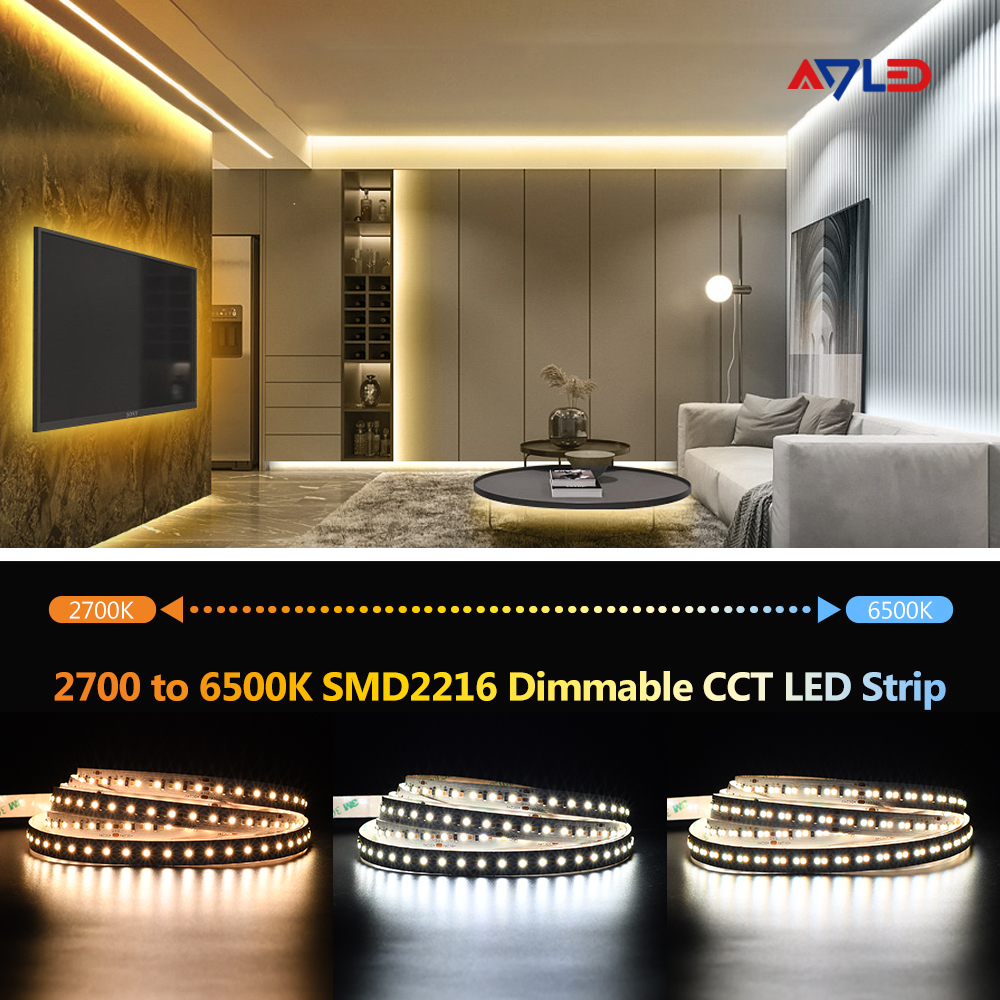
Dual-color temperature strips: Adjustable white light between 2700K-6500K
RGB multicolor strips: Mix red, green, and blue to produce various colors
RGBW strips: Add white LEDs to RGB for improved white light quality
Full-color strips: Use individually addressable LEDs for dynamic lighting effects
By waterproof rating:
Non-waterproof: Basic models for dry indoor environments only