2026-03-17
LED Tape Light Buying Guide: CRI, CCT, Density, and IP Ratings Explained
You unbox your new LED tape light, install it with excitement, then switch it on—only to discover your white walls look dingy, your artwork appears washed out, and individual LEDs glow like a dotted line across your ceiling. What went wrong? You bought based on lumens and price alone, ignoring the technical specifications that actually determine visual quality. In today's market flooded with best LED tape lights claims, understanding CRI (Color Rendering Index), CCT (Correlated Color Temperature), density, and IP ratings separates disappointing installations from transformative lighting. This guide cuts through marketing fluff to deliver actionable science—so your next LED tape light strips purchase elevates your space instead of cheapening it.
Stop Buying Blind: Why 80 CRI LED Tape Makes Your Home Look Cheap (And What 95+ CRI Fixes)
The Dot Dilemma: How High Density LED Strip Erases Visible LEDs on White Ceilings
IP20 vs IP65 vs IP67 vs IP68: Choosing the Right IP Rated LED Strip for Your Project
Voltage Drop Lies: Why Your 10m LED Tape Dimmed at 5 Meters—and the 24V Fix
3000K vs 4000K vs 6500K: How CCT Choice Affects Sleep, Mood & Your Home's Perceived Value
Outdoor LED Tape Failure: UV Degradation & Moisture Intrusion You Can't See Coming
Heat Kills LEDs: Why Aluminum Profiles Double Lifespan of High CRI LED Tape
The 3-Second Test: How to Verify True 95 CRI Before Installing Premium LED Tape Light
Beyond Brightness: Why High Density LED Strip at 120 LEDs/m Outperforms "Super Bright" Claims
Your Buying Checklist: CRI ≥95, Density ≥60 LEDs/m, IP Rating Matched to Zone
Conclusion
The Dot Dilemma: How High Density LED Strip Erases Visible LEDs on White Ceilings
IP20 vs IP65 vs IP67 vs IP68: Choosing the Right IP Rated LED Strip for Your Project
Voltage Drop Lies: Why Your 10m LED Tape Dimmed at 5 Meters—and the 24V Fix
3000K vs 4000K vs 6500K: How CCT Choice Affects Sleep, Mood & Your Home's Perceived Value
Outdoor LED Tape Failure: UV Degradation & Moisture Intrusion You Can't See Coming
Heat Kills LEDs: Why Aluminum Profiles Double Lifespan of High CRI LED Tape
The 3-Second Test: How to Verify True 95 CRI Before Installing Premium LED Tape Light
Beyond Brightness: Why High Density LED Strip at 120 LEDs/m Outperforms "Super Bright" Claims
Your Buying Checklist: CRI ≥95, Density ≥60 LEDs/m, IP Rating Matched to Zone
Conclusion
Stop Buying Blind: Why 80 CRI LED Tape Makes Your Home Look Cheap (And What 95+ CRI Fixes)
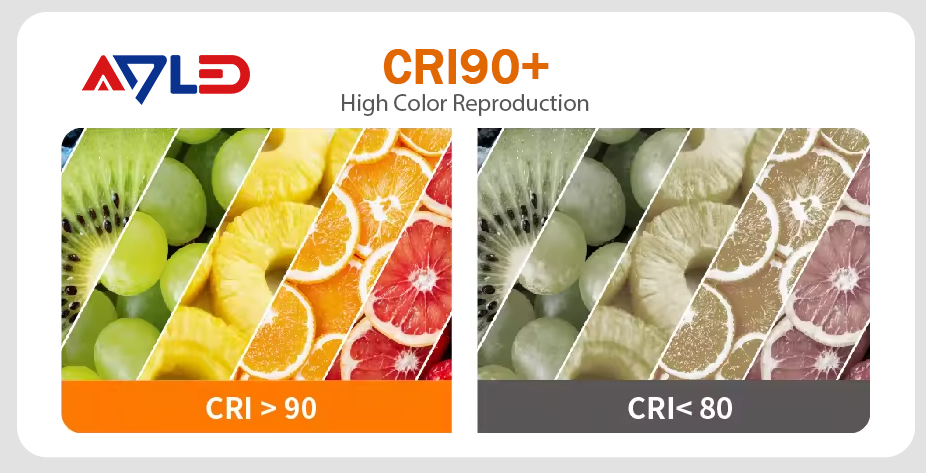
CRI measures how accurately a light source reveals colors compared to natural sunlight (CRI 100). Standard LED tape light often rates 70–80 CRI—a catastrophic compromise for living spaces. At 80 CRI, reds appear muddy, skin tones look sallow, and wood grains lose depth. Your expensive sofa fabric may look entirely different under store lighting versus your new tape. This isn't perception—it's physics. Low-CRI LEDs omit critical wavelengths in the red and cyan spectrums, flattening color dimensionality.
High CRI LED tape (95+ CRI) solves this by incorporating additional phosphors that fill spectral gaps. The difference is immediate: tomatoes regain vibrant reds, artwork pops with true-to-life hues, and your kitchen countertops reflect their intended warmth. For critical zones—vanities, kitchens, art displays—never accept below 90 CRI. Verify claims: reputable LED tape light suppliers provide spectral power distribution charts. If unavailable, assume marketing exaggeration. Investing in genuine CRI 95 LED strip technology costs marginally more but transforms how your entire home feels—rich, authentic, and intentionally lit.
The Dot Dilemma: How High Density LED Strip Erases Visible LEDs on White Ceilings
Ever installed LED tape strips only to see a dotted line of bright points when reflected on a white ceiling or glossy surface? This "dot dilemma" plagues low-density tape (30 LEDs/meter). Individual diodes create hotspots separated by dimmer gaps—a visual flaw magnified in indirect applications like coves.
High density LED strip technology (≥60 LEDs/meter, ideally 120 LEDs/meter) solves this by placing diodes closer together. At 120 LEDs/meter, the human eye perceives light as continuous rather than segmented—even when reflected. For LED tape coving or any application where light bounces off surfaces, density matters more than raw brightness. A 600-lumen high density LED tape at 120 LEDs/m outperforms a "super bright LED tape" at 30 LEDs/m because uniformity trumps peak output. When shopping, ignore vague "ultra bright" claims—demand exact LED count per meter. For seamless results on reflective surfaces, 96–120 LEDs/meter is the professional standard.
IP20 vs IP65 vs IP67 vs IP68: Choosing the Right IP Rated LED Strip for Your Project
IP (Ingress Protection) ratings define resistance to solids and liquids. Misunderstanding these leads to premature failure—especially with outdoor LED tape lighting or bathroom installations.
IP20: Basic indoor protection only. No moisture resistance. Suitable for dry, enclosed spaces like ceiling coves or inside cabinets. Never use in kitchens near sinks or any humid zone.
IP65: Protected against low-pressure water jets from any direction. Ideal for bathroom LED strip lights ip65 applications (mirror perimeters, vanity undersides) and covered outdoor areas like pergolas. Not submersible.
IP67: Withstands temporary immersion (up to 1 meter for 30 minutes). Perfect for outdoor steps, deck edges, or shower niches where splashing occurs. Resists moisture intrusion during heavy rain.
IP68: Continuous submersion rated (depth/time specified by manufacturer). Required for pool steps, fountains, or fully exposed exterior installations subject to standing water.
Critical insight: IP rating applies to the entire system—tape, connectors, and end caps. A single unsealed connector drops your ip rated LED strip from IP67 to IP20. For exterior LED tape projects, always use silicone-sealed connectors and end caps rated to match your tape's IP level. When in doubt, over-specify: IP67 for most outdoor residential applications provides robust safety margin.
Voltage Drop Lies: Why Your 10m LED Tape Dimmed at 5 Meters—and the 24V Fix
You installed a 10m LED tape run, powered it on, and noticed the first half glowed brightly while the end dimmed noticeably—perhaps shifting to an orange hue. This is voltage drop: electrical resistance in copper traces causes power loss over distance. At 12V, voltage drop becomes severe beyond 5 meters (16.4 feet), especially with high density LED strip drawing more current.
The solution isn't thicker tape—it's higher voltage. 24 volt LED tape light systems cut current draw in half for the same wattage, dramatically reducing voltage drop. A 10-meter run that fails at 12V performs uniformly at 24V. For runs exceeding 5 meters:
Use 24v LED tape exclusively
Implement dual power injection (wires from driver to both ends)
Avoid daisy-chaining multiple 5m LED tape segments—each connection adds resistance
Verify performance before final installation: power the full run and measure voltage at the far end with a multimeter. If below 90% of source voltage (e.g., <21.6V for a 24V system), add a mid-run power tap. This single step prevents the most common DIY failure—uneven lighting that undermines premium aesthetics.
3000K vs 4000K vs 6500K: How CCT Choice Affects Sleep, Mood & Your Home's Perceived Value
CCT (Correlated Color Temperature) defines light "warmth" measured in Kelvin (K). This isn't preference—it's biology.
2700K–3000K (Warm White): Amber-rich spectrum mimics sunset. Supports melatonin production, ideal for bedrooms, living rooms, and warm LED tape light stair applications. Creates cozy, inviting atmospheres—proven to increase perceived home value in real estate studies.
3500K–4000K (Neutral White): Balanced spectrum. Suitable for kitchens and home offices where task clarity matters without clinical harshness.
5000K–6500K (Cool White/Daylight): Blue-rich spectrum suppresses melatonin, increases alertness. Appropriate for garages or workshops—but disastrous in living spaces at night. Causes eye strain and disrupts circadian rhythm.
Critical mistake: mixing CCTs in connected spaces. A 4000K kitchen flowing into a 3000K dining area creates visual dissonance. For whole-home harmony, standardize on 2700K–3000K for ambient lighting. Reserve cooler temperatures for isolated task zones only. Variable color temperature LED strip systems offer flexibility—but default to warm white after sunset for health and comfort.
Outdoor LED Tape Failure: UV Degradation & Moisture Intrusion You Can't See Coming
Exterior LED tape faces invisible enemies: UV radiation degrades silicone coatings and phosphors over time, causing yellowing and lumen depreciation. Moisture wicks through microscopic gaps in connectors, corroding copper traces months before visible failure.
Prevention requires three layers:
UV-Stable Materials: Specify tape with UV-resistant silicone jacketing (not PVC). Verify with supplier—many "outdoor" tapes lack true UV protection.
IP67+ Rating: For fully exposed installations, ip68 LED tape provides essential submersion resistance during heavy rain or snowmelt.
Sealed Connections: Every splice must use marine-grade, silicone-filled connectors. Standard clip connectors fail outdoors within one season.
Install outdoor LED tape light in channels with drainage holes to prevent water pooling. Never bury tape directly in soil—always mount on rigid backing. For deck steps or pathways, recess tape into grooves rather than surface-mounting to avoid physical damage. Remember: outdoor installations demand 20% higher upfront investment but prevent 100% replacement costs within two years.
Heat Kills LEDs: Why Aluminum Profiles Double Lifespan of High CRI LED Tape
High CRI LED tape generates more heat than standard tape—additional phosphors convert energy less efficiently. Without thermal management, junction temperatures soar, accelerating lumen depreciation and color shift. Mounting tape directly to wood or drywall traps heat, cutting lifespan from 50,000 to 15,000 hours.
Aluminum profiles solve this by acting as continuous heatsinks. Thermal imaging shows profiles reduce diode temperatures by 30–40°C—directly correlating to doubled operational life. Benefits cascade:
Stable color output (no yellowing over time)
Consistent brightness across entire run
Protection from physical damage
Enhanced diffusion when paired with opal covers
For any permanent installation—especially high density LED strip drawing significant current—aluminum extrusion isn't optional. It's the single most cost-effective upgrade for longevity. Budget 15% more for profiles; you'll avoid 100% replacement costs down the line.
The 3-Second Test: How to Verify True 95 CRI Before Installing Premium LED Tape Light
Manufacturers often exaggerate CRI ratings. Verify authenticity before installation:
Place a color-rich object under the lit tape (e.g., red apple, multicolored magazine page)
Compare against natural daylight or a known 95+ CRI source
If reds appear brownish or blues look muted, CRI is likely ≤85
For precision: request the R9 value (saturated red rendering) from your LED tape manufacturer. True 95 CRI tape maintains R9 >90. Many "90 CRI" tapes score R9 <0—making reds appear gray. Never accept CRI claims without R9 data for critical applications. This 3-second test prevents costly rework after installation.
Place a color-rich object under the lit tape (e.g., red apple, multicolored magazine page)
Compare against natural daylight or a known 95+ CRI source
If reds appear brownish or blues look muted, CRI is likely ≤85
For precision: request the R9 value (saturated red rendering) from your LED tape manufacturer. True 95 CRI tape maintains R9 >90. Many "90 CRI" tapes score R9 <0—making reds appear gray. Never accept CRI claims without R9 data for critical applications. This 3-second test prevents costly rework after installation.
Beyond Brightness: Why High Density LED Strip at 120 LEDs/m Outperforms "Super Bright" Claims
Marketing emphasizes lumens, but human perception prioritizes uniformity. A super bright LED tape at 30 LEDs/meter creates harsh hotspots between diodes. At 120 LEDs/meter, light blends seamlessly—even at lower total lumens.
Density also impacts thermal performance: spreading the same wattage across more diodes reduces heat per point, extending lifespan. For flexible LED tape applications requiring bends or curves, high density maintains continuity through transitions where low-density tape would show visible gaps.
When comparing specifications, prioritize LEDs per meter over lumens per foot. For premium results:
Ambient lighting: ≥60 LEDs/meter
Reflective surfaces (white ceilings): ≥96 LEDs/meter
Critical task zones: 120 LEDs/meter with 95+ CRI
This approach delivers visual comfort that raw brightness cannot replicate.
Your Buying Checklist: CRI ≥95, Density ≥60 LEDs/m, IP Rating Matched to Zone
Before purchasing LED tape light strips, validate these non-negotiables:
CRI: ≥95 for living spaces; ≥90 minimum for utility areas. Demand R9 value >90.
Density: ≥60 LEDs/meter for general use; ≥96 LEDs/meter for coves or reflective surfaces.
IP Rating: Match precisely to environment—IP20 (dry indoor), IP65 (bathrooms/covered outdoor), IP67+ (exposed exterior).
Voltage: 24V for runs >5 meters to prevent voltage drop.
Thermal Management: Budget for aluminum profiles—never mount directly to surfaces.
Certifications: UL/ETL listing mandatory for fire and electrical safety.
Dimmability: Confirm compatibility with your existing dimmer type (TRIAC, 0–10V, PWM).
Print this checklist. Bring it to suppliers. Reject products lacking verifiable specs. This discipline transforms lighting from commodity purchase to curated architectural element.
Conclusion
Premium LED tape light isn't defined by price tags—it's engineered through intentional specification. CRI ≥95 preserves color authenticity. High density erases visual artifacts. Correct IP ratings ensure environmental resilience. 24V systems guarantee uniformity across distance. Aluminum profiles double operational life. Together, these choices create lighting that feels inevitable—not installed. It enhances without announcing itself, protects circadian health, and withstands years of use without degradation. Stop buying based on lumens alone. Start specifying like a professional. Your home's ambiance, safety, and perceived value depend on these invisible details made visible through thoughtful selection.
FAQ
Can I cut high CRI LED tape?
Cut only at marked copper pads. Seal ends with silicone for IP-rated tape. Never cut between pads—breaks circuits permanently.
12V vs 24V for 10m LED tape?
Use 24V for runs >5m. Halves voltage drop vs 12V. Prevents dimming at far end. Critical for uniform stair/cove lighting.
IP65 vs IP67 for bathroom?
IP65: splash zones (vanity edges). IP67: shower niches/wet walls. Never use IP20 indoors near moisture—causes early failure.
Why choose 95 CRI LED strip?
80 CRI washes out reds/skin tones. 95+ CRI renders true colors—art, food, fabrics look authentic. Non-negotiable for living spaces.
Best density for cove lighting?
≥96 LEDs/meter. Erases visible dots on white ceilings. 30 LEDs/m shows harsh segmentation when reflected. Density > raw brightness.
Warm vs cool CCT at night?
3000K supports melatonin; 4000K+ disrupts sleep. Use warm white on stairs/bedrooms. Cool white only for daytime task zones.
Aluminum profile necessary?
Yes. Draws heat from diodes—doubles lifespan. Prevents yellowing/flicker. Never mount high-density tape directly to wood/drywall.
Outdoor LED tape UV protection?
Specify UV-stable silicone jacketing. Standard PVC yellows in 6 months. IP67+ rating alone doesn't guarantee UV resistance—verify with supplier.
Test true 95 CRI before install?
Place red apple under tape. Compare to daylight. Muddy reds = fake CRI. Demand R9 value >90 from supplier—many "90 CRI" tapes score R9 <0.
Smart LED tape safety override?
Always include manual switch independent of app/motion sensors—especially for stairs. Smart failures shouldn't plunge egress paths into darkness.