LED Tape vs LED Strip Lights: What's the Difference?
2026-02-04

LED Tape Lights vs LED Strip Lights:What is the Difference?

LED Tape Lights vs LED Strip Lights: What’s the Difference?

When it comes to flexible, energy-efficient lighting solutions for homes, offices, or commercial spaces, “LED tape lights” and “LED strip lights” are terms you’ll often hear used interchangeably. At first glance, they appear identical—thin, flexible circuits embedded with tiny LEDs that can be cut, bent, and installed almost anywhere. But is there a real difference between them? Or is it just a matter of branding and regional language?
1.Terminology: It’s Mostly About Words
2.Physical Characteristics: Same Core Design
3.Performance & Functionality: No Practical Difference
4.Common Misconceptions
5.When Does the Name Matter?
6.Quality Indicators to Watch For
7.Installation Tips (Regardless of Name)
8.Industry Trends: Convergence and Clarity
9.Final Perspective: Language vs. Reality
10.FAQ
11.Summary

Terminology: It’s Mostly About Words

Let’s start with the basics: there is no technical or industry-standard difference between “LED tape lights” and “LED strip lights.” Both refer to the same type of product—a flexible printed circuit board (PCB) populated with surface-mounted light-emitting diodes (SMD LEDs), resistors, and sometimes integrated controllers.
The variation in naming stems largely from regional preferences and historical usage:
  • In the United Kingdom, Europe, and parts of Asia, the term “LED tape” is more common. This likely originates from the product’s physical resemblance to adhesive tape—thin, rollable, and often backed with sticky material.
  • In the United States and Canada, “LED strip” dominates the market vocabulary. “LED strip” evokes imagery of a long, narrow band—accurate, but less descriptive of its flexible, tape-like nature.
Manufacturers may use either term based on their target market, but the underlying technology remains consistent. So if you’re comparing specs and see “LED tape” in one listing and “LED strip” in another, don’t assume they’re fundamentally different products.

Physical Characteristics: Same Core Design

Whether called LED tape or LED strip, these lights share key design features:
  • Flexible PCB substrate:

Usually made of polyimide or similar materials, allowing bending along the length (but not sideways).
  • Adhesive backing:

Most come with 3M or equivalent double-sided tape for easy mounting.
  • Cut points:

Marked at regular intervals (e.g., every 2–4 inches) where you can safely cut the LED strip without damaging the circuit.
  • IP ratings:

Available in various levels of water and dust resistance—from IP20 (indoor dry use) to IP67/IP68 (outdoor or underwater applications).
  • Color options:

Include single-color (warm white, cool white, etc.), RGB (red-green-blue), RGBW (adds white), and tunable white (adjustable color temperature).
In short, form follows function, and both “LED tape” and “LED strip” describe that form accurately—just with different words.

Performance & Functionality: No Practical Difference

From a performance standpoint, there’s zero distinction based on the name alone. What matters are the specifications:
  • LED density (e.g., 30 LEDs/meter vs. 120 LEDs/meter)
  • Power consumption (watts per meter)
  • Voltage (typically 12V or 24V DC)
  • Color rendering index (CRI) – important for accurate color representation
  • Dimmability and control compatibility (e.g., works with PWM dimmers, smart controllers)
Two products—one labeled “LED tape,” the other “LED strip”—can perform identically if they share the same specs. Conversely, two “LED strips” from different brands might behave very differently due to component quality or design.
So when shopping, ignore the label (“LED tape” vs. “LED strip”) and focus on technical details and build quality.

Common Misconceptions

Several myths persist around these terms. Let’s debunk a few:

Myth 1: “LED Tape lights are lower quality than LED strip lights.”


False. Quality depends on the manufacturer, not the name. Premium brands use high-grade LEDs (like ADLED), robust copper traces, and proper thermal management—regardless of whether they call it LED tape or LED strip.

Myth 2: “Tape lights are only for temporary use.”


Not true. Many “LED tape” lights are rated for permanent installation, especially those with high IP ratings and UL/CE certifications. The adhesive backing is designed to last years when applied correctly to clean, dry surfaces.

Myth 3: “LED Strip lights are always rigid.”


No. While rigid LED bars exist (sometimes called “LED profiles” or “aluminum channels”), the term “LED strip” overwhelmingly refers to flexible versions in consumer contexts.

When Does the Name Matter?

In practice, the name rarely affects your decision—but it can influence search results and product categorization. For example:
  • Searching “LED tape” on a UK-based retailer site may yield more relevant results than “LED strip.”
  • In technical datasheets or B2B contexts, “LED strip” is slightly more standardized globally.
  • Some contractors or electricians may have a preferred term based on training or regional norms.
But again, this is about communication—not capability.

Choosing the Right Product: Focus on Use Case

Instead of worrying about “LED tape vs. LED strip,” ask yourself:

1.Where will it be installed?

  • Indoors (cabinets, coves, shelves)? → IP20 is fine.
  • Outdoors or wet areas (under cabinets, pools, bathrooms)? → Choose IP65 or higher.
Where will it be installed?

2.What brightness and color do I need?

  • Task lighting? Go for high lumen output and CRI >90.
  • Ambient mood lighting? RGB or tunable white offers flexibility.

What brightness and color do I need?

3.How long is the run?

  • Longer runs (>5m) benefit from 24V systems to reduce voltage drop.
  • For very long installations, consider parallel wiring or amplifiers.

How long is the run?

4.Do I need smart control?

  • Look for LED strips compatible with Wi-Fi, Bluetooth, Zigbee, or DMX if integrating with smart home systems.

Do I need smart control?

5.Is ease of installation critical?

  • Pre-wired kits with plug-and-play connectors simplify DIY projects.
  • Solderless connectors save time but may be less reliable than soldered joints for permanent setups.
By focusing on these practical questions, you’ll land on the right product—whether it’s marketed as LED tape or LED strip.

Quality Indicators to Watch For

Quality Indicators to Watch For
Since naming doesn’t reflect quality, look for these signs of a well-made product:
  • Thick copper traces on the PCB (reduces heat and voltage drop)
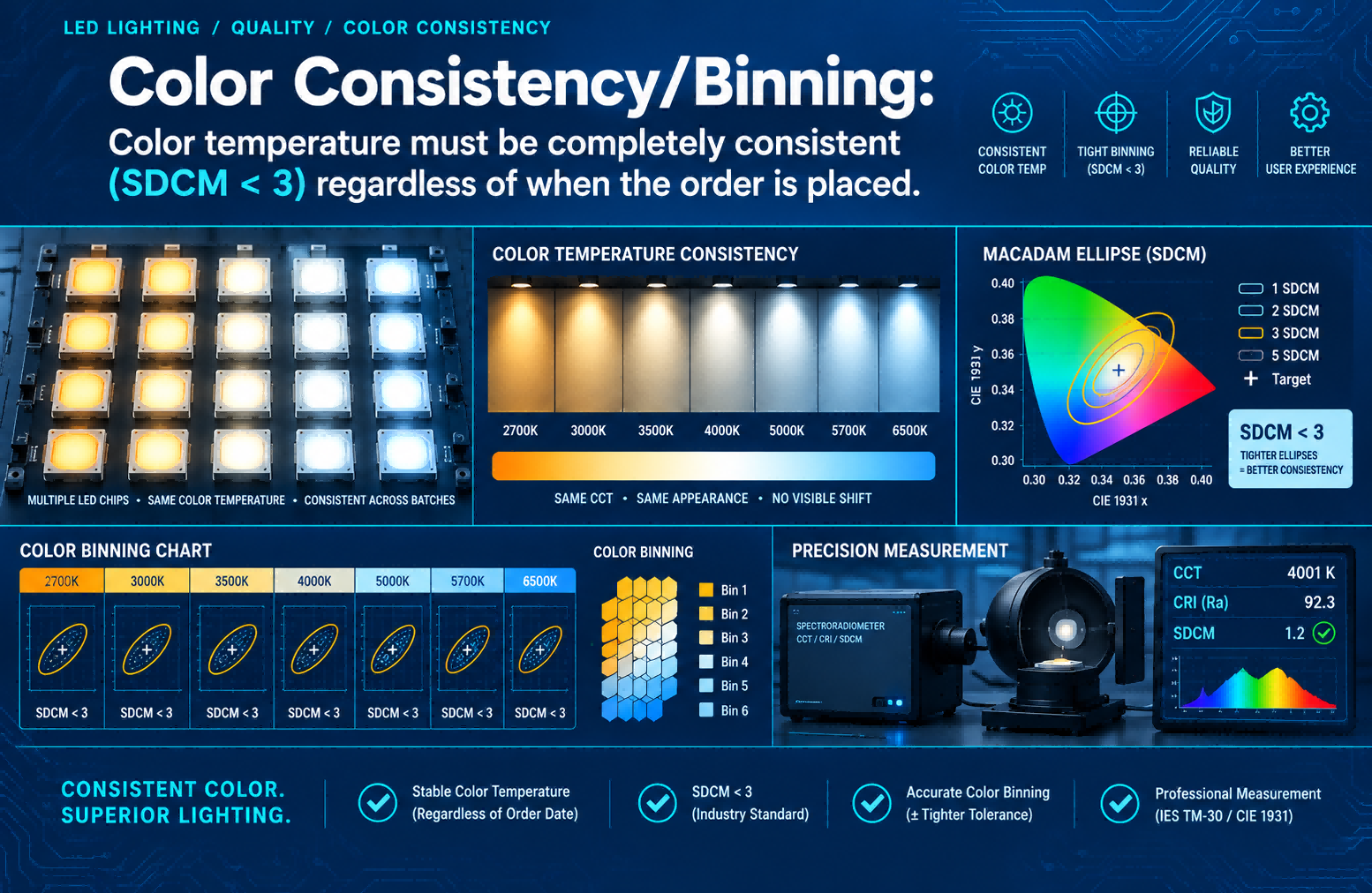
  • Consistent LED binning (ensures uniform color and brightness)
  • Reputable LED chip brands (e.g., Samsung, Osram, Nichia—not generic “SMD5050” without origin info)
  • Clear labeling of voltage, wattage, cut lines, and polarity
  • Certifications like UL, CE, RoHS, or ETL (indicates safety and compliance)
Avoid ultra-cheap options from unknown brands—they often overstate brightness, use thin PCBs that overheat, and lack consistent color output.

Installation Tips (Regardless of Name)

  • Clean the surface thoroughly before applying adhesive backing—dust or grease reduces adhesion.
  • Avoid sharp bends or kinks—flex only along the length, not across the width.
  • Use aluminum channels for better heat dissipation and a polished look (especially for white light).
  • Don’t exceed max run lengths specified by the manufacturer to prevent dimming at the end.
  • Always use a properly rated power supply—undersized adapters cause flickering or failure.
These best practices apply universally, reinforcing that the product’s behavior matters far more than what it’s called.

Industry Trends: Convergence and Clarity

As global e-commerce grows, the distinction between “LED tape” and “LED strip” is fading. Major retailers like Amazon, Home Depot, and AliExpress list both terms in product titles to capture broader search traffic. Technical documentation increasingly standardizes on “LED strip” as the default term, but “LED tape” remains entrenched in certain markets.
What’s more significant than naming is the evolution of the technology itself:
  • Higher efficiency (more lumens per watt)
  • Better color accuracy (CRI >95 becoming common)
  • Integrated smart features (onboard Wi-Fi, voice control)
  • Improved durability (silicone-coated, UV-resistant variants)
These advances benefit all users—regardless of whether they say “LED tape” or “LED strip.”

Final Perspective: Language vs. Reality

At the end of the day, “LED tape lights” and “LED strip lights” are the same thing described with different words. It’s akin to saying “soda” vs. “pop” or “lift” vs. “elevator”—a linguistic quirk, not a technical divergence.
Your time is better spent understanding:
  • Your lighting needs
  • Required specifications
  • Installation environment
  • Quality benchmarks
Rather than debating semantics. The market responds to demand, not dictionary definitions. As long as you know what performance you need, the name on the box won’t affect your results.
So go ahead—buy the “LED tape” if it’s cheaper, or the “LED strip” if it has better reviews. Just check the specs, and you’ll be fine.

FAQ

Can I use LED tape lights and LED strip lights together in the same circuit?

Yes, as long as they share the same voltage, LED type (e.g., both RGB or both warm white), and controller compatibility. Always verify electrical specs before connecting.

Are LED tape lights harder to install than LED strip lights?

No. Installation difficulty depends on the product’s design (e.g., connector type, adhesive quality), not the name. Both typically use the same mounting methods.

Do professionals prefer one term over the other?

In North America, electricians and designers usually say “LED strip.” In the UK and Europe, “LED tape” is more common. Neither implies superiority.

Is one term more “modern” or “outdated”?

Neither. Both terms are actively used. “LEd strip” appears more frequently in technical literature, but “LED tape” remains standard in many regions.

Will using the “wrong” term confuse suppliers or installers?

Unlikely. Most vendors understand both terms refer to the same product category. If in doubt, include a photo or link when ordering.

Summary

There is no functional, technical, or performance difference between LED tape lights and LED strip lights—they are two names for the same flexible LED lighting product. The choice of terminology is primarily regional or stylistic. When selecting lighting, prioritize specifications (voltage, IP rating, LED density, color quality) and build quality over the label. Focus on your application needs, and you’ll achieve the desired result regardless of whether the box says “LED tape” or “LED strip.”
Contact ADLED for LED Strip