2025-06-30
The Certification of LED Strip Lights
What is the certification of led strip lights?
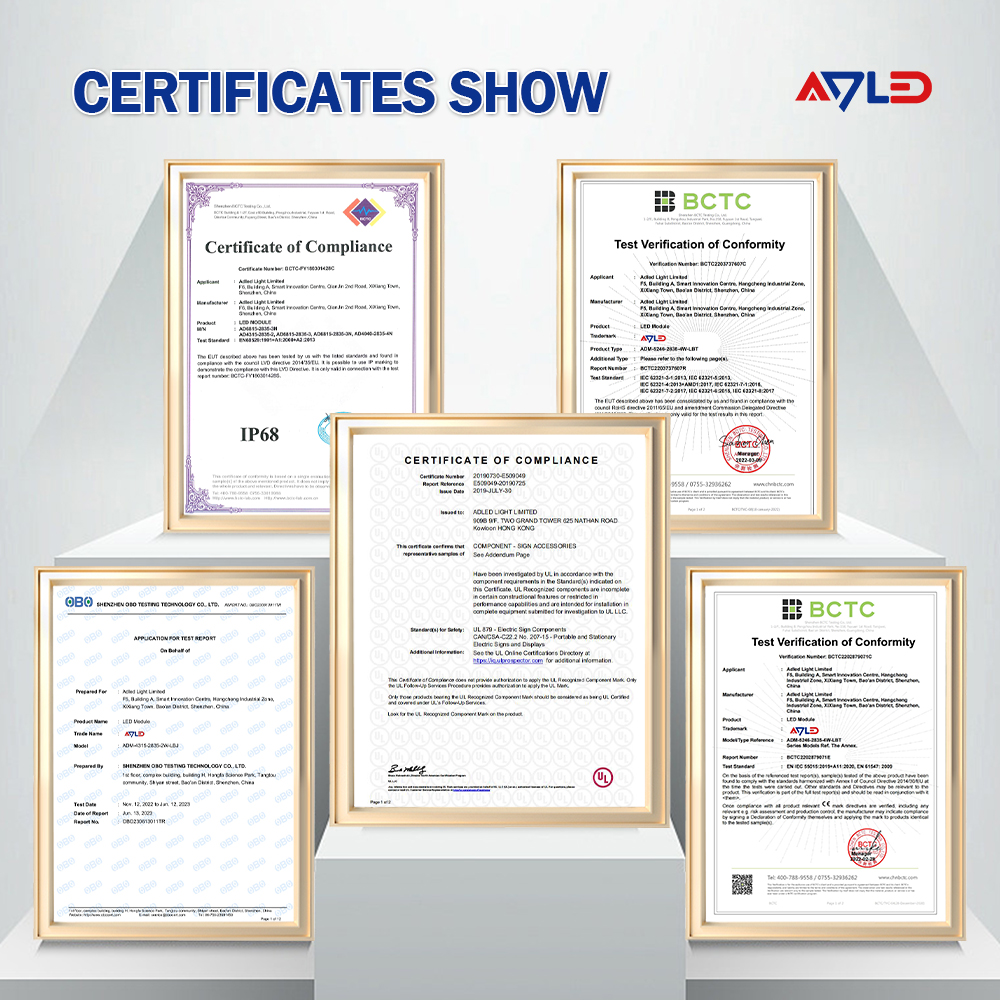
LED light strips are widely used in residential, commercial, and industrial lighting due to their energy efficiency, flexible installation, and long lifespan. However, different countries and regions have varying safety, performance, and environmental requirements, making certification mandatory for legal sales and use. This article provides a detailed overview of LED light strip certification, including its definition, classifications, importance, application process, and maintenance, helping manufacturers, distributors, and consumers understand its necessity.
1. Basic Concepts of LED Light Strip Certification
2. Certification Classifications
3. 30 Key Global Certifications for LED Light Strips
4. Why Certification Matters?
5. How to Obtain Certification? (UL Example)
6. Pre-Application Considerations
7. Certification Benefits
8. Maintenance & Renewal
9. FAQs
2. Certification Classifications
3. 30 Key Global Certifications for LED Light Strips
4. Why Certification Matters?
5. How to Obtain Certification? (UL Example)
6. Pre-Application Considerations
7. Certification Benefits
8. Maintenance & Renewal
9. FAQs
1. Basic Concepts of LED Light Strip Certification
1.1 Definition and Importance
LED light strip certification refers to the evaluation process conducted by authoritative agencies to assess product safety, electromagnetic compatibility (EMC), energy efficiency, and environmental impact, followed by the issuance of compliance certificates. Key objectives include:
Ensuring Safety: Preventing fire or electric shock risks caused by electrical faults, overheating, or material defects.
Regulatory Compliance: Different markets (e.g., EU, North America, Asia) have unique entry standards; certification is often mandatory.
Enhancing Brand Trust: Marks like CE or UL boost consumer confidence and competitiveness.
Facilitating Global Trade: Certifications reduce technical trade barriers, easing market access.
1.2 Common Certification Bodies
International: IEC (International Electrotechnical Commission), ISO.
Europe: CE, TÜV (Germany), ENEC.
North America: UL (USA), ETL, FCC.
China: CCC (mandatory), CQC (voluntary).
Others: PSE (Japan), KC (Korea), BIS (India).
2. Certification Classifications
2.1 Safety Certifications
UL (USA/Canada): Compliance with North American electrical safety standards.
CE (EU): Meets EU safety, health, and environmental directives.
CCC (China): Mandatory for domestic sales.
2.2 EMC Certifications
FCC (USA): Ensures minimal interference with other electronics.
EN 55015 (EU): Limits electromagnetic emissions.
2.3 Energy Efficiency Certifications
Energy Star (USA): High-efficiency products.
ERP (EU): Evaluates energy performance.
2.4 Environmental Certifications
RoHS (EU): Restricts hazardous substances (e.g., lead, mercury).
REACH (EU): Controls chemical impacts on health/environment.
3. 30 Key Global Certifications for LED Light Strips
3.1 North America
UL/ETL: Safety compliance (UL 2108, UL 1993).
FCC: EMC for wireless/high-frequency products.
Energy Star/DLC: Energy efficiency (commercial/residential).
3.2 Europe
CE: Mandatory for LVD, EMC, RoHS.
ENEC/TÜV/GS: Stricter safety benchmarks.
ERP: Energy performance (≥80 lm/W).
3.3 Asia
CCC (China): Mandatory GB 7000.1 compliance.
PSE (Japan): Circular (non-specific) or diamond (specific) marks.
KC (Korea)/BIS (India): Local safety standards.
3.4 Others
RoHS/REACH: Hazardous substance control.
IP/IK Ratings: Dust/water/impact resistance (e.g., IP65, IK08).
CB Scheme: Converts IEC standards to local certifications.
3.5 Special Certifications
LM-80 (USA): Tests LED lumen maintenance (6,000+ hours).
SAA/RCM (Australia/NZ)**: Joint safety-EMC compliance.
GOST-R (Russia)/INMETRO (Brazil)**: Regional mandates.
4. Why Certification Matters?
Market Access: Avoid customs detention or sales bans.
Legal Risk Mitigation: Prevent fines or recalls.
Consumer Trust: Certified products signal reliability.
Supply Chain Optimization: Ensures compliant raw materials.
5. How to Obtain Certification? (UL Example)
5.1 Steps
1. Select a body (e.g., UL, TÜV).
2. Submit documents (circuit diagrams, specs).
3. Sample testing (safety, EMC).
4. Factory audit.
5. Receive certification.
5.2 Key Tests
Electrical safety (voltage endurance, insulation).
Fire resistance (material flammability).
Photobiological safety (blue light hazard).
6. Pre-Application Considerations
Target Market Rules: e.g., CE for EU, UL for USA.
Costs: Vary by certification (e.g., UL > ETL).
Timeline: Typically 2–6 months.
Local Representation: Required in some regions (e.g., EU Authorized Representative).
7. Certification Benefits
Competitive Edge: Preferred for bulk/contract orders.
Reduced Failures: Compliant products have lower defect rates.
Sustainability: RoHS aligns with eco-friendly trends.
8. Maintenance & Renewal
Annual Audits: e.g., UL requires yearly factory checks.
Renewals: Every 1–3 years.
Regulatory Updates: Retesting for new standards (e.g., revised ERP).
9. FAQs
Can uncertified strips be exported?
Possible but risky (customs or legal issues).
Is CE self-declared?
Yes, except high-risk products needing third-party tests.
UL vs. ETL?
UL is more authoritative; ETL is cost-effective.
ISO codes?
Varies by application (e.g., ISO/CIE 20086:2019 for lighting efficiency).
Can one certification cover multiple countries?
Some certifications have international recognition (e.g., CB Scheme for IEC standards), but most are region-specific (e.g., UL for North America, CE for EU). Always verify local requirements.
How long does certification remain valid?
Most certifications require renewal every 1–3 years (e.g., UL needs annual factory inspections). Others, like CE (self-declared), may not expire but require updates if standards change.
Is certification required for LED light strips sold online (e.g., Amazon, eBay)?
Yes! Major platforms enforce compliance:
Amazon: Requires FCC (USA), CE (EU), UKCA (UK).
eBay: May request RoHS, REACH, or safety certifications.
Non-compliant listings risk removal or fines.