

2026-03-16
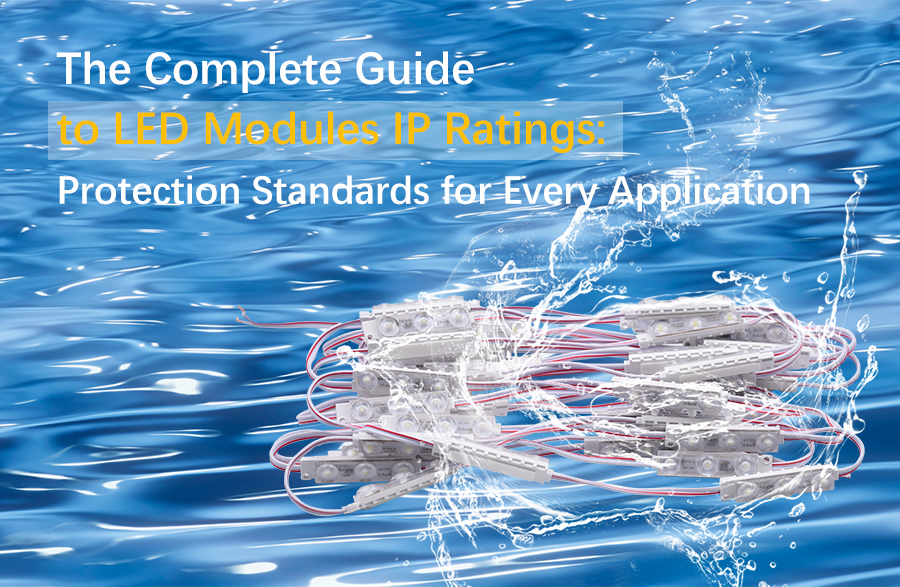
The Complete Guide to LED Modules IP Ratings: Protection Standards for Every Application
The Complete Guide to LED Modules IP Ratings: Protection Standards for Every Application
In the world of LED lighting and displays, longevity and performance depend heavily on one critical factor: protection from environmental elements. Whether you are installing LED modules for an outdoor billboard, architectural lighting, or industrial signage, understanding IP ratings is essential to ensuring your investment withstands dust, moisture, and extreme conditions.
This comprehensive guide explores everything you need to know about LED modules IP ratings, from basic definitions to advanced selection criteria. By the end, you will have the knowledge to specify the right protection level for any application, avoiding costly failures and premature replacements.
What Are IP Ratings for LED Modules?
Common IP Ratings for LED Modules
How IP Ratings Are Tested
System-Level IP Considerations
Selecting the Right IP Rating for Your Application
LED Modules vs. Complete Luminaires: Understanding the Difference
IP Ratings for Different LED Display Types
Installation Best Practices for Maintaining IP Ratings
Limitations and Misconceptions About IP Ratings
Future Trends in LED Module Protection
Conclusion: Making Informed Decisions About LED Module Protection
Frequently Asked Questions About LED Module IP Ratings
What Are IP Ratings for LED Modules?
IP stands for Ingress Protection, an international standard defined by IEC 60529 that classifies the degree of protection provided by enclosures against the intrusion of solid objects, dust, and moisture. For LED modules, these ratings are particularly crucial because electronic components are highly susceptible to damage from contaminants and water.
The IP Rating Format
An IP rating consists of two digits following the letters "IP":
-
First digit (0-6): Protection against solid objects and dust
-
Second digit (0-9K): Protection against liquids and moisture
The higher the number, the greater the protection. For example, an IP68-rated LED module offers complete dust protection and can withstand continuous water immersion, while an IP20 module offers basic protection suitable only for indoor, dry environments.
Breaking Down the IP Rating Digits
First Digit: Solid Particle Protection
The first digit indicates the level of protection against solids, ranging from simple touch protection to complete dust-tight sealing.
|
First Digit
|
Protection Level
|
Description
|
|---|---|---|
|
0
|
No protection
|
No special protection against contact or objects
|
|
1
|
>50mm
|
Protection against large surfaces like hands
|
|
2
|
>12.5mm
|
Protection against fingers or similar objects
|
|
3
|
>2.5mm
|
Protection against tools, wires, etc.
|
|
4
|
>1mm
|
Protection against small objects like screws
|
|
5
|
Dust-protected
|
Dust ingress limited but not harmful to operation
|
|
6
|
Dust-tight
|
Complete protection against dust ingress
|
For LED modules used in clean environments like offices or retail stores, IP20 or IP30 may suffice. However, for industrial or outdoor applications where dust is present, IP54 or IP65 becomes necessary.
Second Digit: Liquid Protection
The second digit represents protection against water, from simple dripping to high-pressure jets and immersion.
|
Second Digit
|
Protection Level
|
Description
|
|---|---|---|
|
0
|
None
|
No water protection
|
|
1
|
Dripping water
|
Vertically falling drops
|
|
2
|
Dripping water when tilted
|
Up to 15° tilt
|
|
3
|
Spraying water
|
Water spray at angles up to 60°
|
|
4
|
Splashing water
|
Water splashed from any direction
|
|
5
|
Water jets
|
Low-pressure water jets from any direction
|
|
6
|
Powerful water jets
|
High-pressure water jets
|
|
7
|
Temporary immersion
|
30 minutes at 1 meter depth
|
|
8
|
Continuous immersion
|
Specified conditions, deeper than 1m
|
|
9
|
High-pressure, high-temperature
|
Steam cleaning applications
|

Common IP Ratings for LED Modules
Different applications demand different levels of protection. Here are the most frequently encountered IP ratings for LED modules and their typical use cases.
IP20: Basic Indoor Protection
IP20 is the most common rating for basic indoor LED modules. The "2" indicates finger-touch protection, while the "0" means no water resistance. These modules are suitable for:
-
Office lighting
-
Retail displays in controlled environments
-
Residential applications
-
Indoor signage where no moisture is present
Important consideration: IP20 modules must be installed in areas where they will never encounter water or excessive humidity. They are not suitable for bathrooms, kitchens, or any outdoor exposure.
IP44: Splash-Proof for Semi-Outdoor Use
IP44 provides protection against solid objects larger than 1mm and splashing water from any direction. This rating is ideal for:
-
Covered outdoor areas like porches and patios
-
Bathrooms and kitchens
-
Areas near swimming pools (but not submerged)
-
Applications with occasional water exposure
IP44 represents the minimum recommended rating for any location where water might occasionally splash onto the module.
IP54: Dust-Protected with Splash Resistance
IP54 offers limited dust protection (some dust may enter but not interfere with operation) and protection against water splashes. Common applications include:
-
Industrial environments with moderate dust
-
Covered outdoor installations
-
Warehouses and workshops
-
Applications requiring occasional washdown
IP65: The Outdoor Standard
IP65 is widely considered the minimum standard for outdoor LED modules. It provides complete dust protection (dust-tight) and protection against low-pressure water jets from any direction.IP65-rated modules are suitable for:
-
Outdoor billboards and signage
-
Building facades and architectural lighting
-
Stadium displays
-
Transportation signage
-
Any fully exposed outdoor application
The "dust-tight" characteristic is particularly important outdoors, where wind-blown dust and sand could otherwise accumulate and damage components.
IP66: Powerful Water Jet Protection
IP66 offers the same dust-tight protection as IP65 but adds resistance to powerful water jets, such as those from fire hoses or heavy pressure washing equipment. This rating is essential for:
-
Coastal installations exposed to salt spray
-
Areas requiring frequent pressure washing
-
Locations with extreme weather conditions
-
Industrial facilities with high-pressure cleaning
Important note: IP66 does not mean the product is waterproof or submersible. It simply withstands powerful water jets without water ingress.
IP67: Temporary Immersion
IP67 modules are dust-tight and can withstand temporary immersion in water up to 1 meter for 30 minutes. This rating is appropriate for:
-
Locations prone to flooding
-
Fountain and water feature lighting
-
Marine applications
-
Areas with heavy rain and standing water
IP68: Continuous Immersion
IP68 represents the highest common protection level, offering dust-tight sealing and continuous immersion in water beyond 1 meter under conditions specified by the manufacturer. Applications include:
-
Underwater signage
-
Swimming pool lighting
-
Submersible fixtures
-
Extreme marine environments


How IP Ratings Are Tested
Understanding how manufacturers determine IP ratings helps ensure you are getting genuine protection. Testing follows strict protocols defined in IEC 60529.
Solid Particle Testing
For ratings up to IP4X, tests use calibrated probes to verify that objects of specified sizes cannot enter. For IP5X and IP6X, modules are placed in dust chambers with circulating talcum powder or similar fine particles.
IP5X allows limited dust ingress that does not interfere with operation, while IP6X requires zero dust penetration after an 8-hour test.
Water Testing Procedures
Each water protection level has specific test methods:
-
IPX1-2: Drip box tests with controlled water flow and tilt angles
-
IPX3-4: Oscillating tube or spray nozzle tests for splashing water
-
IPX5-6: Jet nozzle tests with specified pressure and flow rates
-
IPX7-8: Immersion tests at specified depths and durations
Third-party testing laboratories often conduct these evaluations to provide unbiased certification.
System-Level IP Considerations
One critical aspect often overlooked is that the IP rating of an individual LED module does not guarantee the same protection for the complete lighting system.
The Weakest Link Principle
For an entire LED installation to maintain a given IP rating, every component must meet or exceed that rating. This includes:
-
Connectors and cables: Even if your LED module is IP67, a connector with IP20 rating creates a vulnerability point where moisture can enter and damage the entire system.
-
Power supplies and drivers: These components require their own IP ratings appropriate for the installation environment.
-
Junction boxes: Outdoor installations must use weatherproof junction boxes with proper gaskets and seals.
-
Enclosures: The overall luminaire or display housing determines the effective protection level.
Installation Integrity
Proper installation is essential to maintaining rated protection. Common installation failures include:
-
Damaged gaskets or seals during assembly
-
Incomplete connector mating
-
Missing termination caps on unused connectors
-
Debris accumulation around venting membranes
For products with venting membranes (common in IP66-rated modules to allow pressure equalization), these must never be blocked, punctured, or allowed to fill with debris.
Selecting the Right IP Rating for Your Application
Choosing the appropriate IP rating involves balancing protection requirements against cost and practical considerations. Higher IP ratings typically increase product cost, so over-specifying protection wastes resources.
Indoor Applications
For standard indoor environments like offices, retail spaces, and homes:
-
Dry areas: IP20 is typically sufficient
-
Kitchens: IP44 recommended near sinks and cooking areas
-
Bathrooms: IP44 for zones 1 and 2 (near water sources)
-
Warehouses: IP54 for dust protection
Semi-Outdoor Applications
For areas with partial shelter:
-
Covered walkways: IP44 minimum
-
Porches and patios: IP44 to IP54
-
Under eaves: IP44 to IP54
-
Canopy lighting: IP65 recommended
Outdoor Applications
For fully exposed installations:
-
General outdoor signage: IP65 minimum
-
Coastal areas: IP66 with corrosion-resistant materials
-
Flood-prone locations: IP67
-
Underwater installations: IP68
-
High-pressure washdown areas: IP69K
Special Environment Considerations
Certain environments require additional protection beyond standard IP ratings:
Coastal installations require not just appropriate IP ratings but also corrosion-resistant materials to withstand salt fog and spray. Look for modules specifically tested for anti-salt fog performance.
High-temperature environments demand LED modules with robust thermal management, as heat accelerates degradation of seals and gaskets.
UV exposure outdoors means modules need UV-resistant materials to prevent housing degradation and discoloration.
LED Modules vs. Complete Luminaires: Understanding the Difference
A common point of confusion is whether LED modules themselves carry IP ratings or whether protection is provided by the luminaire housing.
Bare LED Modules
Many LED modules for installation do not have an inherent IP rating unless specifically indicated. These modules require protection from the luminaire or enclosure in which they are installed. The module's data sheet will specify whether it has independent sealing or requires external protection.
For example, a basic LED strip might be IP20, but when installed in an appropriate waterproof profile with end caps, the complete assembly can achieve IP65 or higher.
Integrated LED Modules
Some LED modules come with integrated waterproofing through:
-
Silicone encapsulation
-
Resin potting
-
Sealed housings with gaskets
These modules carry their own IP ratings and can be used independently in appropriate environments.
Protective Coating vs. Waterproofing
Some LED modules feature protective coating that guards against surface moisture and high relative humidity. However, protective coating does not make a module waterproof or suitable for outdoor exposure. If the coating is damaged during soldering or handling, it must be restored to maintain protection.
IP Ratings for Different LED Display Types
LED displays have unique IP rating considerations because they combine multiple modules into larger installations.
Indoor LED Displays
Indoor displays typically use modules rated IP20 or IP30. These provide:
-
Protection against accidental touch
-
Basic dust resistance
-
No water protection
Indoor displays rely on the controlled environment of their installation location and do not need weather sealing.
Semi-Outdoor LED Displays
Displays in semi-protected locations like covered walkways or storefronts with overhangs often use IP44-rated modules. These withstand:
-
Wind-blown dust
-
Accidental water splashes
-
Humidity variations
Outdoor LED Displays
Full outdoor displays require IP65 as the minimum standard for the front (display face), with IP54 often acceptable for rear protection in ventilated cabinets.
Common outdoor display ratings:
-
IP65 front/IP54 rear: Standard configuration for most outdoor screens
-
IP66/IP66: For harsh environments with powerful water jets
-
IP67: For areas prone to temporary flooding
Front vs. Rear Protection
Outdoor displays often have different IP ratings for front and rear surfaces. The front faces the elements and requires higher protection (typically IP65+), while the rear may have lower protection if housed in a weatherproof cabinet or located in a service area with some shelter.
Installation Best Practices for Maintaining IP Ratings
Even with correctly specified IP-rated modules, improper installation can compromise protection.
Cable Management
Cables entering enclosures create potential leak paths. Best practices include:
-
Using certified waterproof cable glands
-
Ensuring proper compression of gland seals
-
Creating drip loops to channel water away from entry points
-
Sealing unused cable entries
Connector Protection
For modular systems with connectors:
-
Keep protective caps in place until connection
-
Ensure connectors are fully seated and locked
-
Verify gaskets are present and undamaged
-
Use dielectric grease in harsh environments (where specified)
Mounting Orientation
Some IP ratings depend on proper orientation:
-
Drain holes must face downward
-
Avoid mounting where water can pool on surfaces
-
Consider prevailing wind and rain direction
-
Maintain minimum distances from water sources
Periodic Maintenance
IP ratings do not guarantee permanent protection without maintenance:
-
Inspect seals and gaskets annually
-
Clean debris from venting membranes
-
Check for seal degradation from UV exposure
-
Verify drain holes remain clear
Limitations and Misconceptions About IP Ratings
Understanding what IP ratings do not cover is as important as knowing what they mean.
What IP Ratings Don't Cover
IP ratings address only ingress of solids and liquids. They do not indicate:
-
Impact resistance: Separate IK ratings cover mechanical impact
-
Corrosion resistance: Not tested in standard IP certification
-
UV resistance: Requires additional material qualification
-
Temperature extremes: Operating temperature ranges are separate specifications
-
Chemical resistance: Not evaluated in IP testing
Common Misconceptions
"IP66 means waterproof" – IP66 does not mean waterproof or submersible. It only indicates protection against powerful water jets.
"Higher IP always means better" – Higher IP ratings often require thicker housings and seals that can affect heat dissipation and optical performance. Choose appropriate, not maximum, protection.
"IP rating never changes" – IP ratings apply to new products. Aging, wear, and environmental degradation can reduce effective protection over time.
"All IP67 products can be submerged" – IP67 specifies temporary immersion (30 minutes at 1 meter). Continuous submersion requires IP68 with manufacturer-specified conditions.
Future Trends in LED Module Protection
The LED industry continues to evolve, with new protection technologies emerging.
Nano-coatings
Advanced hydrophobic coatings applied at the molecular level provide water resistance without affecting optical performance or heat dissipation.
Improved Encapsulation Materials
New silicone and epoxy formulations offer better transparency, UV resistance, and thermal conductivity while maintaining sealing properties.
Integrated Diagnostics
Smart LED modules with self-diagnostic capabilities can detect moisture ingress before catastrophic failure occurs, enabling predictive maintenance.
Modular Sealing Systems
Quick-change gasket systems and tool-less sealing designs reduce installation errors and simplify maintenance.
Cost Considerations and ROI
Selecting appropriate IP ratings affects both initial investment and long-term costs.
Initial Cost Impact
Higher IP ratings typically increase module cost due to:
-
More expensive materials and seals
-
Additional manufacturing steps (potting, encapsulation)
-
More rigorous testing requirements
-
Lower production yields
Long-term Savings
Investing in appropriate IP protection reduces:
-
Premature failure rates
-
Maintenance labor and access costs
-
Replacement module expenses
-
Business interruption from display downtime
For outdoor installations, the cost difference between IP65 and lower-rated modules is typically justified by extended service life and reduced failures.
Conclusion: Making Informed Decisions About LED Module Protection
Understanding IP ratings for LED modules is essential for specifying reliable, long-lasting lighting and display solutions. By matching protection levels to actual environmental exposure, you avoid both under-specification that leads to premature failure and over-specification that wastes budget.
Remember these key takeaways:
-
IP ratings consist of two digits: first for solids, second for liquids
-
Higher numbers indicate greater protection
-
System-level protection requires all components to meet requirements
-
Proper installation is essential to maintaining rated protection
-
Consider environmental factors beyond IP ratings: UV, salt spray, temperature
-
Balance initial cost against long-term reliability
Whether you are specifying LED modules for an indoor retail display, a coastal billboard, or an underwater fountain feature, the IP rating guide provided here helps ensure your selection matches the demands of your specific application.
When in doubt, consult with reputable manufacturers who provide clear documentation of testing and certification, and always verify that the complete system—modules, connectors, power supplies, and enclosures—meets the protection requirements for your installation environment.


FAQ About LED Module IP Ratings
Can I use IP65 LED modules underwater?
No. IP65 provides protection against water jets but not immersion. For underwater applications, you need IP68 rated modules with manufacturer confirmation for continuous submersion. Even IP67 only allows temporary immersion (30 minutes at 1 meter). Always verify the specific immersion conditions with your supplier.
What IP rating do I need for a beachfront outdoor display?
Coastal environments require IP66 minimum due to combined challenges of salt spray, high humidity, and powerful wind-driven rain. Additionally, specify modules with anti-corrosion coatings and salt fog testing certification. Regular maintenance becomes even more critical in coastal installations.
Does IP rating remain the same throughout the LED module's life?
IP rating certification applies to new products under test conditions. Actual protection can degrade over time due to:
-
UV degradation of seals and gaskets
-
Thermal cycling causing seal compression set
-
Physical damage during cleaning or maintenance
-
Contaminant accumulation on venting membranes
Regular inspection and maintenance help preserve effective protection.
Can I improve the IP rating of an existing LED module?
While field modifications are generally not recommended, you can enhance system-level protection by:
-
Installing modules in appropriate enclosures
-
Adding conformal coatings (if approved by manufacturer)
-
Using protective covers or lenses
-
Improving cable entry sealing
However, these measures do not change the module's inherent rating and may affect thermal performance or warranty coverage.
What is the difference between IP65 and IP66 for LED displays?
Both IP65 and IP66 are dust-tight. The difference lies in water protection:
-
IP65 withstands low-pressure water jets from any direction
-
IP66 withstands powerful water jets, such as those from fire hoses or heavy seas
For most outdoor applications, IP65 is sufficient. Choose IP66 for locations with extreme weather, frequent pressure washing, or where water may be directed at the display with significant force.