

2026-02-05
Things You Must Know Before Buying LED Strips for Outside
Things You Must Know Before Buying LED Strips for Outside
Lighting has undergone a revolution. No longer confined to bulky floodlights, modern landscape design now relies on the sleek, flexible, and powerful led light strips. However, the transition from indoor ambiance to outdoor durability is fraught with technical challenges. The primary enemy? Moisture.
Whether you are a homeowner looking to buy led tape for a DIY patio project or a contractor sourcing from global led strip light manufacturers, understanding Ingress Protection (IP) ratings is non-negotiable. This guide provides an exhaustive breakdown of how to select the best led strip light for any external environment.
1. What Do IP65, IP67, and IP68 Really Mean?
2. The Importance of Choosing the Right Waterproof Rating for Outdoor LED Strip Lights
3. IP65: The Go-To Choice for Protected Outdoor Accents
4. IP67: Maximum Weatherproofing for Year-Round Exposure
5. IP68: Beyond the Surface for Pools and Submersible Water Features
6. Key Differences Between IP65, IP67, and IP68 Ratings
7. When Should You Use IP65, IP67, or IP68 Outdoor LED Strip Lights?
8. Cutting and Connecting: How to Maintain the Waterproof Seal
9. Common Mistakes to Avoid When Installing Waterproof LED Strip Lights
10. Maintenance and UV Protection: Keeping Your Lights Clear for Years
11. Outdoor LED Strip Lights: Final Thoughts on the Right IP Rating
2. The Importance of Choosing the Right Waterproof Rating for Outdoor LED Strip Lights
3. IP65: The Go-To Choice for Protected Outdoor Accents
4. IP67: Maximum Weatherproofing for Year-Round Exposure
5. IP68: Beyond the Surface for Pools and Submersible Water Features
6. Key Differences Between IP65, IP67, and IP68 Ratings
7. When Should You Use IP65, IP67, or IP68 Outdoor LED Strip Lights?
8. Cutting and Connecting: How to Maintain the Waterproof Seal
9. Common Mistakes to Avoid When Installing Waterproof LED Strip Lights
10. Maintenance and UV Protection: Keeping Your Lights Clear for Years
11. Outdoor LED Strip Lights: Final Thoughts on the Right IP Rating
1. What Do IP65, IP67, and IP68 Really Mean?
The IP rating system is a global standard (IEC 60529) that classifies the degrees of protection provided against the intrusion of solid objects and liquids. When you see professional led strip lights labeled with these numbers, here is the scientific breakdown:
The First Digit: Solid Ingress (0–6)
For almost all outdoor led strip lights, the first digit is "6". This means the product is completely dust-tight. This is crucial for led strips outside, as fine dust and sand can act as abrasives, scratching the protective coating and leading to premature yellowing or electrical failure.
The Second Digit: Liquid Ingress (0–8)
This is where the real differentiation happens:
5 (Water Jets): Protection against water projected from a nozzle (6.3mm) from any direction.
7 (Temporary Immersion): Protection against water ingress when submerged up to 1 meter for 30 minutes.
8 (Continuous Submersion): Protection against water ingress under pressure for long periods (usually 1.5 meters or deeper).

2. The Importance of Choosing the Right Waterproof Rating for Outdoor LED Strip Lights
Why not just use IP68 for everything? In a word: Aesthetics and Budget.
An ip65 led strip light is thin, lightweight, and uses a 3M adhesive back that sticks to almost anything. In contrast, an ip68 led strip is heavy, thick, and filled with resin, requiring mechanical mounting clips. Choosing the wrong rating leads to two scenarios:
Under-specifying: Using IP65 in an area with heavy rain will cause "water wicking," where moisture enters the copper circuitry, causing the led strip life to end in weeks.
Over-specifying: Using IP68 under a porch roof makes the installation unnecessarily difficult and expensive, as these strips are harder to cut and join.
3. IP65: The Go-To Choice for Protected Outdoor Accents
IP65 led strip lighting is often referred to as "epoxy-coated" or "silicone-covered." The LEDs are protected by a thin layer of transparent material on the top, while the bottom (with the adhesive) is exposed.
Common Application Scenarios:
Outdoor Kitchens: Perfect for led strip lights for kitchen areas that are under a permanent roof.
Porches and Eaves: Ideal for led strip cove lighting under the roofline where the strip won't be hit by direct rain.
Bathroom Accents: Excellent for bathroom led strip lights where steam and occasional splashes are the main concern.
Installation Advantage: Because they are thin, they fit perfectly into an led strip profile (aluminum channel). This setup provides a professional look while adding an extra layer of physical protection.

4. IP67: Maximum Weatherproofing for Year-Round Exposure
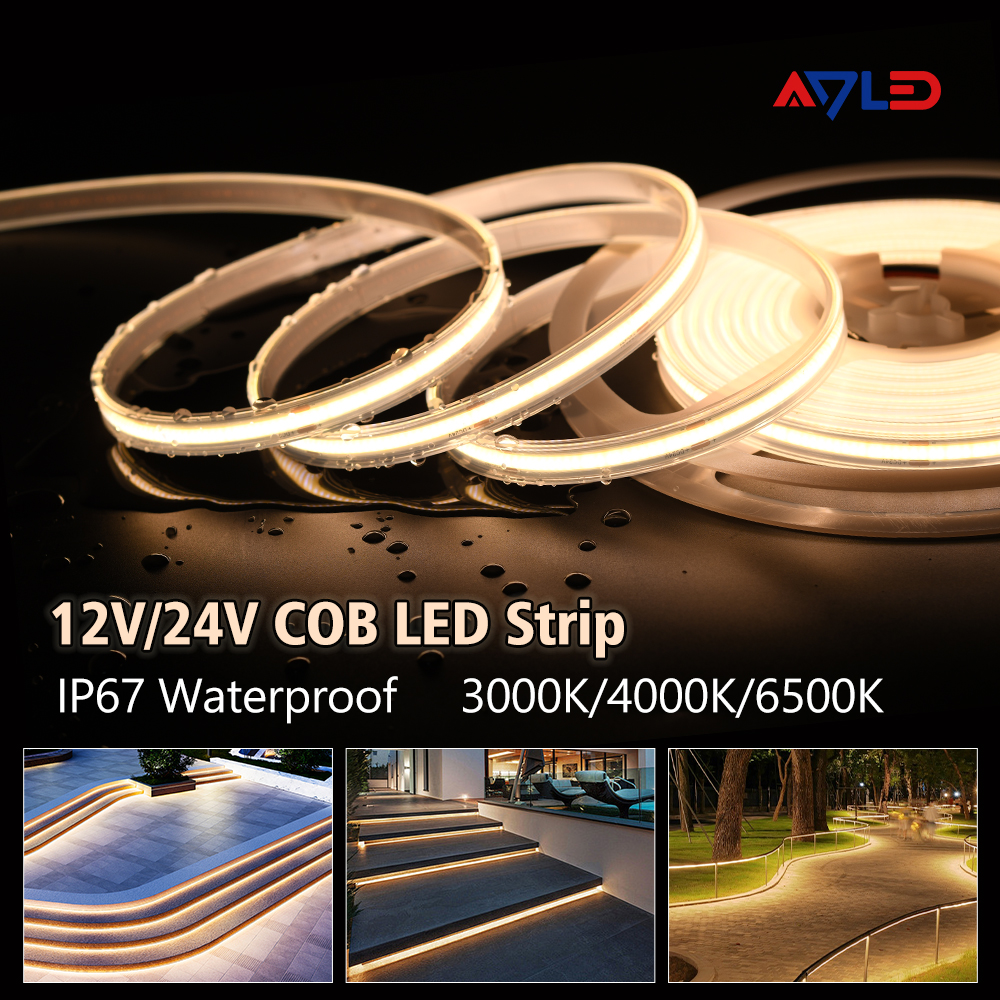
For true led strips for outside that face the wrath of nature, IP67 is the industry workhorse. These strips are encased in a silicone "sleeve" or "tube."
Why IP67 is the "Sweet Spot":
It offers a balance of high-level waterproofing and manageable installation. It can handle:
Heavy Rainstorms: The sealed tube prevents water from touching the electrical components.
Snow and Ice: The silicone tube stays flexible in freezing temperatures, preventing the waterproof led strip lights from cracking.
Garden Paths: Even if a sprinkler hits it directly, an outdoor led strip with IP67 remains safe.
Key Considerations:
Most waterproof strip led products in this category don't use adhesive well. You must use led strip light clips every 12 inches to ensure the lights stay in place.
5. IP68: Beyond the Surface for Pools and Submersible Water Features
When we talk about swimming pool led strip lights, we are entering a specialized field of engineering. An ip68 led strip must be "fully potted."
The "Potted" Process:
Unlike IP67 which is a hollow tube, IP68 strips are placed inside a U-channel and then filled with liquid silicone or epoxy that hardens. This eliminates all air pockets. Without air, there is no place for condensation to form, and the strip can withstand the constant "crushing" pressure of water.
Specialized Applications:
Fountains and Waterfalls: Where water pressure is constant.
Marine Use: Boat led strip lights and marine led light strips require IP68 to survive salt spray and deck washing.
Ponds: Safe for fish and plants if the led strip manufacturer uses non-toxic silicone.

6. Key Differences Between IP65, IP67, and IP68 Ratings
|
Technical Metric
|
IP65 (Spray-Proof)
|
IP67 (Rain-Proof)
|
IP68 (Submersible)
|
|---|---|---|---|
|
Material Build
|
Silicone Drip / Coating
|
Hollow Silicone Tube
|
Solid Resin Infill
|
|
Water Contact
|
Occasional Splashes
|
Direct Rain / Snow
|
Continuous Underwater
|
|
Adhesive Backing
|
Included (3M)
|
Usually Not Included
|
Never Included
|
|
Cutting Ease
|
Very Easy
|
Moderate (Seal Required)
|
Difficult (Pro Only)
|
|
UV Resistance
|
Standard
|
High
|
Extreme
|
|
Typical Voltage
|
12V / 24V
|
12V / 24V / 220V
|
12V / 24V
|
7. When Should You Use IP65, IP67, or IP68 Outdoor LED Strip Lights?
To help you decide, let's look at specific "real-world" projects:
The Deck Railing: Use outdoor led strip lighting. It's exposed to rain but won't be underwater.
The RV Exterior: For camper led light strips or rv awning led light strip replacement, IP67 is preferred to handle the wind and rain at 60mph.
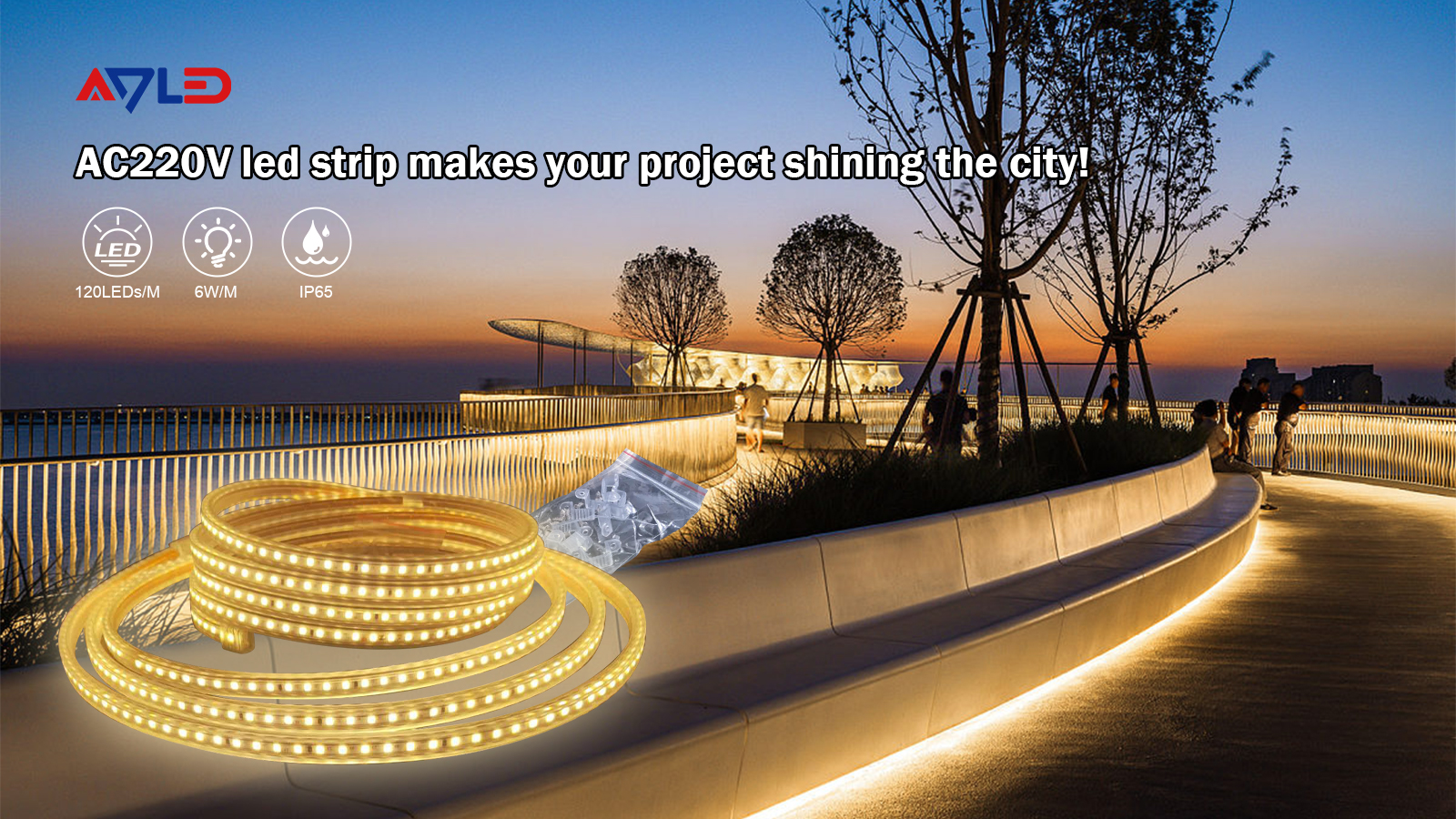
Commercial Building Facades: High-output 220v led strip with IP67 allows for 50-meter runs without a power drop.
Step Lighting: If the stairs are in a garden, use waterproof led lights strips (IP67). If they are under a canopy, IP65 is fine.
8. Cutting and Connecting: How to Maintain the Waterproof Seal
The most common failure point for outdoor led strip lights waterproof setups is the connection point. Can you cut led light strips? Yes, but you effectively "open the door" for water.
The Professional Sealing Process:
Cut only at the marks: Use sharp shears to avoid crushing the silicone.
Solder or Clip: If using an led strip connector, ensure it is also rated for outdoor use.
The Silicone Injection: Fill your end cap with a "neutral cure" silicone sealant. Avoid acidic silicone (smells like vinegar) as it corrodes the copper.
Heat Shrink: Slide a piece of adhesive-lined heat shrink tubing over the end and shrink it with a heat gun. This creates a "boot" that is 100% airtight.
9. Common Mistakes to Avoid When Installing Waterproof LED Strip Lights
Voltage Drop: Running a 12v led strip waterproof longer than 5 meters will result in the end being dimmer. For large outdoor perimeters, always use 24V or 220v led strip.
Improper Power Supply Placement: You buy best waterproof outdoor led strip lights, but hide the power adapter in a plastic bag. This creates heat and moisture buildup. Always use an ip65 led strip lighting rated power supply box.
Ignoring Expansion/Contraction: Materials expand in the sun. If you glue a waterproof led strip too tightly into a channel, it may buckle or tear its own solder joints.
10. Maintenance and UV Protection: Keeping Your Lights Clear for Years
The "Sun" is often more damaging than the "Rain." UV rays break down the chemical bonds in clear silicone.
Yellowing: To prevent this, ask your led strip light manufacturers for "Optical Grade Silicone" rather than "PU Glue."
Cleaning: Use only water or mild soap. Harsh chemicals can strip the UV coating off your outdoor led tape lights.
Inspection: Check your end caps once a year. If the silicone looks cracked, re-apply it before the next rainy season.
11. Outdoor LED Strip Lights: Final Thoughts on the Right IP Rating
Mastering outdoor led strip lights is about understanding that "waterproof" is a spectrum, not a single feature. For residential gardens, waterproof led strip lights offer the most reliability. For architectural highlights in protected areas, IP65 is king. And for the luxury of a glowing pool, IP68 is your only choice.
By selecting the correct rating and following professional installation practices, your exterior led light strips will provide beauty and safety for years to come.
FAQ: The Deep Dive
Can I use 12V waterproof strips for my garden?
Yes, 12 volt led waterproof light strips are very safe for outdoor use near pets and children. However, keep the runs short (under 5m) to avoid brightness loss.
What is the difference between IP67 and "Weatherproof"?
"Weatherproof" is a marketing term. IP67 is a tested, certified technical standard. Always look for the IP rating when you buy led tape.
How do I handle corners with waterproof strips?
Do not bend the strip at a 90-degree angle; you will crack the waterproof coating. Instead, use an led strip connector with a short wire bridge, and seal both ends of the bridge with heat-shrink tubing.
Are there permanent outdoor led strip lights?
Yes, permanent outdoor led strip lights are usually IP67 or IP68 and are mounted in aluminum channels to protect them from birds, wind, and direct sun exposure, extending their life to over 50,000 hours.
Can I use led strip lights for car exterior?
Absolutely. Use ip67 led strip lights to handle road salt, high-pressure car washes, and vibration.
Which is better for a boat: IP67 or IP68?
For boat led strip lights on the deck, IP67 is fine. For anything near the waterline or for marine led light strips used in bait wells, you must use IP68.