Brightest LED Strip Lights: High-Lumen & Chip Comparison
2025-04-22

What Are The Brightest LED Strip Lights?

What Are The Brightest LED Strip Lights?

Looking to illuminate your world with LED strip lights, but finding the brightness lacking? Don't worry, you're not alone! When it comes to achieving maximum lighting impact, brightness is undeniably one of the most crucial factors for LED strip lights. But with a market flooded with options, which ones truly reign supreme as the "brightest"?

This blog post will take you on a deep dive into the secrets behind the most luminous LED strip lights. We'll explore the key factors that influence their brightness, such as lumens, LED chip type and size, and LED density. We'll also unveil some of the LED strip light series renowned for their high output, analyzing their characteristics and ideal applications.
 
Defining "Brightest": More Than Just a Feeling
The Pursuit of Maximum Lumens: Why the Need for "Brightest"?
A Comparative Look at High-Output LED Strip Lights Types
Are 24V LED strips brighter than 12V?
Decoding the Brightness Metrics of LED Strip Lights
The Core Factors Driving LED Strip Brightness
Judging True Brightness: Beyond the Marketing Hype
Practical Guidance for Selecting High-Brightness LED Strip Lights
Key Considerations When Choosing High-Brightness LED Strip Lights
High-Brightness LED Strip Applications and Case Studies
ADLED Recommended High-Brightness LED Strip Series
FAQ
Conclusion: Brightness is a Piece of the Puzzle – Comprehensive Performance Matters

Defining "Brightest": More Than Just a Feeling


When we talk about the "brightest" LED strip light, we need to move beyond subjective impressions and delve into quantifiable metrics. Brightness, in the realm of lighting, is scientifically measured in lumens (lm). Lumens represent the total quantity of visible light emitted by a light source. Therefore, an LED strip with a higher lumen output is objectively brighter than one with a lower lumen output.  
However, the quest for the "brightest" isn't as simple as looking at a single number. Several crucial factors contribute to the overall perceived and measured brightness of an LED strip light:
  • LED Quantity

More LEDs per meter generally translate to a higher total lumen output.  
led strip quantity
  • Chip Specifications

The type and quality of the individual LED chips significantly impact their light-emitting efficiency and potential lumen output.
led strip lights
led strip lights
  • Power Density (W/m)

A higher power density often correlates with a higher potential for brightness, as more power can drive the LEDs harder.
  • Luminous Efficacy (lm/W)

This crucial metric indicates how efficiently the LED strip light converts electrical power into visible light. A higher lm/W value means more lumens per watt, leading to brighter light with potentially lower energy consumption.  

The Pursuit of Maximum Lumens: Why the Need for "Brightest"?


The demand for ultra-bright LED strip lights stems from specific application scenarios where high levels of illumination are paramount:
  • Commercial Displays

Retail environments often require intensely bright lighting to make products stand out and capture customer attention.  
  • Stage Lighting

Theatrical and concert productions rely on powerful and dynamic lighting to create impactful visual experiences.  
  • Outdoor Advertising

Billboards and signage need to be highly visible, even in daylight, necessitating high-lumen LED solutions.  
  • Industrial Lighting

Factories, warehouses, and workshops often require bright and uniform illumination for safety and productivity.  
Beyond these commercial applications, brightness directly impacts the user experience:
  • Atmosphere Creation

In some instances, intense brightness can create a specific mood or highlight architectural features.
  • Visibility and Safety

In task lighting or outdoor applications, high brightness ensures optimal visibility and safety.  
  • Product Appeal

For showcasing products, higher brightness can enhance colors and details, making them more appealing.
However, the core questions remain: How do we truly define "brightest" in a practical sense? And more importantly, how do we balance the desire for maximum brightness with considerations for energy consumption and cost-effectiveness?

A Comparative Look at High-Output LED Strip Types


Let's examine some common types of LED strip lights known for their high brightness capabilities:
Type
Voltage
Common Chips
Max Brightness Range (lm/m)
Typical Applications
High-Output COB
24V
High-Density COB
2000–5000+ lm/m
Commercial lighting, under-cabinet, Industrial lighting
High-Density 2835
24V
2835 (240–792 LEDs/m)
2200–3000 lm/m
Home lighting, display cases
High-Efficiency
24V
160Lm/W
200Lm/W
1500–3000+ lm/m
Photography lighting , Factories warehouses

Are 24V LED strips brighter than 12V?


No, 24V LED strips are not inherently brighter than 12V LED strips. The brightness of an LED strip is primarily determined by factors like the power of the individual LEDs, the number of LEDs per meter (density), the efficiency of the LEDs, and the total power consumed by the LED strip, not the operating voltage itself.
However, 24V LED strip lights often appear to maintain brightness more consistently, especially over longer distances, due to the reduced voltage drop. Here's a breakdown of why:  
  • Direct Relationship Between Voltage and Brightness?

Brightness is Power-Driven: The brightness of a single LED depends on its power (Power = Voltage × Current). If individual LEDs have the same specifications (e.g., 0.5W per LED), their brightness will be the same at the same current, regardless of whether they are in a 12V or 24V system.  
  • Circuit Design Differences: 

12V LED Strip Lights: Typically group 3-4 LEDs in series (e.g., 3 LEDs × 3V ≈ 9V, with a 3V overhead).
24V LED Strip Lights: Can group 6-8 LEDs in series (e.g., 7 LEDs × 3V ≈ 21V, with a 3V overhead).
Implication: For the same length, a 24V LED strip might accommodate more LEDs, leading to a higher total lumen output for the entire LED strip.
  • Why 24V LED Strips Seem Brighter Over Long Distances?

Voltage Drop: According to the formula Voltage Drop (ΔV) = Current (I) × Resistance (R), a higher current leads to a more significant voltage loss along the wires.
Lower Current in 24V Systems: For the same power output, 24V LED strips draw half the current of 12V LED strips (I = Power / Voltage). This results in significantly less voltage drop over the same length of wire.  
Example Comparison:
Parameter
12V LED Strip
24V LED Strip
Power
14.4W/m (60 LEDs/m, 0.24W each)
14.4W/m (same power)
Operating Current
1.2A/m (I=P/V=14.4/12)
0.6A/m (14.4/24)
Voltage Drop over 5m (0.1Ω/m wire)
ΔV = 1.2A × 0.1Ω × 5m × 2 = 1.2V → End Voltage = 10.8V
ΔV = 0.6A × 0.1Ω × 5m × 2 = 0.6V → End Voltage = 23.4V
Brightness Impact
Noticeable dimming at the end (approx. 10%)
Brightness remains more consistent

Decoding the Brightness Metrics of LED Strip Lights


To accurately assess the brightness of an LED strip, understanding these key parameters is essential:
  • Luminous Flux (Lumens, lm)

This is the core indicator of brightness, representing the total amount of light emitted by the entire LED strip.
  • Luminous Efficacy (Lumens per Watt, lm/W)

This measures the energy efficiency, indicating how many lumens are produced for each watt of power consumed. A higher lm/W signifies a more efficient and potentially brighter output for the same power.  
  • Illuminance (Lux, lx)

While not an inherent property of the LED strip itself, illuminance measures the amount of light falling on a surface (lumens per square meter). This is crucial for understanding the actual brightness in a specific application.
 
Navigating the "Brightness Traps":
  • Nominal vs. Actual Brightness

Be wary of inflated "nominal" brightness figures often advertised. Always look for actual tested lumen output data.
  • Color Temperature Impact

Cooler white light (higher Kelvin) often appears subjectively brighter than warmer white light (lower Kelvin) even if their lumen values are similar. This is due to the human eye's sensitivity to different wavelengths.

The Core Factors Driving LED Strip Brightness


Several interconnected factors dictate the ultimate brightness achievable by an LED strip:
  • LED Efficacy

The inherent efficiency of the individual LED chips in converting electricity to light is paramount.
  • LED Chip Specifications

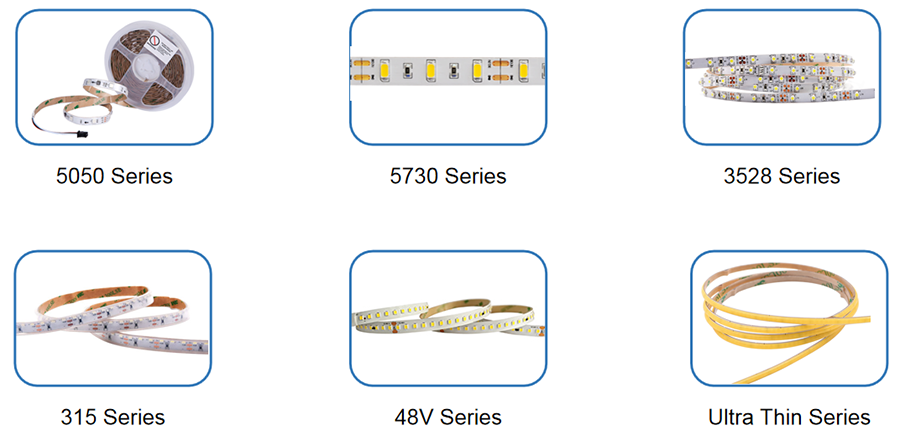
Larger chip sizes (e.g., 5050, 5630) generally have a higher power handling capacity and potential lumen output compared to smaller chips (e.g., 2835). The specific binning and quality of the chip also play a significant role in its light output and efficacy.  
  • Brand Differentiation

Reputable brands like Nichia and Samsung often offer chips with superior efficacy and consistency compared to generic alternatives.
  • LED Density and Arrangement

The number of LEDs per meter and their arrangement (single row, double row, high-density configurations) directly influence the overall lumen output per unit length.  
  • CRI (Color Rendering Index)

While CRI focuses on color accuracy, it can indirectly impact perceived brightness. A lower CRI might mean certain wavelengths are suppressed, potentially affecting the overall light output.  
  • Color Temperature (Kelvin)

As mentioned earlier, cooler color temperatures tend to appear brighter, even with similar lumen values.
  • Constant Current vs. Constant Voltage

Constant current drivers ensure a stable current flow to the LEDs, leading to consistent brightness and preventing overdriving. Constant voltage drivers can be more susceptible to voltage drops affecting brightness uniformity.  
  • Power Supply Matching

An adequately powered supply is crucial. Undervoltage can lead to significantly reduced brightness.
  • Power Input

The total power supplied to the LED strip directly limits the maximum achievable brightness. Higher wattage LED strips can produce more light, provided the LEDs and other components can handle the power.  
  • PCB Board Design

The design and quality of the Printed Circuit Board (PCB) influence heat dissipation and current flow, indirectly affecting the LEDs' ability to operate at their optimal brightness.
  • Aluminum Profile (Heat Sink)

For high-power, high brightness LED strips, proper heat dissipation is critical for maintaining performance and lifespan. An aluminum profile acts as a heat sink, drawing heat away from the LEDs, allowing them to be driven harder for longer without degradation.  

Judging True Brightness: Beyond the Marketing Hype


To discern if an LED strip light is truly "the brightest" for your needs, consider these factors beyond just the advertised lumen number:
  • Scrutinize Chip Parameters

Look for the luminous efficacy (lm/W) of the individual LED chips. Values of ≥ 150 lm/W are indicative of high-performance LEDs.
  • Demand Actual Test Data

Request or look for independent testing data on lumen output and illuminance levels.
  • Evaluate Thermal Management

Assess the heat dissipation design. High brightness LED strip lights require effective cooling solutions (like aluminum profiles) to maintain their output and lifespan.  
  • Analyze Power and Drive Current Design

Ensure the power supply and driving circuitry are robust enough to handle the current demands of a high brightness LED strip without causing voltage drops or instability.

Practical Guidance for Selecting High-Brightness LED Strip Lights


When shopping for high output LED strip lights, prioritize your specific needs:
  • Prioritize Brightness Above All

If maximum lumen output is your primary concern, consider SMD 5630 or double row LED strip lights. Be aware that these often come with higher energy consumption and heat generation.
  • Balance Efficiency and Brightness

COB LED strips or high-efficacy 2835 SMD LEDs (with lm/W > 120) offer a good balance between high brightness and energy efficiency.  
Brand and Value Recommendations:
  • High-End

Brands like Philips Hue (for integrated smart control and high efficacy) and Luminus (renowned for high-performance LEDs used in various lighting applications) offer premium options, though their LED strip offerings might focus on specific applications.
  • Value-Oriented (with verified brightness)

Brands like BTF-Lighting and Govee (while known for smart features) often provide models with tested lumen outputs that meet their specifications at competitive prices. Always check independent reviews and specifications.

Key Considerations When Choosing High-Brightness LED Strip Lights


Before making a purchase, consider these crucial aspects:
  • Necessity of Aluminum Profiles

High power LED strip lights will generate significant heat. Factor in the cost and installation of aluminum profiles for proper heat dissipation.  
  • Dimming and Control System Compatibility

If dimming or smart control is required, ensure the chosen LED strip light and its driver are compatible with your desired control system (e.g., PWM dimming).
  • Installation Environment

Consider whether the LED strip will be used indoors or outdoors and choose a suitable IP rating for protection against dust and moisture.
  • Power Supply Selection

Carefully calculate the total power consumption of your LED strip run and select a power supply with sufficient wattage to avoid underpowering and brightness issues.
Avoiding Common Pitfalls:
  • Beware of Exaggerated Lumen Claims

Be skeptical of claims of "tens of thousands of lumens" for standard LED strip lights. Always look for verifiable, real-world testing data.
  • Inspect Heat Dissipation Design

Avoid high brightness LED strip lights without adequate heat sinking (e.g., just a thin PVC backing). Proper aluminum channels or silicone encapsulation designed for heat transfer are crucial.

High-Brightness LED Strip Applications and Case Studies


Let's see high lumen LED strip lights in action:
  • Commercial Spaces

A jewelry store utilizes 3000 lm/m high power LED strip lights within display cases to dramatically enhance the brilliance and visual impact of their merchandise.
  • Outdoor Advertising

A business employs double-row, waterproof LED strip lights to create a vibrant and highly visible scrolling text billboard on the side of their building, ensuring 24/7 visibility.
  • Home Lighting

A modern living room design uses high-output COB LED strip lights concealed in architectural coves to achieve a bright, even, and shadow-free ambient lighting scheme, exceeding 300 lux at the task plane.

ADLED Recommended High-Brightness LED Strip Series


  • High Density COB LED Strip Lights

 Ideal for applications demanding minimal light hotspots and extremely even illumination, such as professional photography lighting and high-end retail displays.
cob led strip
  • 2835 High Power LED Strip Lights

Offers a compelling balance of high lumen output and cost-effectiveness, suitable for primary lighting in residential and commercial settings.
2835 High Power LED Strip Lights
  • High Efficiency LED Strip Lights

 Engineered for maximum lumen output per watt, ensuring exceptional brightness with optimized energy consumption and long-term reliability.
High Efficiency LED Strip Lights

FAQ


Does higher brightness always mean higher power consumption? 

Yes, generally. However, LED strip lights with high luminous efficacy (e.g., >120 lm/W) can minimize the energy consumption gap compared to less efficient, albeit equally bright, LED strips.  

Can high-brightness LED strip lights be dimmed? 

Yes, but you need to choose models that support PWM (Pulse Width Modulation) dimming to avoid flickering, especially at lower brightness levels. Ensure your dimmer and driver are compatible with the LED strip.

How does brightness affect the lifespan of LED strip lights? 

Operating LED strip lights at their maximum power and brightness continuously can accelerate lumen depreciation (light output degradation) over time. It's often recommended to run them at around 70% of their maximum brightness for everyday use to prolong their lifespan. Proper heat management is also crucial for maintaining both brightness and lifespan.  

Which is brighter, LED 5050 or 3528?

When comparing LED 5050 and 3528, the 5050 LED is significantly brighter. Measuring 5.0mm x 5.0mm, the 5050 contains three chips per LED, producing around 18–22 lumens per chip, while the smaller 3528 (3.5mm x 2.8mm) has only one chip and emits about 6–8 lumens. As a result, a 5050 LED strip with 60 LEDs per meter can deliver 900–1000 lumens per meter, nearly double that of a 3528 LED strip at around 400–500 lumens per meter. The 5050 is ideal for applications requiring higher brightness or RGB color effects, such as general lighting, commercial displays, or ambient lighting, while the 3528 is better suited for accent or decorative use where lower brightness is sufficient. Keep in mind that 5050 LEDs also consume more power and generate more heat, so it's important to consider power supply and heat dissipation when choosing between them.

Are 5630 LEDs brighter than 5050?

Yes, 5630 LEDs are generally brighter than 5050 LEDs. While 5050 LEDs measure 5.0mm x 5.0mm and typically contain three chips (often used for RGB or white light), 5630 LEDs are slightly larger at 5.6mm x 3.0mm and are designed primarily for high-output white lighting. A single 5630 LED can emit around 45–55 lumens, compared to the 18–22 lumens of a 5050 LED. This makes 5630 LED strips significantly brighter, but they also consume more power and generate more heat, requiring good thermal management. 5630 LEDs are ideal for applications needing strong illumination, such as task lighting, signage, or commercial settings, while 5050 LEDs are better suited for RGB effects or ambient lighting where balanced brightness and energy efficiency are key.

Which LED light is best for brightness?

The best LED light for brightness depends on the application, but in general, high-power LED chips like 5630, 5730, or COB (Chip-on-Board) LEDs are considered the brightest. Among them, 5630 and 5730 SMD LEDs can emit over 50 lumens per chip, while COB LEDs offer extremely high lumen output with excellent uniformity, making them ideal for task lighting, industrial use, or large spaces. Additionally, LED strips with high LED density (e.g., 120–240 LEDs per meter) and higher power consumption (such as 20W/m or more) will deliver greater overall brightness. For maximum brightness, look for LEDs with high luminous efficacy (lumens per watt), good heat dissipation, and a high-quality power supply to ensure stable performance.

Conclusion: Brightness is a Piece of the Puzzle – Comprehensive Performance Matters


While the allure of the "brightest" LED strip is understandable, it's crucial to remember that brightness is just one aspect of overall performance. Achieving optimal lighting involves a delicate balance between lumen output, stability, lifespan, and energy efficiency.
When selecting high brightness LED strips, prioritize reputable manufacturers who provide comprehensive specifications and reliable after-sales support. Carefully weigh the trade-offs between brightness, heat dissipation requirements, energy consumption, and cost to choose a solution that is truly fit for your specific application.
Looking ahead, advancements in technologies like Micro-LED may well break through existing brightness ceilings, offering even more intensely bright and energy-efficient lighting solutions in the future. However, for today's applications, a holistic understanding of LED strip characteristics is key to illuminating your world effectively.
Contact ADLED for LED Strip Light