
2025-12-17
What Makes a Great Lighting Layout and How Can You Create One?
The Ultimate Guide to Lighting Layout: Design Principles, Types, and Practical Tips for Every Space
Lighting is far more than just a utility—it’s a powerful design element that shapes mood, enhances functionality, and defines the character of a space. Whether you're an architect, interior designer, homeowner, or DIY enthusiast, understanding how to create an effective lighting layout is essential. A well-thought-out lighting plan balances aesthetics, ergonomics, and energy efficiency, ensuring that every room not only looks beautiful but also serves its intended purpose.
In this comprehensive guide, we’ll break down what a lighting layout is, explore the fundamental principles of lighting design, walk through the step-by-step process of creating one, and provide room-specific tips. We’ll also address common questions in a dedicated FAQ section to help you confidently illuminate any space.
①What Is a Lighting Layout?
②Why Is Lighting Layout Important?
③Core Principles of Lighting Design
④How to Design a Lighting Layout: Step-by-Step
⑤Room-by-Room Lighting Layout Tips
⑥Common Lighting Layout Mistakes to Avoid
⑦The Future of Lighting Layouts
②Why Is Lighting Layout Important?
③Core Principles of Lighting Design
④How to Design a Lighting Layout: Step-by-Step
⑤Room-by-Room Lighting Layout Tips
⑥Common Lighting Layout Mistakes to Avoid
⑦The Future of Lighting Layouts
⑧FAQ
⑨Conclusion
①What Is a Lighting Layout?
A lighting layout is a strategic plan that outlines the placement, type, intensity, and function of lighting fixtures within a space. It serves as a blueprint for how light will be distributed to meet both practical needs (like reading or cooking) and atmospheric goals (such as creating a cozy ambiance or highlighting artwork).
Rather than relying on a single overhead light, a professional lighting layout typically layers three types of lighting:
-
Ambient (General) Lighting – Provides overall illumination. Examples: ceiling-mounted fixtures, recessed lights, or cove lighting.
-
Task Lighting – Focused light for specific activities. Examples: desk lamps, under-cabinet kitchen lights, or vanity mirrors with integrated lighting.
-
Accent Lighting – Used to highlight architectural features, artwork, or decor. Examples: track lights, wall sconces, or LED strip lighting.
When these layers work together harmoniously, they create a balanced, dynamic, and adaptable environment.
②Why Is Lighting Layout Important?
Poor lighting can make even the most beautifully decorated room feel cold, chaotic, or unwelcoming. Conversely, excellent lighting can:
-
Enhance visual comfort and reduce eye strain
-
Influence mood and circadian rhythms (especially with tunable white light)
-
Improve safety and accessibility
-
Increase property value and aesthetic appeal
-
Reduce energy consumption through smart fixture selection and placement
In commercial settings, a thoughtful lighting layout can boost productivity and customer experience. In residential spaces, it can transform a house into a true home.
③Core Principles of Lighting Design
Before diving into fixture placement, it’s crucial to understand the foundational principles that guide effective lighting layout:
1. Function First
Every space has a primary function—cooking, sleeping, working, relaxing. Your lighting layout must support that function. A home office needs bright, shadow-free task lighting, while a bedroom benefits from soft, dimmable ambient light.
2. Layering
As mentioned earlier, layer ambient, task, and accent lighting. Avoid relying on a single light source. Layering adds depth, flexibility, and visual interest.
3. Balance and Uniformity
Aim for even light distribution without harsh contrasts—unless contrast is intentional (e.g., spotlighting a sculpture). Uneven lighting can cause visual fatigue and make spaces feel disjointed.
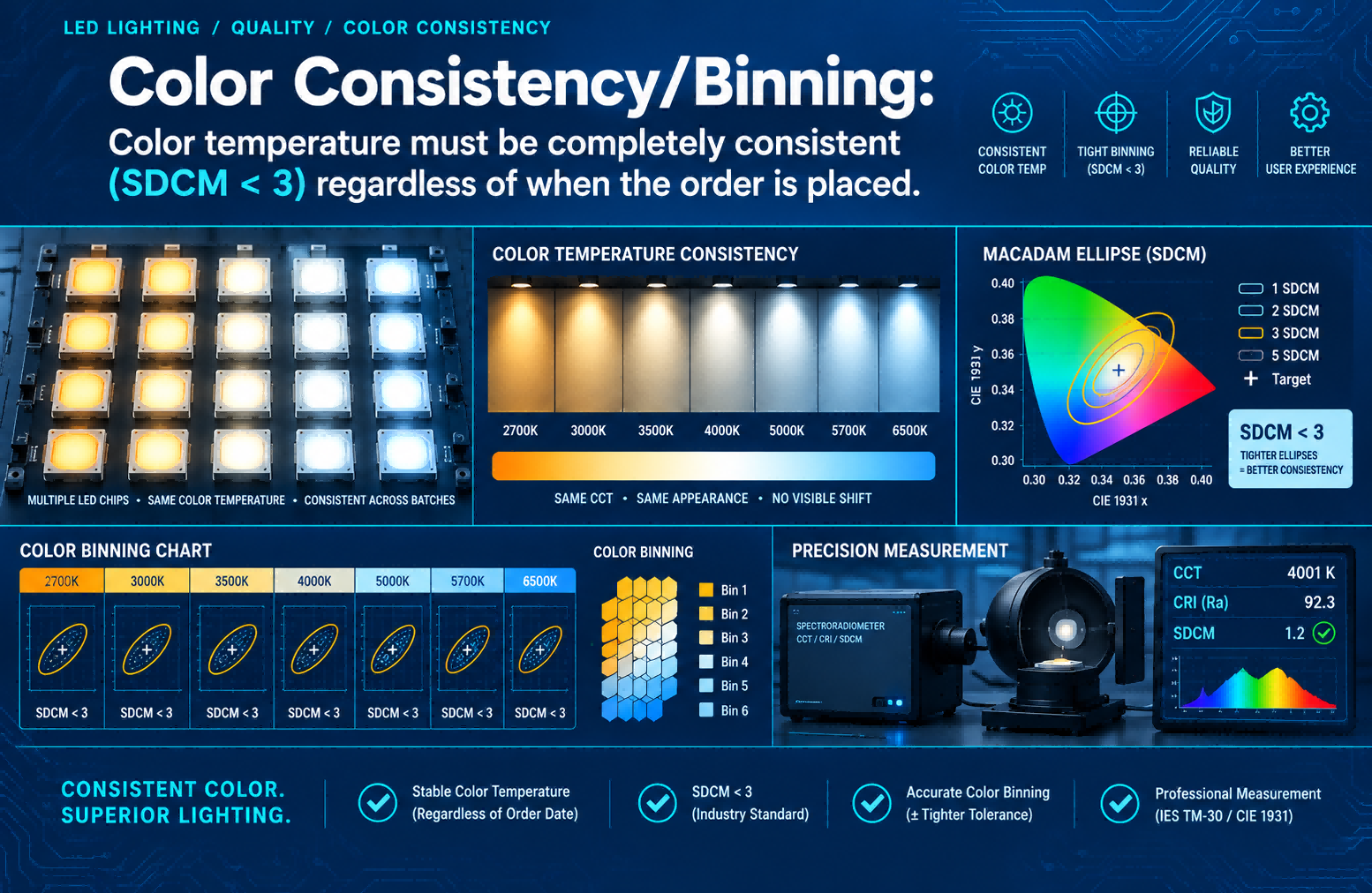
4. Color Temperature Matters
Measured in Kelvins (K), color temperature affects mood:

-
2700K–3000K: Warm white – cozy, inviting (ideal for living rooms, bedrooms)
-
3500K–4100K: Neutral white – clean and focused (good for kitchens, bathrooms)
-
5000K–6500K: Cool white/daylight – energizing, clinical (best for garages, task areas)
Use consistent color temperatures within a single room unless creating a deliberate effect.
5. Control and Flexibility
Incorporate dimmers, smart switches, or multi-circuit systems. The ability to adjust brightness and zones allows the space to adapt to different times of day and activities.
6. Energy Efficiency
Choose LED fixtures with high lumens-per-watt ratios. Consider occupancy sensors, daylight harvesting, and smart controls to minimize waste.
④How to Design a Lighting Layout: Step-by-Step
Creating a lighting layout doesn’t require professional training—but it does require planning. Follow these steps:
Step 1: Analyze the Space
-
Measure the room dimensions.
-
Identify natural light sources (windows, skylights).
-
Note architectural features (beams, niches, high ceilings).
-
Determine the room’s primary and secondary functions.
Step 2: Define Lighting Zones
Break the room into functional zones:
-
In a living room: seating area, media zone, reading nook
-
In a kitchen: prep area, cooking zone, dining space Assign appropriate lighting types to each zone.
Step 3: Calculate Light Levels
Use recommended footcandle or lux levels as a guide:
-
Living room: 10–20 footcandles (100–200 lux)
-
Kitchen countertop: 30–50 footcandles (300–500 lux)
-
Office desk: 50 footcandles (500 lux)
A rough rule of thumb for ambient lighting: multiply room area (in sq. ft.) by 1.5 to get total wattage needed (for incandescent). For LEDs, divide by 5–6 due to higher efficiency.
Step 4: Select Fixture Types
Choose fixtures that align with your design aesthetic and functional needs:
-
Recessed downlights for general illumination
-
Pendant lights over islands or dining tables
-
Wall sconces for ambient fill and vertical light
-
Track or rail lighting for flexible accenting
Consider scale—large rooms need larger or multiple fixtures; small rooms benefit from compact, unobtrusive options.
Step 5: Plan Fixture Placement
-
Recessed lights: Space evenly, typically 3–5 feet apart. Keep 2–3 feet from walls to avoid shadows.
-
Pendants: Hang 28–36 inches above a dining table; 72+ inches from floor in walkways.
-
Task lighting: Position to minimize glare and shadows (e.g., under cabinets should be toward the front edge).
-
Accent lights: Aim at 30-degree angle to highlight art or texture.
Use graph paper or digital tools (like SketchUp, Dialux, or even free apps like Lighting Layout by Lutron) to sketch your plan.
Step 6: Integrate Controls
Plan switches and dimmers:
-
Place switches near entry points.
-
Use multi-gang boxes for layered control (e.g., separate switches for ambient, task, accent).
-
Consider smart systems (like Philips Hue or Lutron Caséta) for scenes and automation.
Step 7: Review and Refine
Ask:
-
Is there enough light for tasks?
-
Are there dark corners or glare hotspots?
-
Can the lighting adapt to different moods or times of day?
-
Is the design energy-efficient and maintainable?
Make adjustments before installation.
⑤Room-by-Room Lighting Layout Tips
1. Living Room Lighting

-
Ambient: Recessed ceiling lights or a central chandelier
-
Task: Adjustable floor or table lamps near seating
-
Accent: Picture lights or wall washers for artwork
-
Tip: Use warm white (2700K–3000K) and dimmers for movie nights
2. Kitchen Lighting
- Ambient: Recessed or flush-mount ceiling lights
-
Task: Under-cabinet LED strips over countertops; pendant over island
-
Accent: Toe-kick lighting or glass-front cabinet LEDs
-
Tip: Ensure countertop lighting is shadow-free—place under-cabinet lights toward the front
3. Bedroom Lighting

-
Ambient: Soft ceiling light or cove lighting
-
Task: Bedside wall sconces or swing-arm lamps (better than table lamps for small spaces)
-
Accent: LED strips behind headboard or closet lighting
-
Tip: Avoid overhead lights directly above the bed—too harsh for relaxation
4. Bathroom Lighting

-
Ambient: Recessed or vapor-rated ceiling lights
-
Task: Vertical sconces at eye level on both sides of the mirror (avoids shadows on face)
-
Accent: Niche or shelf lighting
-
Tip: Use 3000K light with CRI >90 for accurate color rendering (important for makeup/skin tones)
5. Home Office Lighting

-
Ambient: Indirect ceiling or wall lighting to reduce screen glare
-
Task: Adjustable desk lamp with 3500K–4000K temperature
-
Accent: Optional shelf or plant lighting
-
Tip: Position task light opposite your dominant hand to prevent shadows while writing
6. Outdoor/Entryway Lighting

-
Ambient: Pathway bollards or wall-mounted security lights
-
Task: Motion-sensor porch light
-
Accent: Uplighting for trees or architectural features
-
Tip: Use warm white (2700K–3000K) to create a welcoming entry; avoid blinding brightness
⑥Common Lighting Layout Mistakes to Avoid
-
Over-lighting: Too many fixtures create glare and visual chaos.
-
Under-lighting: One central ceiling fixture leaves corners dark and tasks poorly lit.
-
Ignoring vertical surfaces: Walls and ceilings need illumination too—otherwise, rooms feel “flat.”
-
Mismatched color temperatures: Mixing 2700K and 5000K bulbs in the same room creates visual dissonance.
-
Poor switch placement: Having to walk across a dark room to turn on the light is both inconvenient and unsafe.
-
Forgetting maintenance: Choose fixtures that are easy to clean and bulbs that are accessible to replace.
⑦The Future of Lighting Layouts
Smart lighting is revolutionizing how we design and interact with light. Systems now allow:
-
Voice or app control
-
Automated scheduling based on sunrise/sunset
-
Circadian lighting that shifts color temperature throughout the day
-
Integration with motion sensors and security systems
Sustainability is also driving innovation—ultra-efficient LEDs, solar-powered outdoor lights, and fixtures made from recycled materials are becoming standard.
⑧FAQ
How many recessed lights do I need in a room?
A general guideline: one recessed light per 4–6 square meters (40–60 sq ft) of floor space. But spacing and beam angle matter more than quantity. For even coverage, space fixtures 1.2–1.5 meters (4–5 feet) apart and 0.6–0.9 meters (2–3 feet) from walls.
Can I mix different types of light fixtures in one room?
Absolutely! In fact, it’s encouraged. Combining ceiling lights, floor lamps, and wall sconces creates depth and flexibility. Just ensure consistent color temperature and complementary styles.
What’s the difference between lumens and watts?
Watts measure energy consumption; lumens measure brightness. For example, a 60W incandescent bulb produces ~800 lumens, while an LED uses only 8–10W to achieve the same output. Always choose bulbs based on lumens, not watts.
How high should I hang a pendant light over a dining table?
Typically 75–90 cm (30–36 inches) above the table surface. Adjust based on ceiling height and fixture size—higher ceilings may require a slightly higher hang.
Do I need an electrician to design a lighting layout?
You can design the layout yourself using planning tools and guidelines. However, for new wiring, circuit installation, or complex smart systems, always hire a licensed electrician for safety and code compliance.
What is CRI, and why does it matter?
CRI (Color Rendering Index) measures how accurately a light source reveals true colors (0–100 scale). Aim for CRI >90 in spaces where color accuracy matters (e.g., bathrooms, art studios, retail). Standard LEDs are often 80+; high-CRI options are worth the investment.
Can lighting affect my sleep?
Yes. Exposure to cool, blue-rich light (5000K+) in the evening suppresses melatonin, disrupting sleep. Use warm, dimmable lights (2700K or lower) in bedrooms and living areas at night. Consider smart bulbs that automatically shift temperature.
How do I light a room with no ceiling lights?
Use floor and table lamps strategically. Place tall floor lamps in corners for ambient fill, and task lamps on surfaces. Add wall sconces or plug-in LED strips for vertical illumination. Layer multiple sources to mimic ceiling lighting.
⑨Conclusion
Designing a lighting layout is both an art and a science. By understanding the roles of ambient, task, and accent lighting—and applying core principles like layering, balance, and control—you can transform any space into a functional, beautiful, and emotionally resonant environment.
Remember: great lighting isn’t about the most expensive fixtures—it’s about thoughtful placement, appropriate intensity, and human-centered design. Whether you’re renovating a kitchen or setting up a cozy reading corner, take the time to plan your lighting. The results will shine—literally and figuratively.
So grab a tape measure, sketch your floor plan, and start layering light. Your space (and your eyes) will thank you.


