2026-01-04
What to Look for When Buying LED Strip Lights and What to Avoid

LED strip lights have evolved from niche lighting solutions to mainstream design staples—used in kitchens, bedrooms, home theaters, and even commercial spaces. But with countless options flooding the market, how do you pick the right one without getting stuck with flickering, dim, or short-lived strips? Whether you're searching for the best LED strip light for ambient mood lighting or the brightest LED strip for task illumination, this guide cuts through the noise. We’ll also cover essential techniques like how to cut LED strips safely and effectively—so you can customize your setup with confidence.
LED Strip Lights: 7 Must-Check Features Before You Buy
Best vs. Bust: How to Spot a High-Quality LED Light Strip (And Skip the Duds)
The Insider's Guide to the Brightest, Most Dimmable LED Strips
Never Buy the Wrong LED Strip Again: Your Ultimate Sizing & Power Guide
The LED Strip Plug Most People Forget (And Why It's Crucial)
Beyond Basic LEDs: Is a Flexible Neon Strip the Right Choice for You?
Which LED strip offers the best value for money?
What scenarios are 3000K, 4000K, and 6500K suitable for?
Conclusion
FAQ
Best vs. Bust: How to Spot a High-Quality LED Light Strip (And Skip the Duds)
The Insider's Guide to the Brightest, Most Dimmable LED Strips
Never Buy the Wrong LED Strip Again: Your Ultimate Sizing & Power Guide
The LED Strip Plug Most People Forget (And Why It's Crucial)
Beyond Basic LEDs: Is a Flexible Neon Strip the Right Choice for You?
Which LED strip offers the best value for money?
What scenarios are 3000K, 4000K, and 6500K suitable for?
Conclusion
FAQ
LED Strip Lights: 7 Must-Check Features Before You Buy

Before clicking “Add to Cart,” ask yourself these questions:
1. Color Temperature (CCT): Do you want warm (3000K), neutral (4000K), or cool daylight (6500K)?
2. Brightness (Lumens per Meter): Higher lumens = brighter output—check specs, not just “wattage.”
3. CRI (Color Rendering Index): Aim for 90+ CRI for true-to-life colors, especially in kitchens or art studios.
4. Waterproof Rating (IP Rating): IP65 or higher for bathrooms or outdoors; IP20 is fine for dry indoor use.
5. Cut Points & Flexibility: Most strips have marked cut lines—often every 2–4 LEDs. Confirm how to cut LED strips without damaging circuits.
6. Voltage Compatibility: 12V vs. 24V systems affect brightness consistency over long runs.
7. Dimmability: If you want smooth mood control, ensure the strip is compatible with your dimmer or smart system.
Best vs. Bust: How to Spot a High-Quality LED Light Strip (And Skip the Duds)
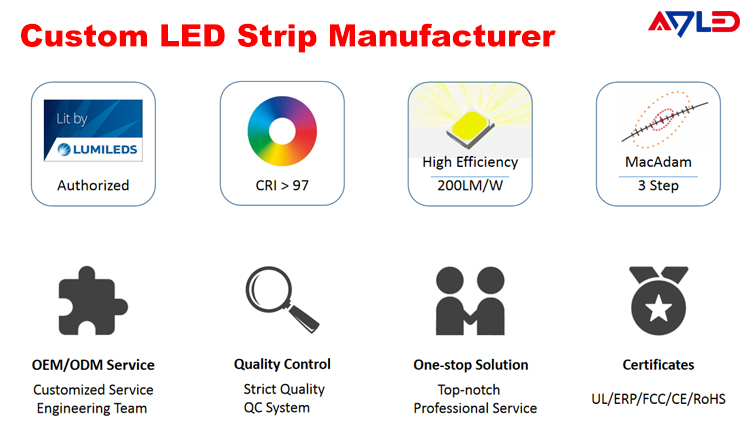
Not all LED light strip lights are created equal. A high-quality strip uses:
Thick copper PCBs (2 oz or more) for better heat dissipation and consistent voltage
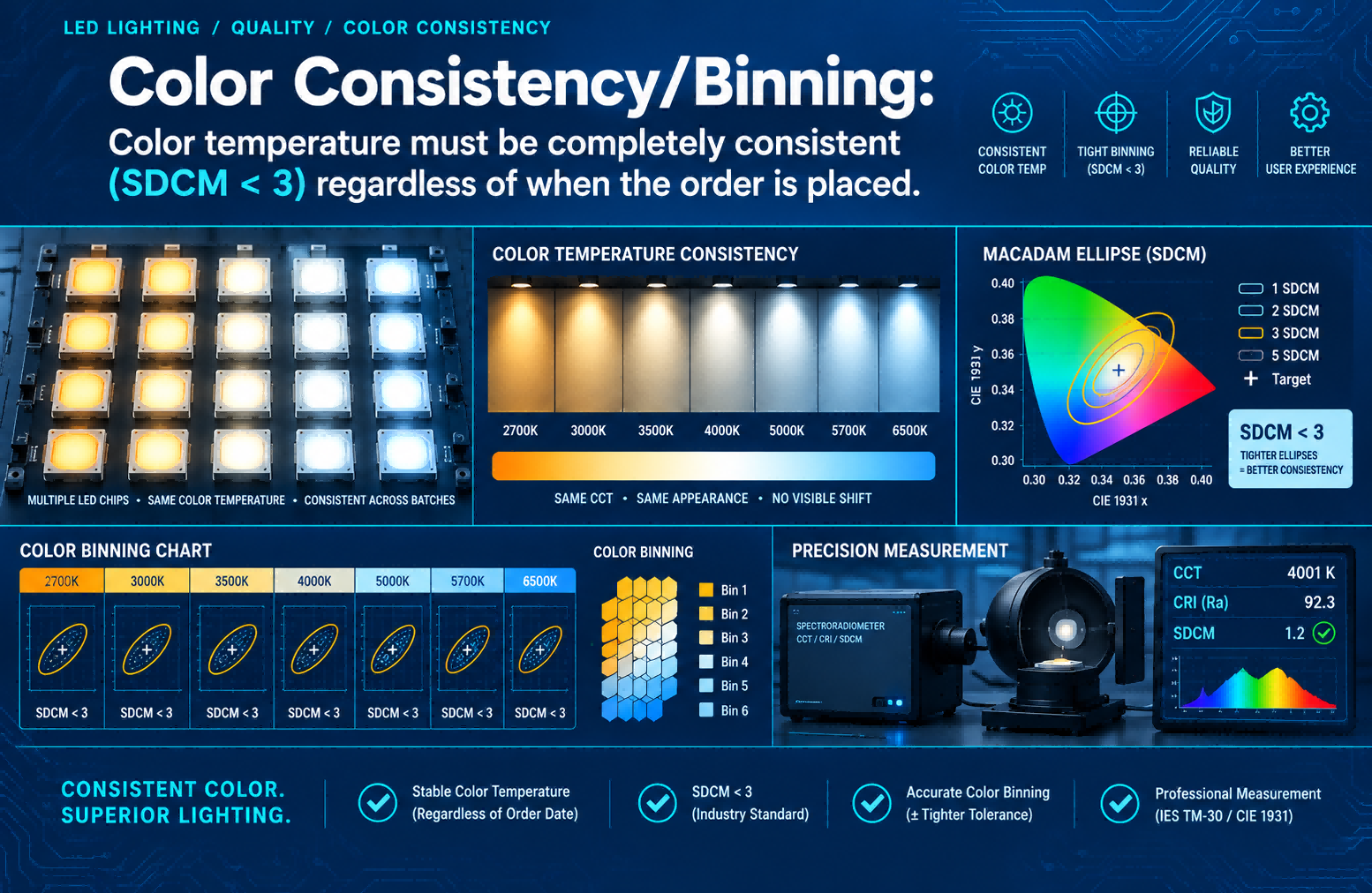
Consistent binning—so colors match across multiple strips
Reliable adhesive backing that won’t peel after a month
Avoid ultra-cheap strips on marketplaces with no brand info, blurry specs, or missing safety certifications (look for UL, CE, or ETL marks). These often overheat, flicker, or die within weeks
The Insider's Guide to the Brightest, Most Dimmable LED Strips

Want maximum impact without sacrificing control? Seek dimmable LED strip lights with:
High-density LEDs (e.g., 120 or 240 LEDs per meter)
24V power for longer runs without voltage drop
PWM (Pulse Width Modulation) dimming compatibility for flicker-free dimming down to 1%
Pro tip: Pair your LED strip and connectors with a high-quality driver and compatible dimmer (0–10V, TRIAC, or smart controllers like Zigbee/Z-Wave) for seamless performance.
Never Buy the Wrong LED Strip Again: Your Ultimate Sizing & Power Guide
Before installation, calculate:
Total length needed, including extra for corners or mistakes
Total wattage (watts per meter × meters) to size your power supply correctly (always add 20% headroom)
Cut points: Most strips can be cut every few inches—look for copper pads marked with a scissor icon
Use LED tape channels (aluminum profiles) to diffuse light evenly, protect the strip, and make mounting easier. They’re not just aesthetic—they prevent hotspots and extend lifespan.
The LED Strip Plug Most People Forget (And Why It's Crucial)

Many DIYers overlook the LED light strip plug and power adapter quality. A cheap, underpowered plug can cause:
Flickering
Overheating
Premature LED failure
Always use a regulated, constant-voltage power supply with the correct amperage. If you’re hardwiring, consider using solderless connectors or soldering for long-term reliability—especially at joints or LED strip and connectors junctions.
Beyond Basic LEDs: Is a Flexible Neon Strip the Right Choice for You?
If you love the retro-glow of traditional neon but want modern efficiency, LED neon strip options might be perfect. These use diffused silicone jackets to mimic glass neon tubes—ideal for signage, coves, or accent lighting.
Pros:
Uniform, shadow-free glow
Flexible and shatterproof
Lower power consumption than real neon
Cons:
Less bright than high-density standard strips
Fewer color temperature options
Great for ambiance; not ideal for task lighting.
Which LED strip offers the best value for money?
The “best” depends on your use case:
High-brightness needs: 24V 240 LEDs/m COB strips for under-cabinet or workshop lighting
Smart control: Wi-Fi or Bluetooth-enabled strips with app support (ensure firmware updates are available)
Avoid paying for unnecessary features—but never skimp on power quality or thermal management.
What scenarios are 3000K, 4000K, and 6500K suitable for?
3000K (Warm White): Cozy, inviting—perfect for living rooms, bedrooms, and restaurants
4000K (Neutral White): Balanced and natural—ideal for kitchens, bathrooms, offices, and retail
6500K (Cool Daylight): Crisp and energizing—best for garages, workshops, task lighting, or display cases
Stick to one temperature per room for visual harmony—mixing can look jarring.
Conclusion
Choosing the right LED strip light is about more than just brightness or color. It’s about compatibility, longevity, and how well it integrates into your space. Whether you're installing dimmable LED strip lights in a home theater or using an LED neon strip for a custom sign, prioritize quality over price. And always double-check how to cut LED strips and which LED tape channel fits your design—these small details make a big difference in the final result.
When in doubt: buy from brands with strong warranties, clear specs, and responsive customer support. Your future self (and your electrician) will thank you.
FAQ
Can I cut any LED strip light?
Only at designated cut points (usually marked). Cutting elsewhere can damage the circuit. Always power off before cutting.
Do all LED strips need a channel or housing?
Not required, but LED tape channels improve light diffusion, protect the strip, and make installation cleaner—highly recommended for permanent setups.
Can I connect multiple LED strips together?
Yes, but avoid daisy-chaining long runs. Use parallel wiring from a single power supply to prevent voltage drop.
Are 6500K strips too harsh for bedrooms?
Usually, yes. 3000K–3500K is better for relaxation. Save 6500K for utility spaces.
What’s the easiest way to install connectors without soldering?
Use clip-on or push-fit LED strip and connectors, but ensure they match your strip width (e.g., 8mm, 10mm) and pin layout.
How long do quality LED strips last?
30,000–50,000 hours (or 10–15 years with typical use)—if properly powered and cooled.