

2025-05-23
Where to use neon LED strip?
Where the Neon lights use?
For decades, neon was the undisputed king of the urban nightscape, defined by its nostalgic glow but plagued by fragility and high maintenance. Today, the lighting industry is witnessing a total transformation. LED Neon Flex has emerged as the superior successor, perfectly replicating the iconic aesthetic of traditional neon while offering unparalleled flexibility, durability, and energy efficiency. Whether you are an architect outlining a city skyscraper or a retailer seeking a high-impact brand signature, understanding the technical nuances of LED Neon Flex is essential. In this comprehensive guide, we dive deep into everything from core structures and outdoor weatherproofing to professional installation techniques, helping you master the art of modern linear lighting.
What is LED Neon Flex?
Uses of LED Neon Lights
Can LED Neon Flex be used outdoors?
How to choose the right LED neon tube?
Advantages of using LED neon lights
Equipment needed to install LED neon lights
How to install LED neon lights?
How do I cut an LED neon tube?
How to buy LED neon lights?
Is LED neon strip the same as neon?
Future trends and potential
Conclusion
FAQ
Uses of LED Neon Lights
Can LED Neon Flex be used outdoors?
How to choose the right LED neon tube?
Advantages of using LED neon lights
Equipment needed to install LED neon lights
How to install LED neon lights?
How do I cut an LED neon tube?
How to buy LED neon lights?
Is LED neon strip the same as neon?
Future trends and potential
Conclusion
FAQ
What is LED Neon Flex?

LED Neon Flex is a lighting product that uses flexible silicone or PVC material to encase LED beads. Compared with the traditional glass neon sign, it simulates the effect of neon light by using a high brightness LED light source, and at the same time, it is flexible and bendable, energy-saving and environmentally friendly, and easy to install.
Core structure: Inside is a series of LED chips, outside wrapped with a flexible translucent adhesive layer, which can be customised in length and shape.
Light-emitting principle: LED beads emit monochromatic or full-colour light when energized, and the light spreads evenly through the outer layer of the gel, forming a continuous band of light similar to that of a traditional neon sign.
Uses of LED Neon Lights

Commercial sector: eye-catching brand visuals
Highly recognisable: customised illuminated logos or three-dimensional characters, supporting dynamic gradient and breathing light effects, attracting customer traffic at night (e.g. milk tea shops, luxury shops).
Low-cost updating: change the light colour or dynamic mode at any time to match the needs of holiday promotion or brand refreshing.
Window & Display Design
Scenario-based marketing: Outline mannequin silhouettes in clothing shop windows, or embed soft light at the bottom of jewellery counters to highlight product texture.
Interactive experience: Combine with sensors to realise intelligent interaction (e.g. flash shop entrance).
Architectural lighting: the ‘paintbrush’ of the urban night economy.
Building outline and façade art
Building outline and façade art
Home Design: Light and Shadow Magic for Personalised Living
Atmosphere Creation
Atmosphere Creation
Living room/bedroom: ceiling hidden installation to simulate starry sky or aurora effect; TV back wall outlined with warm white light to reduce visual fatigue.
Children's room: customised cloud and star shapes with soft night light patterns, combining fun and safety.
Functional Partitioning
Staircase safety: Embedded light strips along the treads, which light up by automatic sensing (need to cooperate with human body sensors).
Mirror Decoration: Bathroom mirror frame surrounded by cool white light to enhance the uniformity of make-up lighting, while anti-fog and waterproof.
Public Art: ‘Flexible Expression’ of Urban Culture
Can LED Neon Flex be used outdoors?

Yes, but it needs to meet the following conditions:
Waterproof rating: choose IP65 and above (dust and water spray proof) or IP67/IP68 (fully waterproof, suitable for swimming pools and fountains).
Weather resistance: The outer layer of the gel should be UV-resistant to avoid yellowing in the sun for a long period of time.
Installation: Use stainless steel fixing clips or waterproof adhesive to avoid falling off due to strong wind.
How to choose the right LED neon tube?
Filter from the following dimensions according to your needs:
Parameter Selection Suggestion
Brightness & Colour Temperature High brightness model (>1500 lumens/m) is suitable for outdoor advertising; 2700K-3000K warm light is suitable for home atmosphere.
Waterproof rating Choose IP33 for indoor, IP65 or above for outdoor, and IP68 for underwater scenes.
Colour Mode Monochrome (red/blue/white) cost-effective; RGBIC programmable full-colour for dynamic effects.
Controller compatibility Models that support Bluetooth/Wi-Fi intelligent control facilitate remote dimming and colour mixing.
Brand and Warranty Prefer OSRAM, Philips and other well-known brands, the warranty period of at least 2 years.
Brightness & Colour Temperature High brightness model (>1500 lumens/m) is suitable for outdoor advertising; 2700K-3000K warm light is suitable for home atmosphere.
Waterproof rating Choose IP33 for indoor, IP65 or above for outdoor, and IP68 for underwater scenes.
Colour Mode Monochrome (red/blue/white) cost-effective; RGBIC programmable full-colour for dynamic effects.
Controller compatibility Models that support Bluetooth/Wi-Fi intelligent control facilitate remote dimming and colour mixing.
Brand and Warranty Prefer OSRAM, Philips and other well-known brands, the warranty period of at least 2 years.
Advantages of using LED neon lights
Energy saving and environmental protection: energy consumption is 60%-80% lower than traditional neon lights, no mercury and other harmful substances.
Long life: average service life of more than 50,000 hours, no need for frequent replacement.
Safe and reliable: low voltage power supply (12V/24V), low heat generation, no risk of glass breakage.
Freedom of design: it can be bent, cut and spliced to adapt to complex modelling.
Intelligent control: adjust brightness, colour, dynamic mode (such as gradient, flashing) through APP.
Equipment needed to install LED neon lights
Basic tools: scissors, screwdriver, tape measure.
Fixing accessories: stainless steel clips, 3M adhesive backing, nylon ties.
Power components: adapter power supply (selected according to lamp voltage), controller (for dimming and colour adjustment).
Connection accessories: waterproof butt connector, L/T-type adapter (for corner splicing).
How to install LED neon lights?
Step-by-step guide:
-
Planning Layout: Measure the installation area, mark the lamp path and power supply location.
-
Fixing the lamp: Fix the lamp to the wall/object surface with snap or adhesive backing, the radius of the bend is ≥10cm.
-
Connect the power supply: Dock the lamp terminals to the power adapter, make sure the positive and negative poles are correct.
-
Test the light: power on and check whether the whole section glows normally, to exclude the problem of poor contact.
-
Sealing treatment: seal the connector and cutting end with silicone when installing outdoors.
How do I cut an LED neon tube?
Confirm the cutting point: Only cut at the cut symbols marked on the tube (usually every 1-2 metres).
Operation method: Use a hobby knife to cut vertically through the outer gel along the marked line, peel off the gel layer and then cut the inner wires.
Repairing the port: Seal the port with an end cap after cutting, or solder a new connector to restore waterproofness.
How to buy LED neon lights?

Define your needs: Determine the purpose (indoor/outdoor), length, and colour pattern.
Choose the channel:
Online: Amazon, Alibaba (suitable for bulk purchase).
Offline: professional lighting market or brand agents (field inspection is available).
Pit avoidance tips:
Avoid non-certified products (check for CE, RoHS marks).
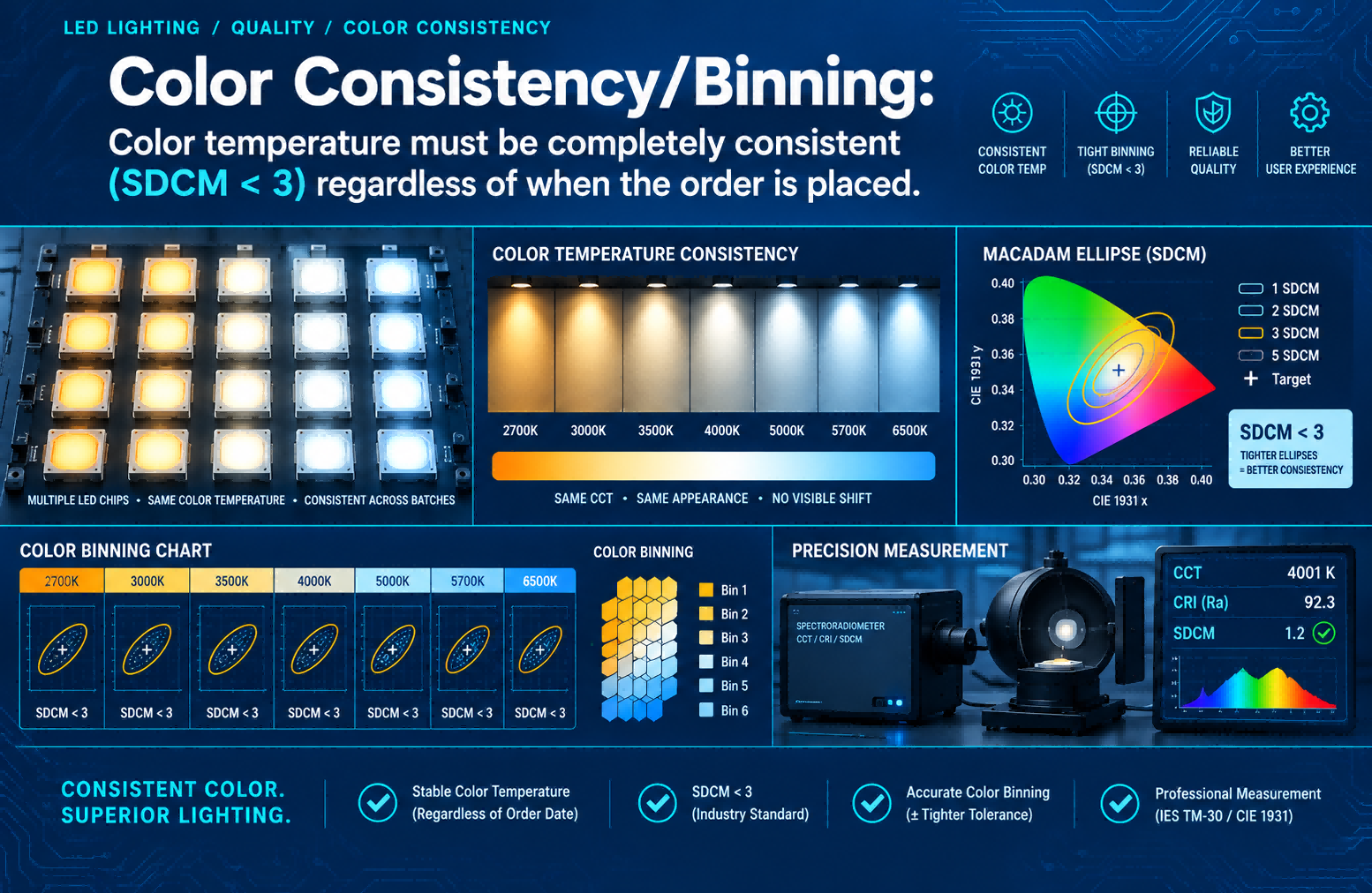
Ask for spectral test reports to ensure colour consistency.
Is LED neon strip the same as neon?
Traditional Neon: Glass tubes filled with an inert gas, requiring high voltage to excite the light, fragile and high energy consumption.
LED Neon Strip: Flexible LED bead package, low voltage power supply, can be bent and cut, essentially two technologies, but LED can perfectly simulate the neon effect.
Future trends and potential
Technology upgrades: thinner tubes (<8mm diameter), higher brightness (2000 lumens/m or more).
Smart Integration: Integration with Internet of Things (IoT), automatic dimming via sensors.
Environmentally friendly materials: R&D of recyclable silicone and bio-based colloids.
Cross-border applications: integration with architectural skins, wearable devices, AR/VR scenes.