

2026-08-19
Green Hotel Initiative How High-Efficacy LED Modules Help Reach LEED Energy Certifications
Green Hotel Initiative: How High-Efficacy LED Modules Help Reach LEED Energy Certifications
The global hospitality industry faces mounting pressure to demonstrate environmental stewardship.For green building consultants & led APs, commercial real estate developers, and luxury hotel groups, achieving led certification is no longer optional—it's a competitive differentiator that drives asset value, attracts eco-conscious guests, and fulfills corporate ESG commitments. Lighting accounts for 25-40% of a hotel's total energy consumption, making it one of the highest-impact areas for efficiency upgrades. This guide explores how high efficacy LED modules for led certification enable sustainable LED lighting for green hotels while delivering measurable carbon footprint reduction LED hospitality outcomes.
The Green Hotel Imperative: Why Sustainable LED Lighting for Green Hotels Is Now a Business Priority
Sustainability has shifted from marketing differentiator to operational imperative. Travelers increasingly prefer accommodations with verified environmental credentials, while investors scrutinize ESG performance before committing capital. Sustainable LED lighting for green hotels addresses multiple stakeholder demands simultaneously: reducing operational expenses, enhancing guest comfort, and providing auditable data for sustainability reporting.
For commercial real estate developers & asset managers, the financial case is compelling. led-certified buildings command rental premiums of 5-10% and experience lower vacancy rates. Lighting upgrades represent one of the fastest paths to certification, with premium LED modules energy savings delivering ROI within 2-4 years through reduced electricity costs and maintenance expenses. When evaluating LED lighting supplier for led projects, prioritize partners who provide comprehensive technical documentation and lifecycle cost analysis.
Understanding led Energy Credits: How to Reduce Lighting Power Density LED Commercial for Maximum Points
led v4.1's Energy & Atmosphere (EA) category rewards projects that exceed ASHRAE 90.1 baseline energy performance. The key metric is Lighting Power Density (LPD), measured in watts per square foot or meter. To reduce lighting power density LED commercial, facilities must optimize both fixture efficiency and control strategies.
Calculating LPD for led Compliance
The baseline LPD is determined by space type per ASHRAE 90.1. Projects earn points by demonstrating percentage improvements:
5-15% reduction: 1 point
16-25% reduction: 2 points
26-35% reduction: 3 points
36%+ reduction: 4 points
High efficacy LED modules for led certification (120lm/W+) directly lower LPD by delivering more lumens per watt. When combined with occupancy sensors, daylight harvesting, and tunable white controls, total energy savings can exceed 50% versus conventional lighting. A professional LED lighting consultant for led APs can model these scenarios using IES files to predict credit achievement before procurement.
Why High Efficacy LED Modules for led Certification Deliver Superior Performance and Compliance
Not all LED modules are created equal. Premium LED modules energy savings extend beyond initial efficacy to encompass longevity, color consistency, and system integration. Key specifications for led projects include:
Performance Benchmarks
Efficacy: ≥120lm/W for general areas, ≥140lm/W for high-ceiling spaces
Lifetime: L70 ≥50,000 hours to minimize replacement frequency
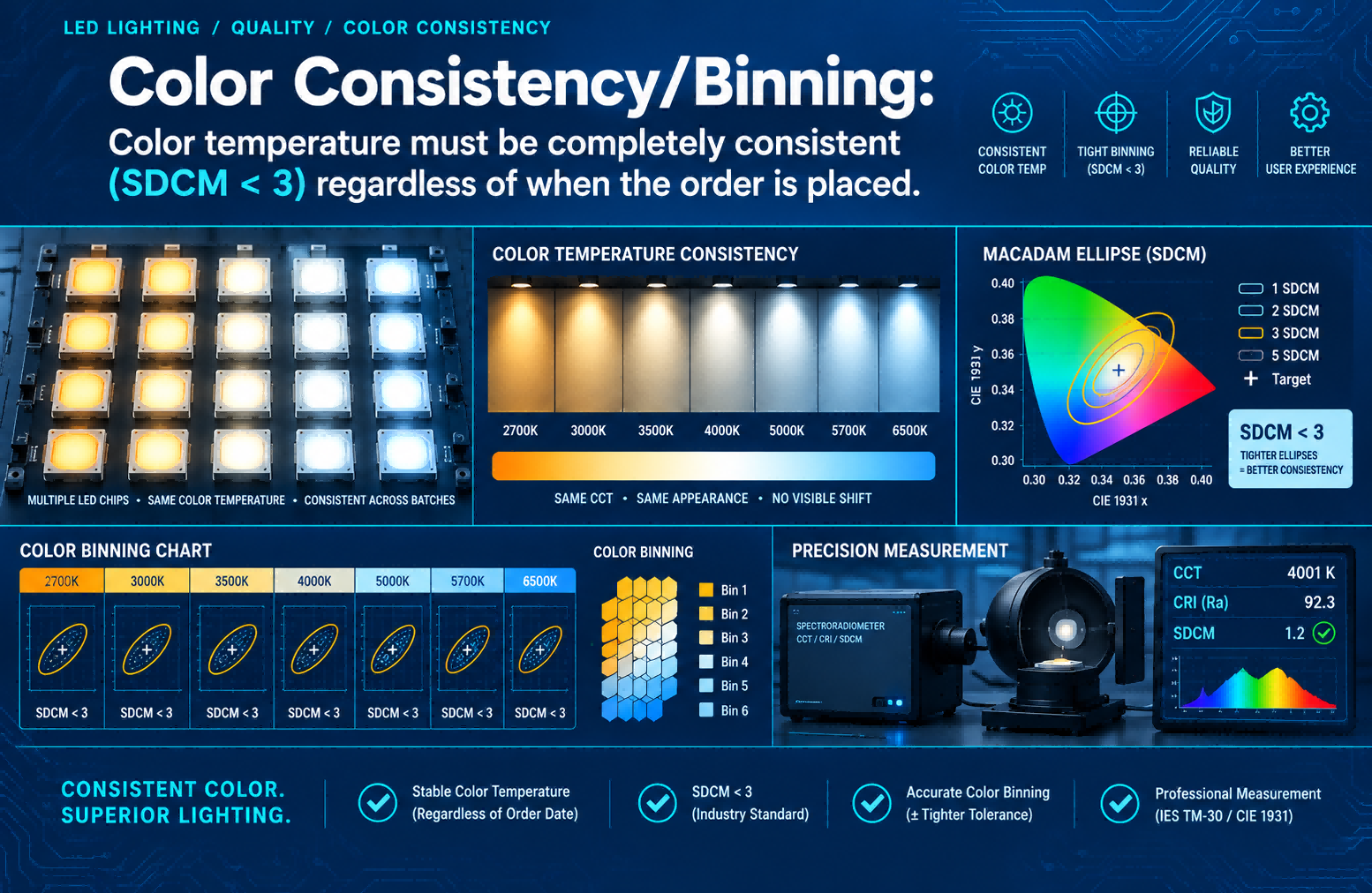
Color consistency: MacAdam ellipse ≤3 for uniform appearance across fixtures
Flicker performance: <5% flicker index for guest comfort and camera compatibility