

2026-01-19
How should old LED light strips be disposed of
How should old LED light strips be disposed of?
In the ever-evolving world of home decor and smart technology, LED light strips have become a ubiquitous feature. They line our ceilings, backlight our TVs, illuminate our kitchens, and even add a festive glow to our holiday decorations. Their energy efficiency, low heat output, and vibrant color options have made them a go-to solution for both functional and aesthetic lighting. However, like all technology, they don't last forever. Eventually, your once-bright strip may start to flicker, lose its color accuracy, or simply stop working altogether.
At this point, a common question arises: What should I do with my old LED light strip? It’s tempting to just toss it in the trash and order a new one, but that’s far from the best—or most responsible—course of action. LED strips are complex electronic devices containing a variety of materials, some of which can be harmful to the environment if not disposed of properly. This guide will walk you through every step of the process, from diagnosing the problem to exploring creative reuse options and, ultimately, ensuring a safe and eco-friendly end-of-life for your old lighting.
Step 1: Diagnose Before You Discard
Step 2: The Art of Reuse and Repurposing
Step 3: Understanding the Composition of an LED Strip
Step 4: The Responsible Path: Recycling Your LED Strip
Step 5: A Note on the Power Supply and Controller
Step 2: The Art of Reuse and Repurposing
Step 3: Understanding the Composition of an LED Strip
Step 4: The Responsible Path: Recycling Your LED Strip
Step 5: A Note on the Power Supply and Controller
Step 6:The Bigger Picture: Sustainable Consumption
FAQ
Summary
FAQ
Summary
Step 1: Diagnose Before You Discard
Before you even consider disposal, it’s crucial to confirm that the LED strip itself is the problem. Often, the issue lies elsewhere in the system, and a simple fix can save you money and keep a perfectly good product out of the landfill.
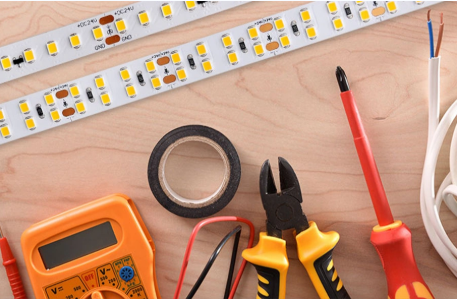
Check the Power Supply: The power adapter (or driver) is the most common point of failure. If your strip isn’t lighting up at all, try testing the power supply with a multimeter to see if it’s delivering the correct voltage (usually 12V or 24V DC). If you have a spare adapter of the same specifications, swap it in to test.
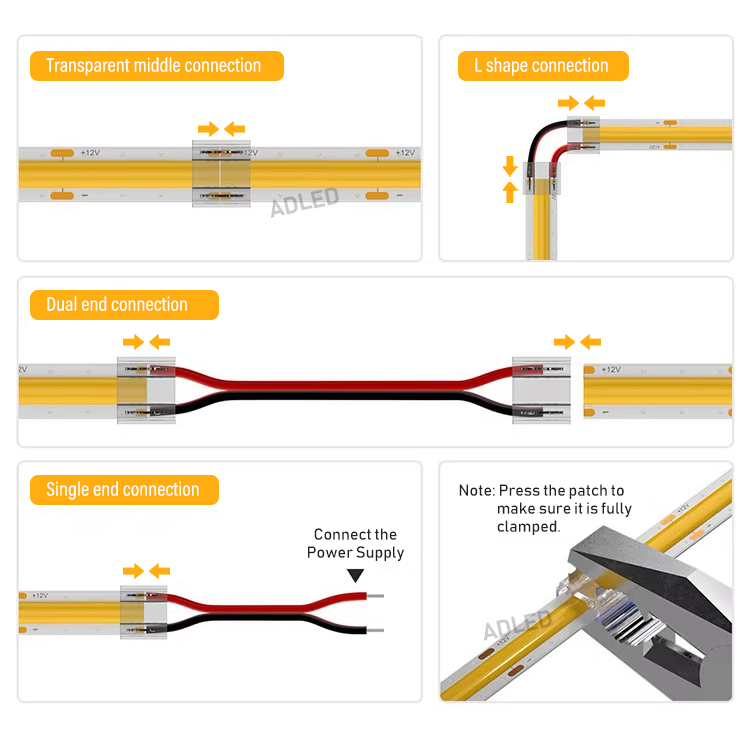
Inspect the Connections: Over time, the solder joints or connector clips between the strip and the power source can become loose or corroded. Carefully examine these points for any signs of damage, discoloration, or poor contact. A quick re-soldering or a firm re-connection can often restore full functionality.
Look for Physical Damage: LED strips are flexible, but they’re not indestructible. Check for any cuts, kinks, or areas where the copper traces on the back might be severed. A single cut in the wrong place can disable an entire section of the strip.
Test with a Controller: If your strip is an RGB or RGBW type, the controller might be at fault. Try bypassing the controller and connecting the strip directly to the power supply (for a white-only test) to see if the LEDs themselves are working.
By methodically troubleshooting, you might discover that your “dead” LED strip is actually just a victim of a faulty peripheral. This simple step can prevent unnecessary waste.
Step 2: The Art of Reuse and Repurposing
If your strip is confirmed to be partially or fully functional, the most sustainable option is to give it a second life. Creativity is your best friend here.
Salvage Individual Components: Even a non-functional strip is a treasure trove of useful parts. You can carefully de-solder individual LEDs, resistors, and capacitors. These components can be used in other electronics projects, from building custom indicator lights to repairing other gadgets. For hobbyists and makers, this is a fantastic way to build a component inventory at no cost.
Create a New Lighting Fixture: A short, working segment of an LED strip can be repurposed into a completely new project. Imagine using it as under-cabinet lighting in a small workshop, as a reading light inside a bookshelf, or even as a unique accent light for a piece of art or a model. Its flexibility and adhesive backing make it incredibly easy to integrate into new designs.
Build a Custom Task Light: Cut a working section to size, attach it to a piece of wood or acrylic, and connect it to a simple switch and a USB power bank. You now have a portable, adjustable task light perfect for a desk, a craft table, or even a camping lantern.
Educational Tool: An old LED strip is a perfect hands-on teaching tool for learning about basic electronics, circuit design, and soldering. Its clear layout of components on a flexible PCB makes it an ideal platform for experimentation.
The key to successful repurposing is to see the strip not as a single, monolithic item, but as a collection of valuable resources waiting to be liberated.
Step 3: Understanding the Composition of an LED Strip
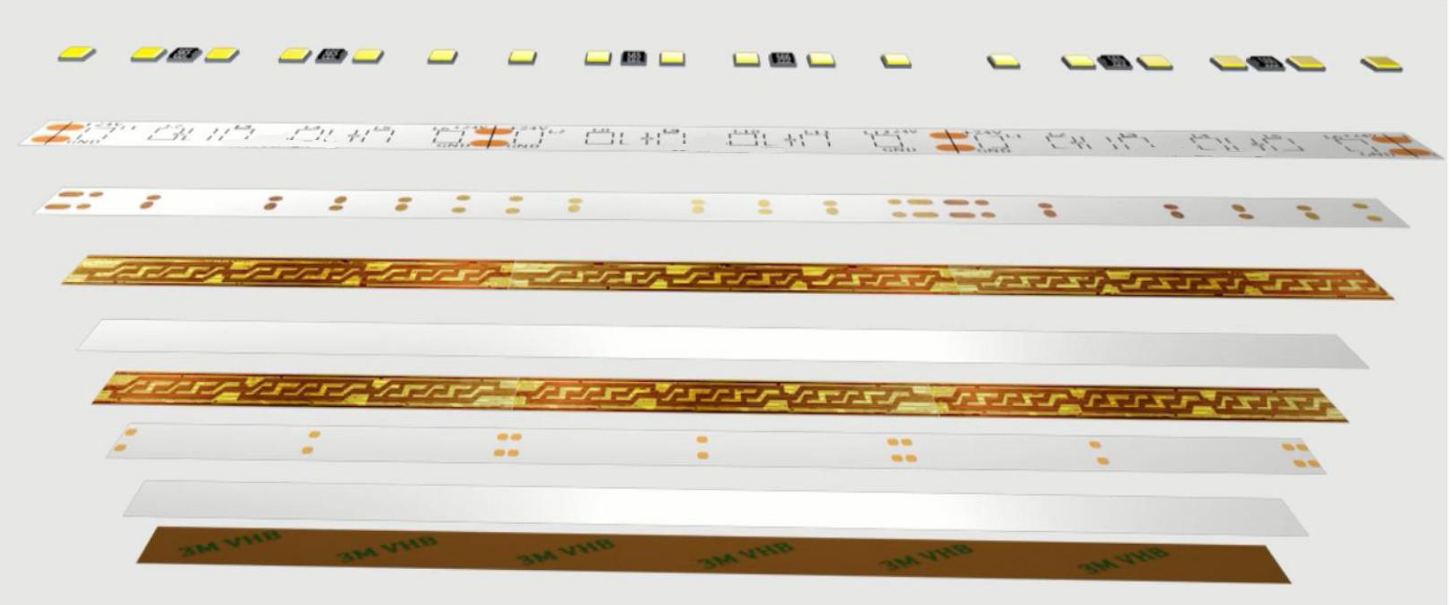
To dispose of an LED strip responsibly, you must first understand what it’s made of. A typical LED strip is a marvel of miniaturized engineering, composed of several key elements:
-
LED Chips:
These are the actual light-emitting diodes, usually made from semiconductor materials like gallium arsenide or gallium nitride.
-
Printed Circuit Board (PCB):
The flexible base of the strip is a thin PCB, typically made from a polyimide film with copper traces. This is what conducts electricity to the LEDs.
-
Resistors and Other Passive Components:
Small surface-mount resistors are placed along the strip to regulate the current flowing to each LED or group of LEDs.
-
Adhesive Backing:
Most strips come with a strong 3M adhesive on the back for easy mounting.
-
Silicone or PVC Coating:
Many strips, especially those rated for outdoor or wet-location use, have a protective coating of silicone or PVC to shield the electronics from moisture and dust.
-
Connectors and Wires:
The ends of the strip usually have wires or connectors for linking to a power source or other strips.
While LED strips do not contain large amounts of highly toxic heavy metals like older fluorescent tubes (which contain mercury), they are still classified as Waste Electrical and Electronic Equipment (WEEE) or e-waste. This is because they contain a mix of plastics, metals (including small amounts of lead and other potentially hazardous substances in the solder and components), and complex electronic circuits that should not end up in a standard landfill.
When e-waste is dumped in landfills, these materials can leach into the soil and groundwater over time, posing a long-term environmental risk. Furthermore, the valuable metals and rare earth elements used in their construction are lost forever, instead of being recovered and reused in a circular economy.
Step 4: The Responsible Path: Recycling Your LED Strip
Recycling is the final and most critical step for an LED strip that has truly reached the end of its useful life. However, recycling e-waste is not as simple as putting it in your curbside bin.
Why Curbside Recycling Won't Work: Municipal recycling programs are designed for clean, single-stream materials like paper, plastic bottles, and aluminum cans. They are not equipped to handle the complex, mixed-material composition of electronic waste. Putting your old LED strip in your regular recycling bin will likely result in it being pulled out as contamination and sent to a landfill anyway, or it could even damage the sorting machinery at the recycling facility.
Finding a Certified E-Waste Recycler: The correct path is to take your LED strip to a certified e-waste recycling center. These specialized facilities have the technology and processes to safely dismantle electronic devices, separate their various components, and recover valuable materials.
Here’s how to find one:
1. Check with Your Local Municipality:
Many cities and counties operate household hazardous waste (HHW) collection events or have permanent drop-off facilities that accept e-waste.
2. Use Online Directories:
Websites like Earth911 (in the US) or your country’s equivalent environmental agency portal allow you to search for local e-waste recyclers by entering your zip or postal code and the type of item you want to recycle.
3. Retailer Take-Back Programs:
Some major electronics retailers, such as Best Buy, offer free or low-cost e-waste recycling services, even for items they didn’t sell you. It’s worth checking their policies.
4. Manufacturer Programs:
While less common for simple LED strips than for larger appliances, some manufacturers have started their own take-back and recycling initiatives. Check the brand’s website for details.
What Happens at the Recycler? At a certified facility, your LED strip will go through a series of processes. It will be shredded, and then various techniques—like magnetic separation, eddy current separation, and optical sorting—are used to isolate ferrous metals, non-ferrous metals (like copper and aluminum), plastics, and glass. The recovered materials are then sold to smelters and manufacturers to be used in the production of new products. This process conserves natural resources, reduces the need for mining, and minimizes the environmental footprint of manufacturing.
Step 5: A Note on the Power Supply and Controller
Don’t forget about the other parts of your LED lighting system! The power adapter and the controller (if you have one) are also electronic waste and must be recycled separately.
These are essentially small power supplies and contain a transformer, capacitors, and other electronic components. They are a prime candidate for e-waste recycling.
Whether it’s a simple remote-control receiver or a sophisticated Wi-Fi-enabled smart hub, these are complex circuit boards that belong in the e-waste stream.
It’s good practice to bundle all the components of your old LED system together and take them to the recycler at the same time.
Step 6:The Bigger Picture: Sustainable Consumption
Our handling of a single LED strip is a microcosm of a much larger issue: our relationship with technology and consumption. The convenience of modern electronics has LED to a "take, make, dispose" linear economy that is fundamentally unsustainable.
By choosing to troubleshoot, reuse, and finally recycle our old LED strips, we are participating in a more circular model. We are extending the life of the product, extracting maximum value from its materials, and ensuring that its end-of-life doesn't come at the planet's expense.
Furthermore, this mindful approach can influence our future purchasing decisions. When it’s time to buy a new LED strip, consider factors like:
-
Quality and Longevity:
Investing in a higher-quality strip from a reputable brand may cost more upfront but will likely last longer, reducing the frequency of replacement.
-
Repairability:
Look for strips that are designed with standard cut points and easy-to-replace connectors, making future repairs and modifications simpler.
-
Brand Responsibility:
Support companies that have clear environmental policies and take-back programs for their products.

Every small, conscious decision we make adds up to a significant collective impact.
In conclusion, your old LED light strip is not just trash. It’s a challenge and an opportunity. A challenge to move beyond the convenience of the garbage can, and an opportunity to act as a responsible steward of our planet’s resources. By following the steps of diagnose, reuse, and recycle, you can ensure that the afterglow of your lighting project is one of environmental responsibility, not regret.
FAQ
Can I just throw my old LED strip in the regular trash?
No, you should not. LED strips are considered electronic waste (e-waste) due to their complex mix of metals, plastics, and electronic components. Disposing of them in the regular trash sends them to landfills where they can contribute to environmental pollution and waste valuable resources that could be recycled.
Are LED strips hazardous waste?
They are not classified as acutely hazardous like batteries or paint, but they are regulated as e-waste. They contain small amounts of potentially harmful substances (like lead in solder) and should be handled by certified e-waste recyclers to ensure safe and proper processing.
My LED strip is only partially working. Can I still recycle it?
Absolutely. Recycling centers accept electronic items regardless of whether they are fully functional or not. In fact, even non-working electronics are valuable for their raw materials.
What if I can’t find an e-waste recycler near me?
Start by checking your city or county’s official website for household hazardous waste (HHW) collection days or permanent facilities. You can also use online resources like Earth911.com to locate the nearest drop-off point. If you live in a very remote area, you might need to hold onto your e-waste until you can travel to a collection event or facility.
Can I recycle the adhesive backing and the silicone coating?
You don’t need to remove these yourself. Certified e-waste recyclers have industrial processes designed to separate and handle all the different materials in an electronic device, including adhesives and protective coatings.
Is it worth trying to repair a broken LED strip?
It depends on your skill level and the nature of the break. A simple cut at a designated cut line can often be repaired with a soldering iron and a connector. However, if the internal copper traces are damaged in a non-cut area, or if multiple LEDs have failed, it’s usually more practical to salvage the working sections for a new project and recycle the rest.
Summary
Old LED light strips should never be discarded in regular household trash. They are a form of electronic waste (e-waste) that requires special handling. The responsible process involves three key steps: first, diagnose the problem to ensure the strip itself is truly faulty; second, explore options to reuse or repurpose any functional segments or components; and third, for the remaining unusable parts, recycle them through a certified e-waste recycling facility. This approach conserves valuable resources, prevents potential environmental harm, and supports a more sustainable, circular economy. Always remember to recycle the accompanying power supply and controller as well.