

2026-04-03
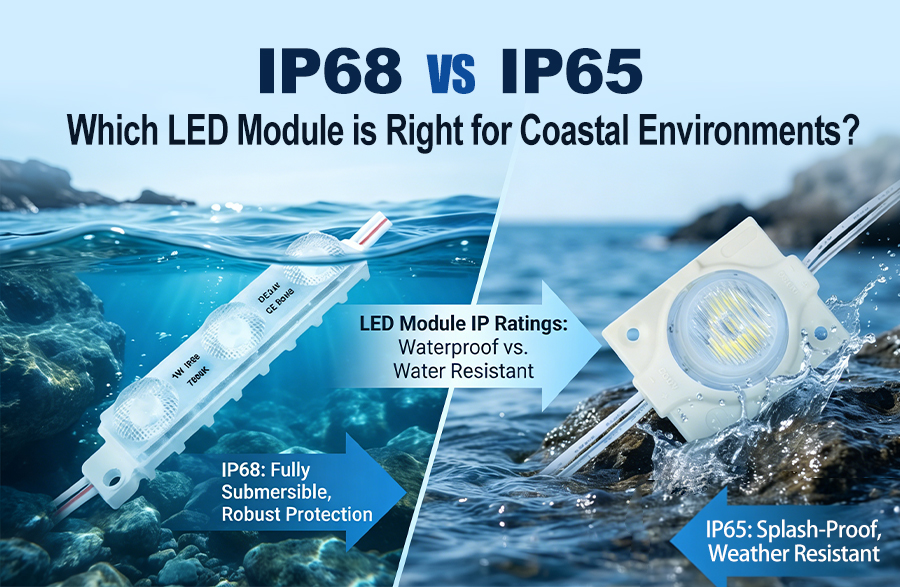
IP68 vs IP65 :Which LED Module is Right for Coastal Environments?
IP68 vs IP65: Which LED Module is Right for Coastal Environments?
Coastal environments present one of the most aggressive operational landscapes for electronic and lighting components. Salt aerosols, high humidity, UV exposure, and rapid temperature fluctuations accelerate material degradation, leading to premature failure, corrosion, and costly maintenance downtime. For B2B procurement managers, lighting engineers, facility operators, and marine infrastructure developers, selecting the correct ingress protection (IP) rating is not a compliance checkbox—it is a direct determinant of total cost of ownership, project reliability, and long-term operational continuity.
While IP65 and IP68 are widely specified for outdoor applications, their performance divergence in marine and coastal zones is substantial. This guide cuts through marketing claims to deliver a concise, engineering-backed comparison. You will find actionable selection criteria, real-world degradation factors, verification protocols, and a procurement checklist designed to prevent specification errors. Whether you are sourcing for port infrastructure, seaside commercial developments, or offshore facilities, understanding the operational boundaries of each rating ensures optimal lifecycle performance and eliminates costly retrofit cycles.
Understanding IP Ratings: The Basics for Coastal LED Modules
IP (Ingress Protection) ratings, defined by the International Electrotechnical Commission (IEC) standard IEC 60529, measure a device’s resistance to dust and water ingress. For LED modules used in coastal environments, the two digits in the IP rating directly impact their ability to withstand the region’s harshest elements. Both IP65 and IP68 share the same first digit—“6”—which denotes complete dust tightness, a non-negotiable feature for coastal areas where fine salt particles and sand can infiltrate unprotected fixtures, corrode internal components, and cause premature failure.
The critical difference lies in the second digit, which measures water resistance. This digit is the deciding factor for coastal applications, as it determines how well the LED module can withstand the varying levels of water exposure common in coastal settings—from light rain and sea mist to direct salt spray and temporary submersion. Below is a concise breakdown of each rating’s water resistance capabilities, tailored to the specific threats of coastal environments.
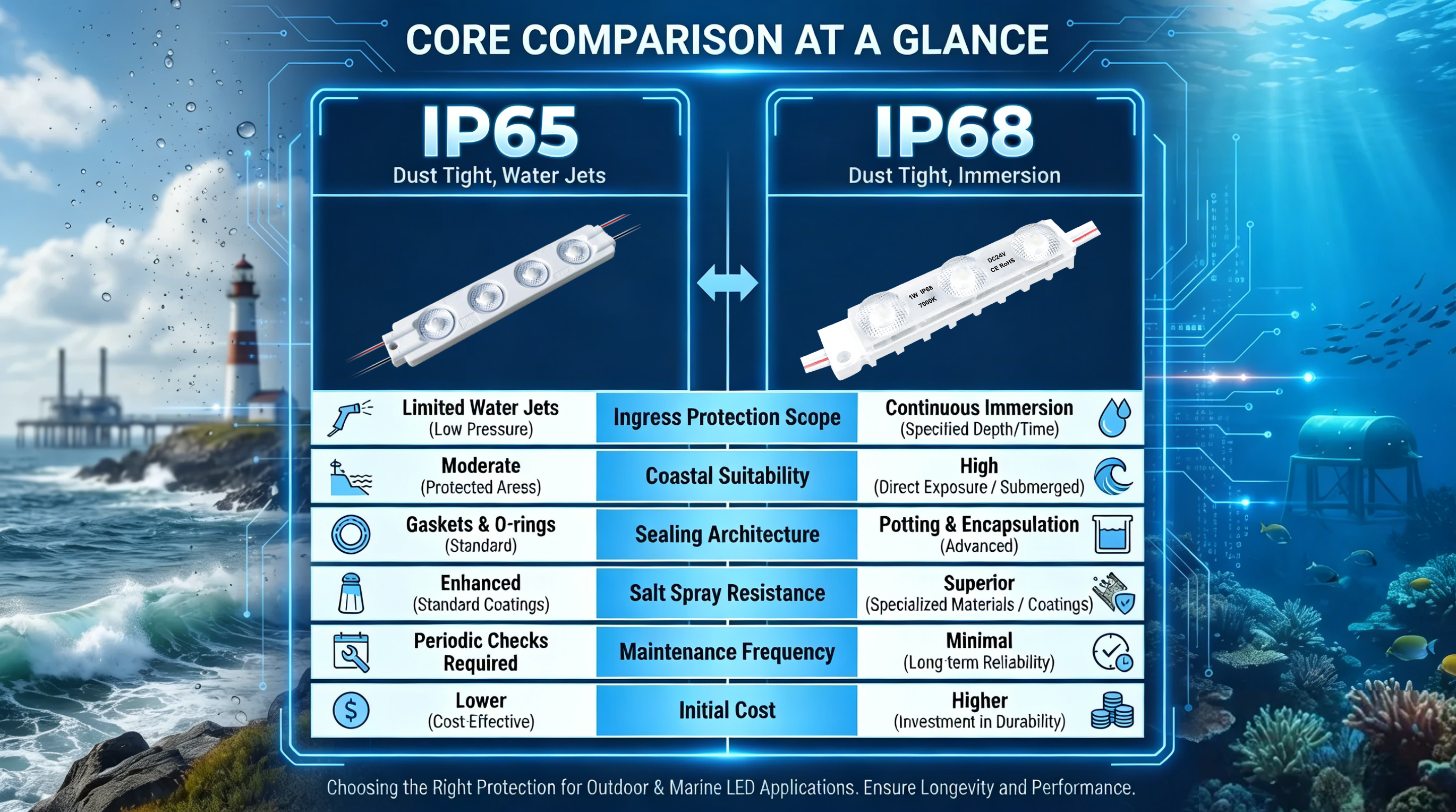
Core Comparison at a Glance
IP65 vs. IP68 in Coastal Environments: Key Comparisons
How to Choose Between IP65 and IP68 for Your Coastal LED Project
Decision Matrix: When to Specify IP65 vs. IP68
Total Cost of Ownership (TCO) & ROI Analysis
Key Takeaways for Professional Buyers
Final Procurement Recommendations
Summary
IP65 vs. IP68 in Coastal Environments: Key Comparisons
How to Choose Between IP65 and IP68 for Your Coastal LED Project
Decision Matrix: When to Specify IP65 vs. IP68
Total Cost of Ownership (TCO) & ROI Analysis
Key Takeaways for Professional Buyers
Final Procurement Recommendations
Summary
Core Comparison at a Glance
|
Parameter
|
IP65 LED Module
|
IP68 LED Module
|
|---|---|---|
|
Ingress Protection Scope
|
Dust-tight + protected against water jets from any direction
|
Dust-tight + protected against continuous immersion under manufacturer-specified depth/duration
|
|
Coastal Suitability
|
Moderate exposure (sheltered facades, covered walkways, inland coastal zones)
|
High/continuous exposure (direct seafront, piers, marine vessels, tidal splash zones)
|
|
Sealing Architecture
|
Perimeter silicone gaskets + mechanical compression seals
|
Multi-stage sealing + epoxy/polyurethane potting + pressure-equalization membranes
|
|
Salt Spray Resistance
|
Typically 200–500 hours (standard coating)
|
1000+ hours (marine-grade anodizing, advanced potting compounds)
|
|
Maintenance Frequency
|
12–24 months (gasket inspection, cleaning, driver checks)
|
36–60+ months (sealed design, minimal field intervention)
|
|
Initial Cost
|
Lower (standard outdoor tier)
|
Higher (specialized materials, extended validation testing)
|
IP65 vs. IP68 in Coastal Environments: Key Comparisons
To help you make an informed decision, below is a summary of the critical differences between IP65 and IP68 LED modules in the context of coastal environments, focusing on the factors that matter most to professional buyers:
1. Water Resistance
IP65: Protects against low-pressure water jets (e.g., light rain, indirect sea mist) but not direct salt spray or submersion. Suitable for sheltered coastal locations.
IP68: Protects against continuous submersion in water and high-pressure salt spray. Ideal for exposed coastal locations and areas prone to storm surges.
2. Corrosion Resistance
IP65: Requires additional corrosion-resistant materials (e.g., stainless steel screws, treated aluminum) to withstand salty air; may degrade over time in harsh coastal conditions.
IP68: Typically manufactured with marine-grade materials and full encapsulation, offering superior corrosion resistance against salty air and water.
3. Lifespan in Coastal Conditions
IP65: 2-5 years in moderate coastal environments; 1-2 years in harsh, exposed coastal areas (within 1 km of the shoreline).
IP68: 5-10+ years in harsh coastal environments, thanks to advanced sealing and corrosion-resistant materials.
4. Cost
IP65: Lower upfront cost (30-50% less than IP68), making it a budget-friendly option for sheltered coastal projects.
IP68: Higher upfront cost, but lower long-term maintenance and replacement costs, making it cost-effective for harsh coastal applications.
5. Installation
IP65: Easier to install, with simpler sealing mechanisms and fewer requirements for specialized tools or expertise.
IP68: Requires more careful installation to maintain the integrity of the sealing (e.g., proper connector sealing, avoiding damage to the encapsulation), often requiring professional installation.
How to Choose Between IP65 and IP68 for Your Coastal LED Project
The decision between IP65 and IP68 LED modules ultimately depends on three key factors: the location of the installation, the level of exposure to coastal elements, and your budget. Below is a step-by-step guide to help you select the right option, tailored to professional project needs:
Step 1: Assess the Level of Exposure
First, determine how exposed your LED modules will be to salt, water, and humidity:
-
Low Exposure: Sheltered areas (e.g., covered patios, under eaves, indoor spaces near the coast) with light rain and occasional sea mist. IP65 is sufficient here, especially if the modules have corrosion-resistant materials.
-
High Exposure: Exposed areas (e.g., beachfront walkways, piers, marinas, offshore structures) with direct salt spray, heavy rainfall, or potential submersion. IP68 is required to ensure long-term reliability.
A good rule of thumb: if your installation is within 1 km of the shoreline or faces the ocean directly, IP68 is the safer choice. For installations 1-5 km from the shoreline with partial shelter, IP65 may be suitable, but always prioritize corrosion-resistant materials.
Step 2: Evaluate Your Budget and Long-Term Goals
If budget is a primary concern and your installation is in a low-exposure area, IP65 offers a cost-effective solution. However, if you’re looking for long-term reliability, reduced maintenance, and minimal downtime (critical for commercial and industrial projects), IP68 is worth the higher upfront investment. Remember: the cost of replacing failed LED modules in coastal areas—including labor, materials, and downtime—often exceeds the initial savings of choosing IP65 over IP68.
Step 3: Consider Additional Coastal-Specific Features
Regardless of whether you choose IP65 or IP68, look for LED modules with the following coastal-specific features to enhance durability:
-
Corrosion-resistant housings (e.g., marine-grade stainless steel, anodized aluminum, UV-stable plastics).
-
Stainless steel screws and hardware, which resist rust and corrosion from salty air.
-
UV-stable lenses and encapsulation materials, which prevent yellowing and degradation from intense coastal sunlight.
-
Proper cable entry sealing, as most water ingress failures in coastal environments occur at connection points.
Step 4: Consult with a Professional Supplier
For complex coastal projects (e.g., large-scale commercial lighting, offshore installations), consult with a supplier who specializes in coastal LED solutions. They can assess your specific location, exposure levels, and project goals to recommend the right IP rating and module features, ensuring optimal performance and longevity.
Common Misconceptions About IP Ratings in Coastal Environments
Professional buyers often have misconceptions about IP ratings that can lead to poor purchasing decisions. Below are the most common myths, debunked to help you make informed choices:
Myth 1: IP65 is “Waterproof” and Suitable for All Coastal Areas
Fact: IP65 is “water-resistant,” not waterproof. It cannot withstand direct salt spray or submersion, which are common in harsh coastal environments. Using IP65 modules in exposed coastal areas will lead to premature failure.
Myth 2: IP68 is Overkill for Most Coastal Projects
Fact: For installations within 1 km of the shoreline or exposed to direct salt spray, IP68 is not overkill—it’s necessary. The corrosive nature of salty air and water will quickly degrade lower-rated modules, leading to costly replacements and downtime.
Myth 3: All IP68 Modules Perform the Same in Coastal Environments
Fact: IP68 ratings vary by manufacturer—some modules are rated for submersion at 1 meter, while others can withstand 5 meters or more. Additionally, the quality of materials and sealing affects performance; look for modules with marine-grade components for coastal use.
Myth 4: IP Rating is the Only Factor That Matters
Fact: IP rating is critical, but it’s not the only factor. Corrosion resistance, thermal management, and UV stability are equally important for coastal LED modules. A module with a high IP rating but poor corrosion resistance will still fail in salty environments.
Decision Matrix: When to Specify IP65 vs. IP68
Project specifications should align environmental exposure with module architecture. Use the following framework to eliminate over-specification or under-protection:
Specify IP65 When:
-
Installation is located >500 meters inland from high-tide lines, with natural or architectural shielding
-
Fixtures are mounted under eaves, canopies, or within recessed housings that limit direct salt spray
-
Budget constraints prioritize initial capital expenditure over long-term maintenance cycles
-
Application allows for scheduled maintenance windows (e.g., commercial parking structures, coastal retail facades)
-
Local climate exhibits low humidity and minimal wind-driven salt aerosol concentration
Specify IP68 When:
-
Installation is within 200 meters of the shoreline, directly exposed to sea spray or tidal splash zones
-
Application supports critical infrastructure requiring >99% uptime (ports, navigation aids, offshore platforms)
-
Maintenance access is restricted, costly, or poses safety hazards
-
Environmental conditions include high humidity, frequent thermal cycling, or industrial coastal pollution
-
Project lifecycle expectations exceed 10 years with minimal component replacement
Total Cost of Ownership (TCO) & ROI Analysis
Initial procurement cost rarely reflects true project economics. A structured TCO model clarifies the financial impact of IP rating selection:
IP65 TCO Profile:
-
Lower upfront investment (baseline pricing)
-
Higher maintenance frequency (gasket replacement, cleaning, driver checks)
-
Shorter functional lifespan in high-exposure zones (5–7 years)
-
Elevated downtime costs due to access constraints and labor
-
Suitable for budget-driven projects with manageable replacement cycles
IP68 TCO Profile:
-
Higher initial capital outlay (specialized materials, extended testing)
-
Minimal maintenance requirements (sealed architecture, corrosion-resistant components)
-
Extended operational lifespan (10–15+ years in coastal conditions)
-
Reduced failure rates and predictable replacement scheduling
-
Optimal for high-availability, safety-critical, or access-restricted installations
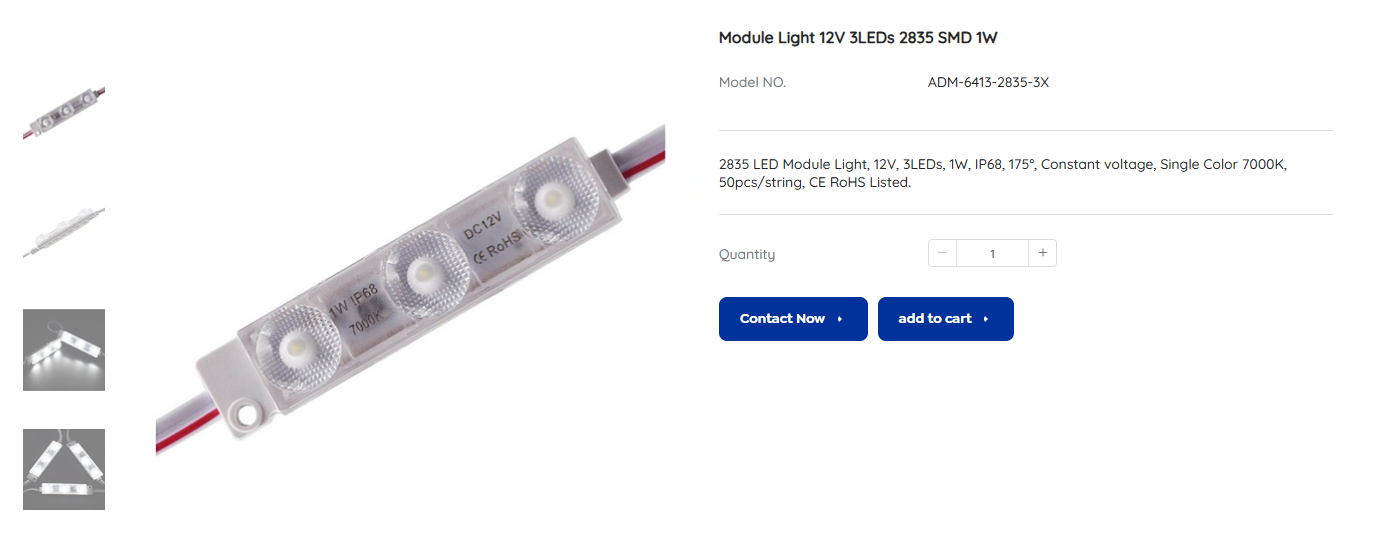
ROI Break-Even Point:
In standard coastal environments (moderate salt exposure, accessible mounting), IP65 typically breaks even against IP68 within 4–5 years. In high-exposure or mission-critical applications, IP68 achieves ROI within 24–36 months due to avoided maintenance, extended lifespan, and reduced operational disruption. Procurement teams should model TCO using actual site data, not manufacturer estimates. Factor in labor rates, equipment rental, warranty terms, and failure penalty costs. A 15% higher unit cost for IP68 often yields 30–50% lower lifecycle expenditure when deployed in appropriate environments.
Key Takeaways for Professional Buyers
For professional buyers seeking to select the right LED module for coastal environments, the key takeaways are clear:
-
IP65 is suitable for sheltered coastal locations with low exposure to salt spray and water; it offers cost-effectiveness but limited durability in harsh conditions.
-
IP68 is essential for exposed coastal locations (within 1 km of the shoreline, direct salt spray, potential submersion); it provides superior durability and long-term reliability, justifying the higher upfront cost.
-
Corrosion-resistant materials, UV stability, and proper sealing are critical for both IP65 and IP68 modules in coastal environments—never rely solely on the IP rating.
-
Assess your project’s exposure level, budget, and long-term goals to make the right choice; consult with a coastal LED specialist for complex projects.
Final Procurement Recommendations
Coastal lighting projects demand precision specification. IP65 remains a cost-effective solution for shielded or inland-adjacent applications where maintenance access is straightforward and budget parameters are strict. IP68 delivers superior reliability for direct-exposure zones, critical infrastructure, and locations where maintenance downtime carries operational or financial penalties. The correct selection hinges on accurate site assessment, transparent supplier documentation, and lifecycle cost modeling rather than upfront unit pricing.
Engineering teams should mandate full test documentation, verify material compatibility across the entire optical-electrical assembly, and require suppliers to stand behind performance guarantees in salt-rich environments. When specification aligns with environmental reality, projects achieve extended service life, predictable maintenance schedules, and optimized capital allocation.
Summary
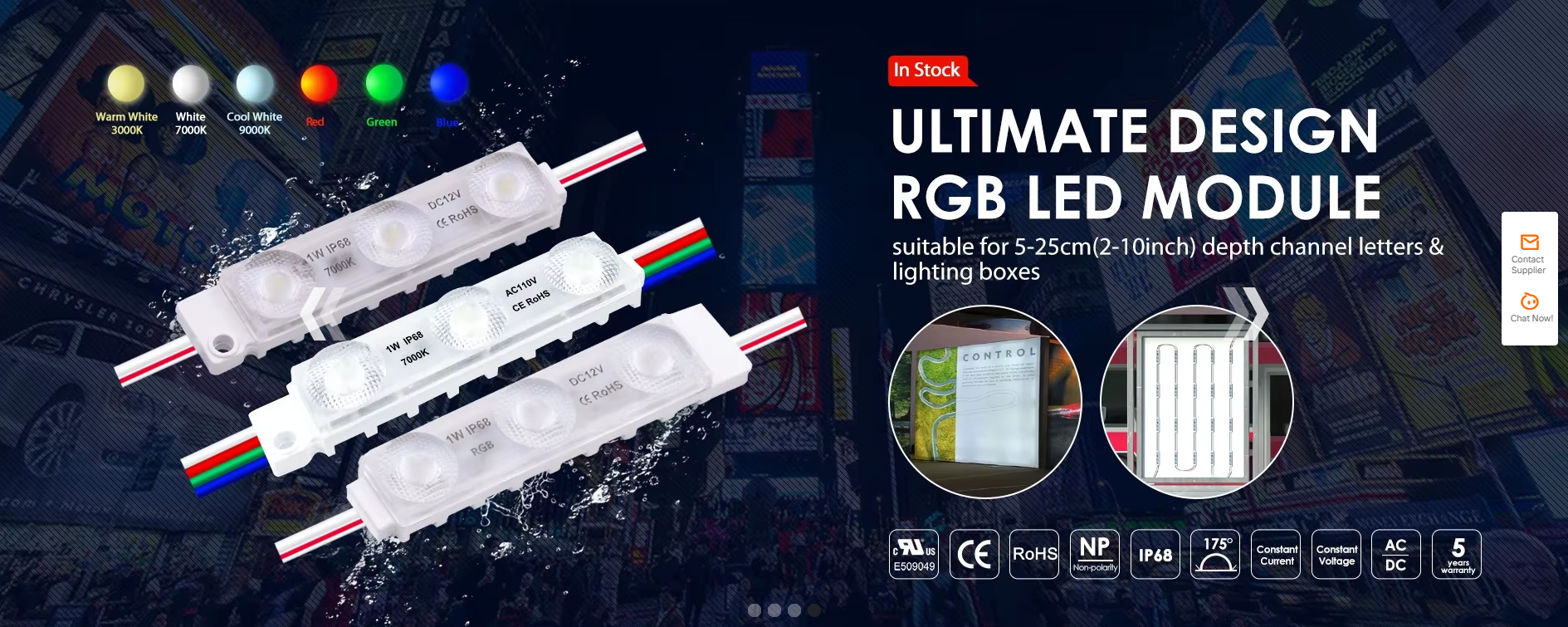
Selecting between IP65 and IP68 LED modules for coastal environments requires moving beyond basic ingress codes and evaluating real-world degradation factors. IP65 provides reliable protection against rain and water jets, making it suitable for sheltered or moderately exposed installations where maintenance is accessible and budget constraints dominate. IP68 delivers multi-barrier sealing, advanced potting, and pressure-compensation architecture, engineered for direct salt spray, high humidity, and mission-critical applications where downtime is unacceptable. Coastal readiness depends not only on IP ratings but also on corrosion-resistant coatings, salt-fog tested drivers, UV-stabilized optics, and transparent supplier validation. Procurement teams should prioritize total cost of ownership over initial pricing, demand independent lab reports, and align module architecture with site-specific exposure levels. When specified correctly, IP68 reduces lifecycle expenditure, extends operational lifespan, and eliminates costly retrofit cycles in aggressive marine environments.
FAQ
Does IP68 automatically mean the LED module is suitable for marine environments?
No. IP68 certifies protection against continuous water immersion under controlled lab conditions. Marine environments require additional safeguards: salt spray resistance (≥1000 hours), marine-grade anti-corrosion coatings (ISO 12944 C5-M), potted drivers, UV-stabilized lenses, and pressure-equalization membranes. Always verify the complete assembly specification.
Can I use IP65 modules if the installation is under a roof or canopy near the coast?
Yes, if the fixture is fully shielded from direct wind-driven salt spray, tidal splash, and condensation accumulation. Ensure adequate ventilation to prevent moisture trapping, and schedule biannual inspections to verify gasket integrity and clean salt deposits from exterior surfaces.
How do I verify a supplier’s salt spray test claims?
Request full ASTM B117 or ISO 9227 test reports from accredited third-party laboratories. Verify sample quantity, test duration, neutral salt concentration, temperature control, and post-test inspection criteria. Cross-check report dates and batch numbers against current production. Reputable manufacturers provide transparent documentation without redaction.
What is the typical lifespan difference between IP65 and IP68 in coastal zones?
In direct-exposure coastal environments, IP65 modules typically achieve 5–7 years before requiring major component replacement or resealing. IP68 modules, when properly engineered with marine-grade materials, routinely exceed 10–15 years with minimal maintenance. Actual lifespan depends on coating quality, driver reliability, and site-specific salt concentration.
How should procurement teams model ROI for IP68 vs IP65?
Calculate TCO over a 10-year horizon. Include unit cost, shipping, installation labor, scheduled maintenance frequency, replacement parts, equipment rental (scaffolding/vessels), downtime penalties, and warranty claim processing. Apply site-specific failure rate projections from manufacturer field data. IP68 typically achieves positive ROI within 24–36 months in high-exposure or access-restricted installations.