


LED Light Amplifier RGBW
AD-AMF-RGBW
RGBW LED Amplifier, 12~24V, 4 Channels 6Ax4CH, Dimmable, CE RoHS Listed.
Quantity
Professional LED Light Amplifier Manufacturer & Supplier
Enhance your RGBW LED strip lighting installations with our efficient LED light amplifier. This robust amplifier LED, housed in a durable aluminum casing, is designed to boost signal strength and extend the reach of your RGBW LED strips. Compatible with both DC12V and DC24V RGBW LED strips, this amplifier LED strip seamlessly integrates into your existing setup. As a dedicated RGB amplifier, it ensures consistent color output and synchronized dimming across extended LED strip runs. We prioritize fast shipping, ensuring you receive your LED light amplifier and amplifier LED strip quickly to keep your projects on schedule. This RGB amplifier is the ideal solution for large-scale RGBW installations requiring reliable signal amplification for both 12V and 24V RGBW lighting.
RGBW LED Amplifier 12~24V
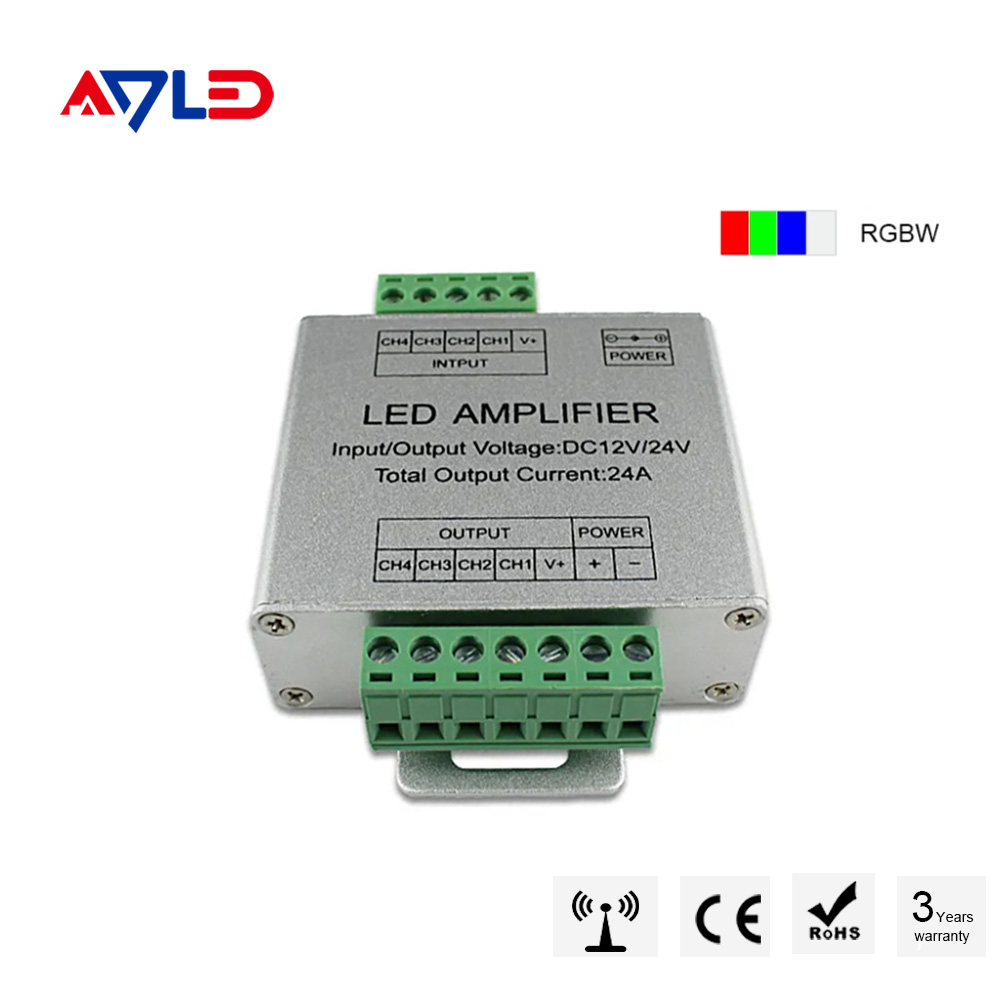
LED Light Amplifier Specifications
Product name | RGBW LED Amplifier |
Model | AD-AMF-RGBW |
Supply voltage | DC12~24V |
Outout | 4 Channels |
Outout current | 6Ax4CH |
Supply power | 12V:<288W‚ 24V:<576W |
Connect mode | Common anode |
LED Strip Light Controller
Our advanced LED light amplifier is designed to boost signal strength and maintain consistent brightness across extended LED installations. Paired with a versatile RGBW LED controller, it allows for precise color mixing and smooth transitions in your lighting projects. Choose from a variety of LED strip controllers tailored to meet different lighting needs, from simple dimming to complex color effects. When searching for the best LED controller, consider options that offer reliability, ease of use, and compatibility with your LED setup. Our products provide seamless LEDs control, making customization effortless. The controller LED interfaces smoothly with multiple LED types for flexible applications. Integrating a high-quality LED light amplifier ensures your lighting remains vibrant and uniform over long distances. Whether for residential or commercial use, an LED light amplifier is essential to prevent voltage drop and signal loss. Trust our LED light amplifier and controllers to deliver professional-grade performance and lasting durability. Upgrade your system with our complete LED strip light controller solutions for unmatched control and brilliance.
LED Light Amplifier
The LED light amplifier is essential for maintaining consistent brightness across long runs of LED strips, preventing voltage drop and signal loss. When paired with a reliable LED strip lights controller, it enhances the overall performance of your lighting system. For large displays, a LED wall controller works seamlessly with the amplifier to deliver precise color and brightness control. To easily manage your setup, follow the LED light strip remote control instructions provided with your controller for smooth operation. Using a high-quality LED light amplifier ensures your control LED lights function flawlessly, even in complex installations. The LED light amplifier boosts signals, allowing you to extend your lighting without sacrificing quality. Combining the LED light amplifier with effective controllers guarantees uniform illumination throughout your project. Trust our LED light amplifier solutions to optimize your LED lighting system for professional results every time.
LED Light Amplifier FAQ
How to control LEDs with arduino?
To control LEDs with an Arduino, connect the LED’s positive leg (anode) to one of the Arduino’s digital output pins through a current-limiting resistor, and the negative leg (cathode) to the ground. Using Arduino code, you can turn the LED on or off by setting the pin HIGH or LOW. For more advanced control like brightness or color, use PWM (Pulse Width Modulation) with the analogWrite() function or connect RGB LEDs and control each color channel separately. Libraries like FastLED or NeoPixel help simplify controlling addressable LEDs.To control LEDs with an Arduino, connect the LED’s positive leg (anode) to one of the Arduino’s digital output pins through a current-limiting resistor, and the negative leg (cathode) to the ground. Using Arduino code, you can turn the LED on or off by setting the pin HIGH or LOW. For more advanced control like brightness or color, use PWM (Pulse Width Modulation) with the analogWrite() function or connect RGB LEDs and control each color channel separately. Libraries like FastLED or NeoPixel help simplify controlling addressable LEDs.
What is a"signal amplifier"and when do I need one?
A signal LED light amplifier in LED lighting boosts the control signal to ensure consistent brightness and color across long LED strip runs. You need one when the total length of your LED strips exceeds the controller’s maximum output capacity, causing voltage drop and dim or flickering lights. By placing LED light amplifier at intervals, you restore signal strength and power, maintaining uniform lighting throughout your installation.A signal amplifier in LED lighting boosts the control signal to ensure consistent brightness and color across long LED strip runs. You need one when the total length of your LED strips exceeds the controller’s maximum output capacity, causing voltage drop and dim or flickering lights. By placing an amplifier at intervals, you restore signal strength and power, maintaining uniform lighting throughout your installation.


/5