


2025-12-03
The Ultimate Guide to LED Strip Light Colors & Where to Use Them
The Ultimate Guide to LED Strip Light Colors & Where to Use Them
LED strip lighting has transformed from a niche DIY tool into a cornerstone of modern interior design, smart homes, and ambient experiences. But with endless options—from white LED strip lights to RGBIC LED strip lights, 2700K LED strip to 6500K LED strip, single colour LED strip lights to multi-color LED tape light—how do you choose wisely?
This guide cuts through the noise. We’ll explore LED strip light color science, decode every technology (including CCT LED strip, RGBWW LED strips, ARGB LED strip, and dream color acrylic LED strips), and show you exactly where to use each type—whether you’re installing waterproof RGB LED strip lights outdoors or dimmable LED strip lights warm white in your bedroom.
Let’s illuminate your space with intention.
Why LED Strip Light Color Matters?
What Types of Colors Are Available for LED Strip Lights?
What Is Single Color LED Strip?
What Types of Colors Are Available for LED Strip Lights?
What Is Single Color LED Strip?
-
What Is Color Temperature and Why Is It Important?
-
LED Strip 2700K vs 3000K: What’s the Difference?
-
Warm White vs Cool White LED Strip
-
What LED Strip Light Color Temperature Should I Choose?
What Is Color Changing LED Strip Lights?
-
What Is CCT LED Strip?
-
What Is RGB LED Strip?
-
What Is RGBWW LED Strip?
-
What Is RGB CCT LED Strip?
-
What Is RGBIC LED Strip?
How to connect LED strip lights?
-
How to Connect Single Color LED Strip?
-
How to Connect CCT LED Strip?
-
RGB LED Strip Lights How To Connect?
-
How To Connect RGBW LED Strip?
Are Single Color LED Strips Better Than Color Changing LED Strips?
Can RGB LED Strips Produce Good White Light?
Where to Use Each LED Strip Light Color?
Can I Mix Different LED Strip Light Colors in the Same Room?
Do LED Strip Light Colors Affect Sleep or Mood?
Conclusion
FAQ
Can RGB LED Strips Produce Good White Light?
Where to Use Each LED Strip Light Color?
Can I Mix Different LED Strip Light Colors in the Same Room?
Do LED Strip Light Colors Affect Sleep or Mood?
Conclusion
FAQ
Why LED Strip Light Color Matters?
Color isn’t decorative—it’s biological, emotional, and functional. The LED strip light color you choose affects:
Sleep Quality: Blue-rich light suppresses melatonin, disrupting rest.
Mood & Focus: Cool white enhances alertness; warm white promotes calm.
Perception of Space: Neutral white makes rooms feel more open and airy.
Task Performance: High-CRI, bright white LED light strips improve precision—ideal for kitchens, workspaces, and detail-oriented tasks.
Mood & Focus: Cool white enhances alertness; warm white promotes calm.
Perception of Space: Neutral white makes rooms feel more open and airy.
Task Performance: High-CRI, bright white LED light strips improve precision—ideal for kitchens, workspaces, and detail-oriented tasks.
Whether you use LED strip ambient lighting or LED strip lights color changing for entertainment, your choice shapes how you live.
What Types of Colors Are Available for LED Strip Lights?
Modern LED strips fall into two broad categories:
-
Fixed-color options
White in various temperatures: 2700K, 3000K, 3200K, 3500K, 4000K, 5000K, 5500K, 5600K, 6000K, 6500K, even ultra-warm 1800K–2200K or daylight 7000K–10000K
Single-color hues: red LED strip, green LED strip light, blue LED strips, yellow LED strip lights, amber color LED strip
 |
 |
 |
Warm White LED Strip |
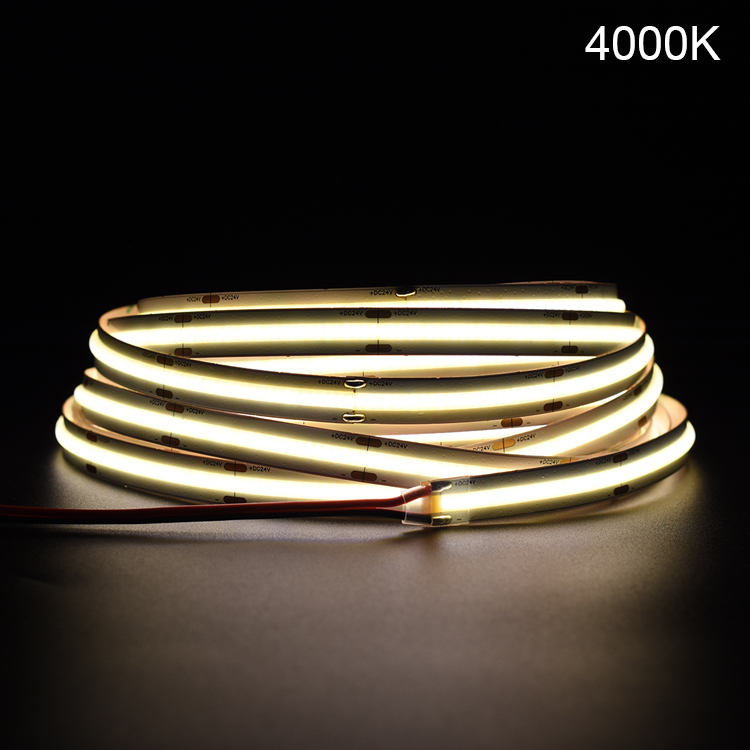
Natural White LED Strip |
Cool White LED Strip Lights |
 |
 |
 |
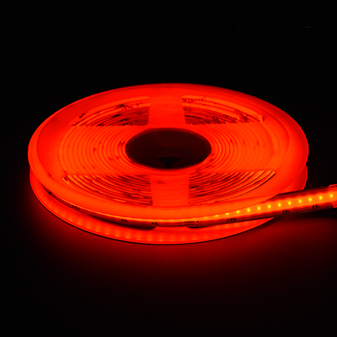
Red LED Strip |
Green LED Tape |
LED Strips Blue |
-
Dynamic-color systems
Color changing LED strip lights: RGB, RGBW, RGBWW, RGBIC, ARGB
Tunable white: CCT LED strip, tunable white LED strip, adjustable color temperature LED strip
 |
 |
 |
Tunable White LED Strip |
Addressable CCT LED Strip |
RGB LED Light Strips |
 |
 |
 |
RGB White LED Strip |
LED RGB CCT Strips |
RGBIC LED Strip Lights |
From 5V white LED strip to 24V RGB LED strip lights, LED tape 3000K to RGB flexible LED strip light, there’s a solution for every voltage, IP rating (IP65 LED strip warm white), and application.
What Is Single Color LED Strip?
A single color LED strip emits one unchanging hue—either a pure white LED strip light or a solid color like green LED tape, LED tape blue, or red LED light strip.
-
Warm white LED strip (2700K–3000K): Cozy, inviting
-
Cool white LED strip lights (5000K–6500K): Crisp, energizing
-
Natural/neutral white LED strip (3500K–4000K): Balanced
-
Soft white LED strip lights, extra warm white LED strip, super bright white LED strip, daylight white LED strip lights
Single colour LED strip lights are ideal for under-cabinet lighting, shelf accents, or architectural coves where consistency and reliability matter. They’re often dimmable, available in 12V warm white LED light strip or 24V warm white LED strip, and come as waterproof or ultra-thin variants.

What Is Color Temperature and Why Is It Important?
Color temperature, measured in Kelvin (K), defines the warmth or coolness of white light:
-
Lower K = warmer (more yellow/red) → relaxing
-
Higher K = cooler (more blue) → stimulating

This only applies to white LED strip, strip of white LED lights, or white LED tape—not RGB colors.
Choosing the right LED strip color temperature ensures your LED strip lights warm white don’t clash with ceiling lights, and your cool white LED tape supports productivity.
LED Strip 2700K vs 3000K: What’s the Difference?
Both are warm white LED strip tones, The main difference between 2700K and 3000K LED strips lies in their color temperature, which affects the appearance and mood of the light they emit:
2700K LED Strip Light
Appearance: Soft, warm, yellowish-white light—similar to traditional incandescent bulbs or candlelight.
Ambiance: Cozy, relaxing, and inviting.
Best for: Living rooms, bedrooms, dining areas, or any space where comfort and warmth are priorities.
Ambiance: Cozy, relaxing, and inviting.
Best for: Living rooms, bedrooms, dining areas, or any space where comfort and warmth are priorities.
3000K LED Strip
Appearance: Slightly crisper and cleaner than 2700K, with a touch more neutral tone—still warm but less yellow.
Ambiance: Warm yet slightly more alert and balanced; less "sleepy" than 2700K.
Best for: Kitchens, bathrooms, hallways, retail spaces, or areas where you want warmth without sacrificing clarity.
Ambiance: Warm yet slightly more alert and balanced; less "sleepy" than 2700K.
Best for: Kitchens, bathrooms, hallways, retail spaces, or areas where you want warmth without sacrificing clarity.
Key Comparison
|
Feature
|
2700K
|
3000K
|
|---|---|---|
| Product |  |
 |
|
Color Tone
|
Yellowish-white
|
Neutral-warm white
|
|
Mood
|
Very cozy, intimate
|
Warm but more functional
|
|
Common Use
|
Relaxing residential zones
|
Task-friendly warm areas
|
|
CRI (if same)
|
Identical (depends on LED quality)
|
|
The difference may seem subtle, but it’s noticeable when the two are placed side by side. 2700K warm white LED strip feels more intimate; LED strip 3000K offers better clarity without losing coziness.
Warm White vs Cool White LED Strip
|
Feature
|
Warm White (2700K–3000K)
|
Cool White (5000K–6500K)
|
|---|---|---|
|
Mood
|
Calming, cozy
|
Alert, focused
|
|
Best For
|
Bedrooms, living rooms
|
Garages, offices, kitchens
|
|
Sleep Impact
|
Supports melatonin
|
May disrupt sleep
|
|
Popular Products
|
dimmable LED strip lights warm white, 5m warm white LED strip lights, warm white LED ribbon
|
LED strip lights cool white, cool white LED tape, 5000K LED tape light
|
Many now choose dual color LED strip or warm white cool white LED strip combos for flexibility.

What LED Strip Light Color Temperature Should I Choose?
-
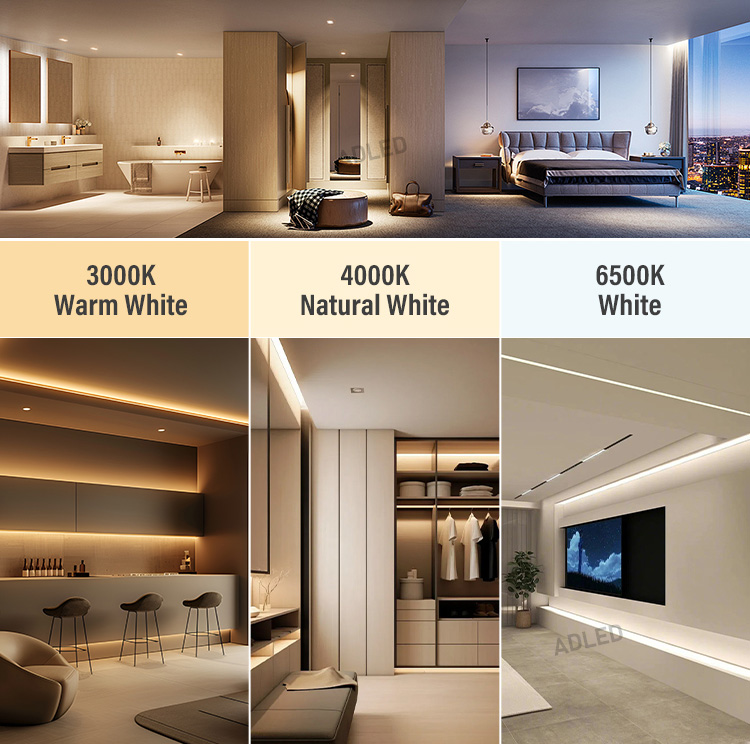
Bedroom: 2700K LED tape or 3000K LED strip
-
Kitchen: 4000K LED strip or 3500K LED strip (natural white)
-
Office: 5000K LED strip light
-
Bathroom: 3000K–4000K with CRI >90
-
Outdoor: 3000K for ambiance, 5000K for security
Use tunable white LED strip or white adjustable LED strip lights if needs change throughout the day.
What Is Color Changing LED Strip Lights?
Color changing LED strip lights let you switch between millions of hues. Types include:
-
CCT LED Strip: Dual-white only — no RGB — enables smooth adjustment of white from warm to cool (e.g., 2700K–6500K)
-
Addressable White LED Strip: Combines individually addressable white LEDs with dual CCT (warm + cool white) per pixel — allows dynamic, segmented control of tunable white light
-
RGB LED Strips: Red + Green + Blue → 16M colors
-
RGBW: Adds dedicated white LED strip for true white
-
RGBWW / RGBCCT: Adds warm + cool white for full flexibility
-
RGBIC: Independent color zones (e.g., RGBIC WIFI LED strip)
-
ARGB / Dreamcolor: Pixel-level control (dream color acrylic LED strips)
Available as 12V RGB LED strip, 5V RGB LED strip, RGB 5050 LED strip lights, waterproof RGB LED strip lights, and addressable variants.
 |
 |
 |
CCT LED Strip |
Dynamic White LED Strip |
RGB LED Light Strips |
 |
 |
 |
Strip LED RGBW |
LED RGB CCT Strips |
Digital RGB LED Strips |
What Is CCT LED Strip?
CCT (Correlated Color Temperature) LED strip—also called tunable white LED strip—blends warm white and cool white LEDs to let you adjust from 2700K to 6500K.
Also known as:
Also known as:
-
CCT adjustable LED strip
-
Dynamic white LED strip
-
White CCT tunable COB LED strip light
Ideal for circadian lighting in bedrooms or offices.

What Is RGB LED Strip?
RGB LED light strips use red, green, and blue diodes to create millions of colors. Common formats:
-
RGB LED stripe, RGB LED strips
-
RGB 5050 LED strip lights, high density LED strip RGB
Limitation: RGB cannot produce true white—only a weak composite. For real white, choose RGB plus white LED strip.

What Is RGBWW LED Strip?
RGBWW LED strips (or RGB+CCT) combine:
-
Red, Green, Blue → for colors
-
Warm White + Cool White → for high-quality, tunable white
This is the ultimate multi color LED strip for spaces needing both LED colorful strip lights and bright white LED light strips—like kitchens or home theaters.

What Is RGB CCT LED Strip?
An RGB CCT LED strip merges RGB color + CCT tunable white in one system. Controlled via app or remote, it offers:
-
Full color spectrum
-
Adjustable white from 2700k to 6500k
Perfect for smart LED color strip light setups.

What Is RGBIC LED Strip?
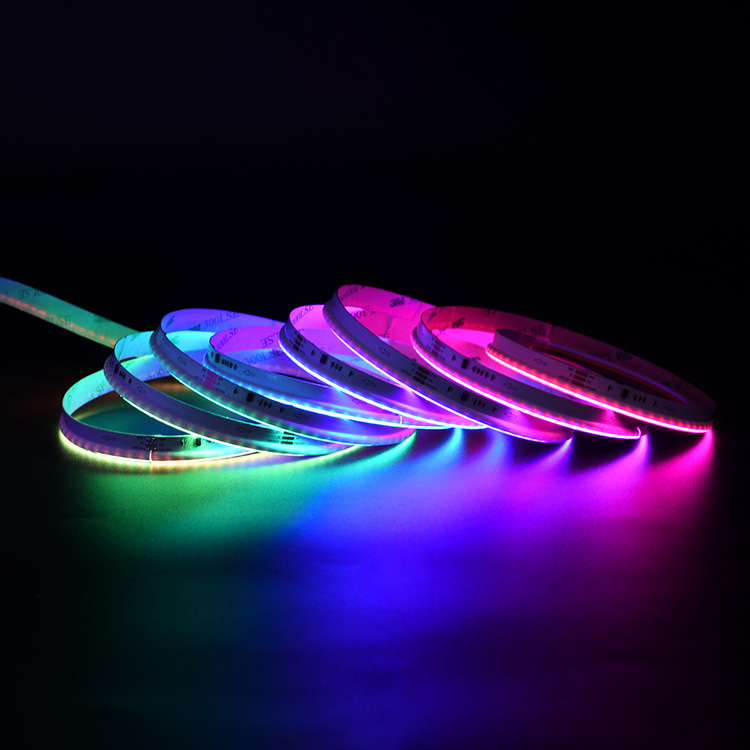
RGBIC LED strip lights (e.g., RGBIC dreamcolor LED strip) allow independent color control per segment—so you can run a rainbow, chase effect, or static zones simultaneously.
-
Cannot be cut between IC chips
-
Requires special controllers
Used in LED strip ambient, gaming, and architectural highlights.

How to connect LED strip lights?
All LED strips require two main components for function:
A Power Supply (Driver): Converts AC wall power (120V/240V) to the low-voltage DC required by the strip (usually 12V or 24V).
The LED Strip: The flexible circuit board containing the LEDs.
The key difference in connection is the LED Controller, which is required for any strip that needs color or temperature adjustment.
A Power Supply (Driver): Converts AC wall power (120V/240V) to the low-voltage DC required by the strip (usually 12V or 24V).
The LED Strip: The flexible circuit board containing the LEDs.
The key difference in connection is the LED Controller, which is required for any strip that needs color or temperature adjustment.
 |
 |
 |
 |
LED Strip Light |
LED Power Supply |
LED Connector |
LED Aluminium Profile |
How to Connect Single Color LED Strip?
-
Wires: 2 (V+ and GND)
-
Purpose: Simple lighting, such as a warm white LED strip or a cool white LED strip.
Connection Steps:
-
Power: Connect the power supply's output (+) terminal to the strip's V+ wire.
-
Ground: Connect the power supply's output (-) terminal to the strip's GND wire.
-
Dimming (Optional): If you wish to dim the strip, you must place a single-color dimmer between the power supply and the strip. The dimmer connects to the output of the power supply.

How to Connect CCT LED Strip?
-
Wires: 3 (V+, WW, and CW)
-
Purpose: Adjusting the white light color temperature (from warm white to cool white).
Connection Steps:
-
Controller: A dedicated CCT Controller (or smart receiver) is required. This device manages the power distribution between the Warm White (WW) and Cool White (CW) channels.
-
Controller Input: Connect the power supply's output (+) and (-) terminals to the input terminals of the CCT Controller.
-
Controller Output to Strip:
-
Controller V+ output connects to Strip V+ wire.
-
Controller WW output connects to Strip WW wire.
-
Controller CW output connects to Strip CW wire.
-

RGB LED Strip Lights How To Connect?
-
Wires: 4 (V+, R, G, and B)
-
Purpose: Producing millions of hues by mixing Red, Green, and Blue light.
Connection Steps:
-
Controller: An RGB Controller is necessary to select and mix colors.
-
Controller Input: Connect the power supply's output (+) and (-) terminals to the input terminals of the RGB Controller.
-
Controller Output to Strip:
-
Controller V+ output connects to Strip V+ wire.
-
Controller R output connects to Strip R wire.
-
Controller G output connects to Strip G wire.
-
Controller B output connects to Strip B wire.
-

How To Connect RGBW LED Strip?
-
Wires: 5 (V+, R, G, B, and W)
-
Purpose: Full color (RGB) plus a dedicated, clean white light (W) channel.
Connection Steps:
-
Controller: An RGBW Controller is required.
-
Controller Input: Connect the power supply's output to the input of the RGBW Controller.
-
Controller Output to Strip: Connect the five output channels of the controller (V+, R, G, B, W) directly to the corresponding five wires on the strip.

Are Single Color LED Strips Better Than Color Changing LED Strips?
It depends on your goal:
|
Priority
|
Best Choice
|
|---|---|
|
Reliability, simplicity, consistent light
|
Single color LED strip (e.g., natural white LED strip, cool white LED strip lights)
|
|
Mood, entertainment, flexibility
|
Color changing LED strip lights (e.g., RGB LED strips, multicolor LED strip lights)
|
|
Both white + color
|
RGBW, RGBWW, or CCT + RGB hybrids
|
Single color addressable LED strip or individually addressable white LED strip offer middle-ground control.
Can RGB LED Strips Produce Good White Light?
No—not truly.
RGB creates “white” by mixing red, green, and blue, resulting in:
RGB creates “white” by mixing red, green, and blue, resulting in:
-
Bluish tint
-
Low CRI (<70)
-
Poor color accuracy
For real white, use RGBW LED strip, pure white LED strip light, or white LED strip 5v/12v.
Where to Use Each LED Strip Light Color?
|
Room
|
Recommended LED Strip
|
|---|---|
|
Bedroom
|
2700K LED strip light, dimmable warm white, tunable white
|
|
Kitchen
|
4000K LED tape, RGBWW LED strips (task + party mode)
|
|
Home Office
|
5000K LED strip, neutral white LED strip
|
|
Gaming Room
|
RGBIC LED strip, addressable RGB LED strip, color chasing LED strip lights
|
|
Bathroom
|
3000K LED tape, IP65 LED strip warm white
|
|
Outdoor
|
Waterproof RGB LED strip lights, white waterproof LED strip lights
|
|
Retail/Display
|
high-CRI white, amber color LED strip, COB LED strip 2700K
|
Use LED strip lights diy colors ideas for creative accents!
Can I Mix Different LED Strip Light Colors in the Same Room?
Yes—but strategically:
-
Avoid mixing 3000K and 5000K white in direct view (looks like a mistake)
-
Layer single color LED strip (e.g., warm white LED strip lighting) as base + color changing LED strip lights as accent
-
Ensure all LED strips color share similar CRI if used together
Do LED Strip Light Colors Affect Sleep or Mood?
Absolutely.
-
Blue/cool white (>5000K): Suppresses melatonin → avoid before bed
-
Warm white (2700K–3000K): Supports relaxation
-
Red/amber: Least disruptive—ideal for nightlights
Use tunable white LED strip to auto-shift from 5000K LED strip (morning) to 2700K LED strip light (evening).
Conclusion
You are no longer limited to compromise in lighting design. By understanding the core technologies—from basic RGB to the flexible power of RGBW LED Strip and the human-centric benefits of Tunable White LED Strip—you are now equipped to make informed choices. The perfect light is within reach. Stop guessing and start designing.
FAQ
Why is half my LED strip a different color?
This usually indicates damage to the PCB trace or a faulty current-limiting resistor, particularly common in older 5V RGB LED strip or cheap models.
What LED light strip color is best for sleep?
2700K LED strip light or ultra warm white LED strip (1800K-2500K). Light with low blue content signals the body to relax.
How to mix colors on LED strip lights?
Use an RGB controller or app to combine the intensity of the Red, Green, and Blue channels. For instance, combining high red and high green creates yellow (yellow LED strip lights).
How to make your own colors on LED strip lights?
If you have a LED strip lights with remote or app, use the DIY function to manually adjust the percentage output of R, G, and B to create custom color LED strip or diy LED light strip colors like peach color LED strip.
How to install color strip LED lights?
First, clean the surface. Then, affix the RGB flexible LED strip light. Connect the strip to the controller and power supply (24V LED strip cool white or 12V white LED strip lights). Finally, pair with an app.
How to fix LED strip lights different colors?
If the strip is showing LED light strips 2 different colors or is discolored, check the 4-pin connection (V+, R, G, B) to ensure it’s firmly seated. If that fails, the strip may have physical chip damage.
How to turn on RGB LED strip lights?
Use the dedicated remote, the wall switch for the power supply, or the paired app.
Can you cut RGBIC LED strips?
Yes, but only at the designated cut points. Cutting anywhere else will damage a segment of the RGBIC LED strip.
What is addressable LED strip?
An addressable LED strip is an RGBIC strip where each LED can be controlled individually, allowing for chasing and flowing colors LED strip effects (dreamcolor LED strips).
what is RGBW LED strip
It's a RGB white LED strip that combines R, G, B diodes with a fourth, dedicated white diode, allowing for both vibrant color and pure white light.
Can you cut RGB LED strip?
Yes, at designated copper cut points.
Where to cut RGB LED strip?
Cut along the copper pads, typically marked with a scissor icon.
How to make warm white on LED strip lights
If using RGBW or RGB CCT strips, simply turn on the dedicated Warm White channel (W or WW). If using only RGB, mix Red and Green at high intensity and slightly reduce Blue.
How to change LED strip color?
Use the remote, app, or physical controller connected to the LED strip lights different colors.
Does RGB LED strip have white?
Yes, but it’s a mixed pseudo-white, not a true, clean white. For clean white, you need a RGBWL LED strip or single color LED strip.
How do I change the color of my LED strip without a remote?
If your LED strip uses a controller (e.g., Bluetooth, Wi-Fi, or IR), you can often control it via a smartphone app (like “Magic Home” or “Govee Home”). For non-smart RGB strips, you’ll need the original remote or a compatible replacement—color can’t be changed manually without a controller.
How do I make my own/custom/DIY colors on LED strip lights?
Most RGB or RGBWW LED strips allow custom colors through:
-
A remote with a “DIY” mode (adjust red, green, blue values manually), or
-
A smartphone app that includes a color wheel or RGB sliders.
Simply select your desired hue and save it as a preset if supported.
How do I make peach color on LED strip lights?
Peach is a soft blend of red, green, and a touch of blue. Try:
-
Red: High (e.g., 255)
-
Green: Medium-High (e.g., 200–220)
-
Blue: Low (e.g., 150–180)
Adjust gradually using your app or DIY remote mode until you achieve the warm, pinkish-orange tone.
Why won’t my LED strip lights change color?
Common causes:
-
Dead or misaligned remote batteries
-
Controller not receiving signal (check connections)
-
Using a non-RGB (single-color) strip by mistake
-
Power supply issues (voltage too low)
Try resetting the controller or testing with a known-working remote/app.
Why do my LED strip lights change colors by themselves?
This usually happens due to:
-
A stuck or faulty remote button
-
Interference from another remote/device (common with IR controllers)
-
A defective controller
Try removing remote batteries or replacing the controller.
Why are parts of my LED strip different colors (or two colors)?
This often indicates:
-
Voltage drop: Common in long runs (>5m without amplification); the end appears dimmer or shifts color (e.g., white looks pink).
-
Damaged LEDs or cut points: If cut improperly or bent sharply, some channels (R, G, or B) may fail.
-
Poor soldering or loose connections at joints.
Solution: Power the strip from both ends, check cuts at marked points, or add an amplifier.
How do I connect RGB LED strip lights?
-
Match the strip’s +12V/+24V and R/G/B wires to the controller output.
-
Connect the controller to a compatible power supply.
-
Ensure polarity is correct—reversing can damage the strip.
Always cut only at designated scissor marks and observe maximum run lengths.
Does an RGB LED strip have white?
Standard RGB strips cannot produce true white—they mix red, green, and blue to create a bluish or purplish “white” that lacks warmth and brightness. For real white (warm, cool, or tunable), you need RGBW or RGBWW strips, which include dedicated white LEDs.
How do I fix one color not working on my LED strip?
If red, green, or blue is missing:
-
The issue is likely a broken LED channel (e.g., a burnt resistor or damaged copper trace).
-
Check for visible damage near the start of the non-working section.
-
If the problem starts mid-strip, you may need to cut out the faulty segment and reconnect.
Note: A single dead LED can sometimes disable an entire channel downstream.